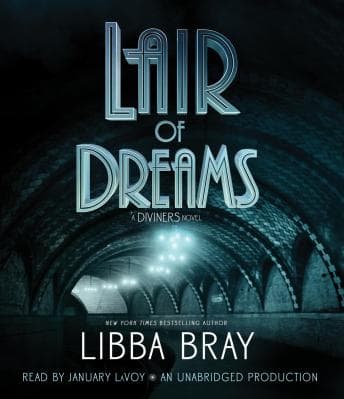
What happens when you put a nurse who's spent 15 years in a trauma center in front of a book about a mysterious sleeping sickness killing people in 1920s New York?
She yells at her dashboard. A lot.
But here's the thing - I wasn't yelling because Libba Bray got things wrong. I was yelling because the dreamworld sequences in Lair of Dreams are genuinely unsettling, and I was white-knuckling my steering wheel on the I-10 at 7:45 AM after a twelve-hour shift, running on caffeine and spite.
January LaVoy Deserves a Raise and Possibly a Medal
Let me compare this to every other multi-character audiobook I've listened to in the last year. Most narrators give you maybe three distinct voices before everyone starts bleeding together - the "slightly deeper version of the same person" problem. LaVoy is doing something different. She's got this sultry, Jazz Age rasp for Evie that's completely separate from the clipped, guarded tone she uses for Ling Chan. Her Memphis Campbell carries a specific gravelly weight that sounds like a man who's seen too much. And then there's Sam - she gives him this particular Brooklyn energy that's equal parts charm and desperation.
But what really got me? The accents aren't decorative. LaVoy uses Irish, Polish, Russian inflections that actually serve the story's themes about immigrant communities in 1920s America. When she shifts into Ling's Chinese American family scenes versus the broader Chinatown community, there's a specificity there that makes you understand this is a book about who belongs in America and who gets to decide. The voice work isn't just showing off - it's doing thematic heavy lifting.
Twenty hours. That's a commitment. And LaVoy carries every single one of them.
The Sleeping Sickness Plot - Where My Medical Brain Had Opinions
As someone who's actually worked a code on patients with altered consciousness, the sleeping sickness in this book hit differently for me than it probably does for most listeners. Bray describes victims who simply don't wake up, and the city's response - the fear, the quarantine impulses, the scapegoating of immigrant communities - felt uncomfortably real. I've worked through enough flu seasons and one very memorable pandemic to know exactly how fast a community turns on its most vulnerable when people start getting sick. That same dread - the social unraveling that runs parallel to the body count - is something Dennis Lehane nails in a completely different setting in Mystic River, where the real horror is also never quite what you think it is.
The dreamworld sequences where the Diviners descend to chase the killer are genuinely creepy. There's a particular macabre quality to the murder scenes that LaVoy narrates with this restrained tension - she doesn't oversell the horror. She lets it breathe. Which somehow makes it worse. I had to switch to a podcast for the last ten minutes of my drive home one morning because my hands were shaking and I hadn't slept in thirteen hours and I did NOT need dream-killer energy following me into bed.
Here's where I have to be honest, though. This is book two in the Diviners series, and compared to the first one, the main storyline arc doesn't advance as much as I wanted. There are a LOT of characters, a lot of threads being set up, and sometimes it feels like Bray is placing chess pieces on a board for books three and four rather than delivering a complete game here. The pacing drags in spots - around hours 10-14 especially, I found my attention wandering during charting, which is saying something because charting at 3 AM is already its own battle for consciousness.
Who This Is For (And Who Should Wait)
This is not a background listen. Not even close. With this many characters and intersecting plotlines - supernatural politics, personal relationships, historical tensions about immigration and race in America - you need your brain engaged. I tried listening while making breakfast for the kids one morning and missed an entire subplot. Carlos found me rewinding in the driveway twenty minutes later.
If you loved the first Diviners book, you need this. If you're coming in cold, go back to book one. And if you're a YA skeptic who thinks books marketed to teens can't handle serious themes about xenophobia, systemic racism, and the American dream's ugly underbelly wrapped in a supernatural thriller - Bray would like a word.
Perfect for that post-shift decompression if your shift didn't involve anyone in an unexplained coma. Otherwise, maybe give it a day.
Night Shift Prescription
LaVoy's performance is the reason this audiobook works at twenty hours. Without her, I think the middle-book pacing issues would've lost me. With her, I stayed. The 1920s atmosphere is thick enough to taste - speakeasy smoke and subway steam and something darker underneath. My mom would love this (she still thinks I should've been a doctor) - it's got that family loyalty thread running through it, the eldest daughter carrying everyone's expectations. Ling Chan especially. I felt that in my bones.
Worth the credit. Just block out the time and pay attention.