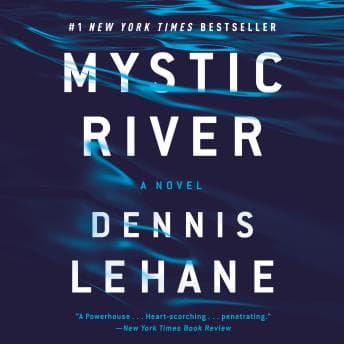

Everyone told me to watch the movie first. Sean Penn, Tim Robbins, all those Oscars. I ignored them. Fifteen hours with Scott Brick and Dennis Lehane's prose felt like the better choice. And look—I was right. But I wasn't prepared for how much this book would sit in my chest like a stone.
I finished it at 2 AM on a Tuesday, grading forgotten, red pen dried out on my desk. Denise had gone to bed hours ago. I just sat there in the dark kitchen, listening to the silence after the final chapter, thinking about the boys I've taught over twenty years. The ones who got into the wrong car. Metaphorically speaking.
What Happens When Childhood Ends in Four Minutes
The premise is deceptively simple. Three boys. One gets into a car with strangers pretending to be cops. The other two don't. That four-minute decision—or lack of decision—echoes through twenty-five years until it detonates when Jimmy Marcus's daughter turns up dead.
But Lehane isn't interested in the mystery the way most thriller writers are. Sure, there's a murder to solve. Sean Devine is the detective on the case. Jimmy is the grieving father with old criminal instincts. Dave Boyle is the one who got in that car, and he came home the night of the murder covered in someone else's blood.
The mystery matters. But what Lehane really wants to examine is how trauma doesn't just wound—it rewires. Dave's demons aren't metaphorical. They're specific, ugly, and Brick narrates his internal monologue with this quiet desperation that made me pause the audiobook more than once. Not because I couldn't handle it. Because I needed to process what I was hearing.
This is why we still read the classics—and why Lehane belongs in that conversation. He's doing what Faulkner did with Yoknapatawpha County, except his county is blue-collar Boston, and his ghosts wear Red Sox caps.
Scott Brick Understands That Pause Is Punctuation
Here's the thing about Brick's narration: it's not flashy. Some listeners apparently struggled with his subtle character differentiation, and I get it. He's not doing distinct accents or theatrical voice changes for each character. Jimmy, Sean, and Dave all sound like variations of the same working-class Boston—because they are.
But that's the point. These men grew up on the same street. They played hockey on the same frozen river. The differences between them aren't in their accents—they're in the weight behind their words. Brick gets this. His Jimmy carries a coiled violence even in casual conversation. His Dave has this pleading quality, like a man constantly apologizing for existing. His Sean sounds like someone who built a wall between himself and his past and is watching it crack.
The emotional switching is where Brick earns his keep. There's a moment—I won't spoil it—where a character's grief transforms into something else entirely, and Brick pivots mid-sentence without it feeling theatrical. That's craft. That's understanding the material.
I listened at 1.0x. The author chose those words. Brick chose those pauses. I chose to hear them properly.
The Wives Carry Half This Story
My students would hate this. I love it.
Lehane gives us three marriages in various states of decay, and the women in this book are doing just as much heavy lifting as the men. Annabeth Marcus—Jimmy's second wife—is terrifying in her devotion. Celeste Boyle watches her husband unravel and makes choices that feel inevitable and devastating. These aren't supporting characters. They're co-protagonists in a tragedy about what happens when love becomes complicity.
This reminds me of what Hemingway said about writing—that the dignity of movement of an iceberg is due to only one-eighth of it being above water. Lehane shows us the surface of these marriages. The underwater mass—the history, the compromises, the things never said—you feel pressing against every scene.
Who Should Wade Into These Waters
If you loved The Secret History or A Little Life—books where the past is a character with its own agenda—this is your next listen. That same sense of the past as an inescapable force shows up in Tipping the Velvet, though the emotional landscape is completely different. If you want a puzzle-box mystery with a neat solution, look elsewhere. The "whodunit" resolves, but the real question—who are these men, and could they have been different?—doesn't have an answer.
Skip this if you need likeable protagonists. These are wounded people making wounded choices. Some of them are monstrous. Some of them are understandable. Most of them are both.
Content warning: childhood abuse is central to the plot. It's handled with gravity, not exploitation, but it's there. Violence, too. This is not a cozy mystery.
Class Dismissed
Fifteen hours is a commitment. This isn't background listening—the complexity demands attention, and the emotional weight deserves it. I'd recommend dedicated sessions, maybe during a long commute or those late nights when sleep isn't coming anyway.
Lehane won the Anthony and Barry Awards for this. The film won Oscars. But the audiobook—Brick's measured, devastating performance—is how I'll remember this story. It's the version that felt like being told something true by someone who understood exactly how much it would cost to hear it.
My mom is definitely going to fall asleep during my podcast episode about this one. But I'm recording it anyway.