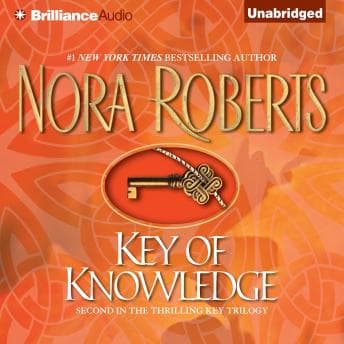

"She won't be alone" — that line from the description kept rattling around in my head somewhere around hour three, because Dana Steele spends a good chunk of this book being furiously, magnificently alone in her anger. And Susan Ericksen leans into that anger like she's been waiting her whole career for a character this pissed off.
I was walking the lakefront with Denise on a Saturday morning — one of those gray Chicago days where the lake looks like hammered steel — and Dana's frustration at the man who broke her heart years ago hit me with this weird specificity. Not romance-novel frustration. Real frustration. The kind where you're mad at someone but also mad at yourself for still caring. Ericksen's voice gets this clipped, tight quality during those early scenes that reminded me of how my wife sounds when she's telling me she's "fine" and I know she absolutely is not fine.
Dana Steele Reads Like a Librarian Who'd Fight You
Here's what I appreciate about Nora Roberts when she's working in this mode: Dana is a book person. Her quest literally revolves around knowledge, around the power of what you know and what you choose to learn. As someone who has spent two decades trying to convince teenagers that reading matters — that books aren't just homework but actual keys to understanding the world — I felt Roberts writing directly to my particular wound. Dana doesn't just love books. She needs them the way some people need oxygen. That kind of bone-deep devotion to knowledge as identity is something I also found in Ember in the Ashes, where what a character knows — and chooses to do with that knowledge — becomes the whole ballgame. And when the mythology of the Key trilogy asks her to use that love as her weapon against an evil god? That's the kind of fantasy premise I can get behind.
But let's be honest about the second-book problem. This is the middle chapter of a trilogy, and it carries all the structural weight that implies. The world-building happened in Key of Light. The big payoff waits in book three. Key of Knowledge has to do the hard work of deepening relationships, raising stakes, and giving Dana her own complete arc — all while treading water on the larger mythological plot. Roberts mostly pulls it off, but there are stretches in the middle where the quest mechanics feel like they're on autopilot. Dana goes here, finds a clue, comes back, argues with Jordan (the ex), has a moment of connection with her friends, repeat.
The sexual encounters — and yes, there are several — range from genuinely earned to "okay, we get it, they have chemistry." A couple of the scenes feel like they exist because the genre contract demands them rather than because the story needs them right then. My students would hate this. I love it. (Okay, I love most of it. Some of those scenes I'd fast-forward if I were a faster-forward kind of person, which I'm not, because the author chose those words.)
Ericksen's Accent Work Is Doing Heavy Lifting
Susan Ericksen gives you a Southern drawl for certain characters and then pivots to Welsh and Irish accents when the mythology requires it — and the shift between the mundane world and the magical one becomes audible. You hear the difference between Pleasant Valley, Pennsylvania and Warrior's Peak. That's smart audio storytelling. The narrator understands that pause is punctuation, and Ericksen deploys silence during Dana's most frustrated moments the way a good drummer uses rests.
Where she really earns her keep is in differentiating the three women. Dana sounds different from Malory and Zoe — not just in pitch but in rhythm. Dana talks faster, cuts people off, uses sarcasm like a shield. Ericksen captures that without turning it into caricature. That particular trick — making a defensive, prickly protagonist feel sympathetic rather than exhausting — is also what keeps I've Got Your Number working as well as it does, because Sophie Kinsella's narrator has the same problem and the audiobook performance leans on the same kind of comic timing to save her. Jordan, the love interest, gets a warmer register that contrasts nicely with Dana's sharp edges.
I wouldn't call this a background listen. The mythology has enough moving pieces that you'll lose the thread if you're also trying to grade essays on The Great Gatsby. (I tried. I lost the thread. Had to go back twenty minutes.) This one wants your attention, especially in the back half when the danger to Dana becomes more than metaphorical.
Who Gets the Key, Who Skips It
If you loved Key of Light, you already know whether you're continuing. If you haven't started the trilogy, don't start here — you'll be lost in about twelve minutes. If you're a Roberts completist, this is solid middle-trilogy work with a heroine who actually feels like a person rather than a wish-fulfillment template. And if you're someone who believes books can literally save your life? Dana Steele is your people.
For anyone who finds angry heroines off-putting in the early chapters — give it until hour four. The anger has context, and Ericksen's delivery makes sure you understand it's coming from hurt, not meanness.
The Margin Note I'd Leave
This reminds me of what Hemingway said about prose being architecture, not interior decoration. Roberts builds the structure of Dana's story cleanly, even if some of the furniture feels familiar. The prose deserves to be savored at 1.0x, and Ericksen gives you good reason to stay at that speed. It's not the strongest entry in the trilogy, but Dana's love of books — her belief that knowledge itself is power and purpose — hit me harder than I expected on a gray morning by the lake. Worth pausing the faculty meeting for. (Sorry, Principal Martinez.)