
What happens when the most organized person you know loses everything in a single afternoon?
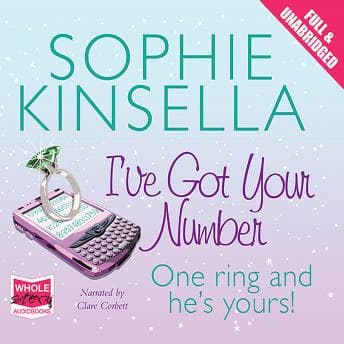
I was supposed to be grading sophomore essays on The Great Gatsby. Instead, I found myself at 11:47 PM, red pen abandoned, completely absorbed in Poppy Wyatt's spectacular unraveling. My wife Denise walked in, saw me grinning at my phone like an idiot, and asked if I was having a stroke. I wasn't. I was listening to Sophie Kinsella describe a woman diving into a hotel lobby trash can to find her engagement ring while a fire alarm blared.
This is not Faulkner. This is not even close to Faulkner. And you know what? I needed that.
The Chaos Theory of Lost Jewelry
The premise is delightfully absurd. Poppy loses her heirloom engagement ring during a hotel fire drill, then her phone gets stolen, and in a moment of pure desperation, she claims an abandoned phone from a trash can. Said phone belongs to Sam Roxton, a buttoned-up businessman who needs it for work emails. What follows is eleven hours of two strangers reading each other's texts, solving each other's problems, and—because this is romantic comedy—falling in love through the most modern of courtships: the shared phone plan.
Kinsella understands something about romantic comedy that many literary snobs (and yes, I count myself among them on most days) forget: the best ones aren't about the destination. We know Poppy and Sam will end up together. The joy is in watching the beautiful disaster unfold.
The text message exchanges are genuinely hilarious. There's a running bit where Poppy starts "helping" with Sam's work emails, and her cheerful, emoji-laden responses to his corporate clients create this wonderful friction between their worlds. She's all exclamation points and warmth; he's all efficiency and barely concealed panic.
Clare Corbett Earns Her Keep
Here's where I have to eat some humble pie. I approached this audiobook with my usual skepticism about contemporary romance narration—too often it's all breathless delivery and no character work. Corbett proved me wrong within the first hour.
Her Poppy is pitch-perfect: scattered but not stupid, anxious but not annoying. There's a scene involving a singing telegram where Poppy has to perform an "All the Single Ladies" parody, and Corbett commits to it with the exact right amount of mortified enthusiasm. You can hear Poppy wanting to die while simultaneously powering through because that's what she does.
But what impressed me more was her Sam. She gives him this clipped, controlled delivery that softens so gradually over the book that you almost don't notice until suddenly he's making jokes and you realize—oh, she's been doing character development through vocal shifts this whole time. That's craft. That's interpretation.
(My students would hate this book, by the way. Too much "feelings stuff." They're wrong.)
Where the Frosting Gets Too Thick
Look, I'm not going to pretend this is perfect. The ending leans into cheese with the enthusiasm of a Wisconsin tourism board. There's a grand romantic gesture that made me roll my eyes even as I was smiling. And if you've read other Kinsella novels, Poppy will feel familiar—she's cut from the same cloth as Becky Bloomwood and every other lovably chaotic heroine in Kinsella's catalog.
Some listeners find this repetitive. I'd argue it's more like a jazz musician returning to familiar themes—you know the structure, but the variations keep it interesting. Still, if you bounced off the Shopaholic series, this probably won't convert you.
The book also requires you to accept some fairly ridiculous premises. Anne of Green Gables operates on similar logic—you either accept that a chatty orphan can charm an entire town, or the whole thing crumbles. Would a businessman really let a stranger keep accessing his phone for weeks? Would Poppy's fiancé really be that oblivious? The answer is no, of course not, but romantic comedy operates on its own physics. Accept the premise or the whole thing falls apart.
Who Should Hit Play (And Who Should Keep Scrolling)
This is for the person who needs a break from heavy lifting. The teacher grading papers at midnight. The commuter who's tired of podcasts about productivity. The reader who secretly loves When Harry Met Sally but won't admit it at dinner parties.
Skip it if you can't turn off your analysis brain, if you need gritty realism, or if you think romantic comedy is a lesser genre. (Those people are wrong, but that's a different podcast episode.)
Class Dismissed
I finished this at 1:30 AM, which meant I was useless during Principal Martinez's curriculum meeting the next day. Worth it. Clare Corbett's performance elevates what could have been disposable fluff into something genuinely entertaining, and Kinsella's understanding of comedic timing translates beautifully to audio.
Is it literature? No. Will it change your life? Probably not. But will it make an 11-hour grading marathon feel like 6? Absolutely.
Sometimes the books we need aren't the ones we're supposed to read. Sometimes they're the ones that make us laugh alone in the dark while our spouses worry about our mental health.