
The Gamble of the Ensemble
Okay, so I was grinding through some procedural terrain generation code (yes, Dr. Patel, I was technically working on my thesis) when I decided I needed something short to break up the Sanderson marathon I've been on. Four and a half hours? Perfect. Classic H.G. Wells? Even better. The man basically invented science fiction. What could go wrong?
I had similar misplaced optimism going into Magic Shop, another Wells piece that didn't quite land for me.
Oh, sweet summer child. Past Tom had no idea what he was walking into.
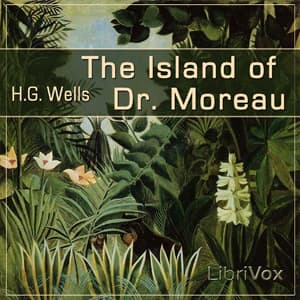
Here's the thing about this particular edition of The Island of Doctor Moreau - it's narrated by "Various Readers." And I mean various. We're talking like fourteen different narrators across under five hours of content. That's... that's a lot of voice changes. It's like if your D&D group decided to take turns reading the module out loud, except some of your friends are professional voice actors and others are that one guy who insists on doing a Scottish accent even though he's from Ohio.
When the Narration Hits, It Hits
The source material here is genuinely incredible. Wells was asking questions about what makes us human back in 1896 that we're still grappling with today. The Beast Folk, Moreau's twisted experiments, the slow breakdown of Prendick's sanity - this is proto-body horror meets philosophical treatise meets survival thriller. It's basically a one-shot campaign setting that went horribly, beautifully wrong. My D&D group would absolutely try to run something like this. (Note to self: pitch "mad scientist island" arc to Jake.)
And when you get one of the good narrators? Chef's kiss. Simon Prebble apparently did a version that people describe as "shadowy and intense," making the whole thing feel visceral and visual. Gordon Griffin brings this subdued Victorian energy that fits the material perfectly. Michael Page - who I've heard do fantasy work before - apparently nails the intrigue. The problem is this edition shuffles between readers like it's a LibriVox project that got slightly out of hand.
The Narrator Roulette Problem
I'm not gonna sugarcoat this: the ensemble approach here is rough. You'll be settling into the atmosphere, really feeling the creeping dread of the island, and then BAM - new voice. Different pacing. Sometimes a completely different energy. One narrator might be delivering the horror with appropriate gravity while the next sounds like they're reading a grocery list. I literally lost track of who was supposed to be speaking in a few scenes because the voice changes didn't match the character changes.
Some listeners reported mispronunciations. Others mentioned voices that were genuinely hard to understand. A few called certain performances "incompetent," which - harsh, but I get it. When you're trying to maintain the creepy atmosphere of a man discovering his host has been surgically creating human-animal hybrids, you don't want to be pulled out by wondering why the narrator suddenly sounds bored.
(And honestly? The dramatized versions with sound effects apparently make it worse, not better. Sometimes less is more, folks.)
Wells Was Playing a Different Game
Here's the thing that kept me listening despite the narrator chaos: H.G. Wells was genuinely ahead of his time. This book tackles Darwinism, eugenics, the ethics of scientific experimentation, what constitutes personhood - heavy stuff wrapped in a pulpy adventure package. The man studied biology, and it shows. The descriptions of Moreau's work are disturbing in that "this feels too plausible" way that good sci-fi achieves.
Wells nails this same unsettling plausibility in War of the Worlds, though that one benefits from better audio production in most editions.
The story itself moves at a solid clip for Victorian fiction. No endless descriptions of drawing rooms here - you're shipwrecked, rescued by a drunk doctor with suspicious cargo, and dumped on a nightmare island within the first chunk of the book. Wells knew how to hook a reader. The pacing is basically progression fantasy for the 1890s - things keep escalating, stakes keep rising, and by the end you're genuinely wondering how (or if) Prendick is getting off this island.
Fair Warning
Content-wise, this isn't light listening. There's animal vivisection described in enough detail to make you uncomfortable (which is the point - Wells was partly critiquing the practice). Violence, disturbing experiments, the whole nine yards. If you're sensitive to animal cruelty themes, maybe read a plot summary first to see if you can handle it.
Also, this is 1896 prose. It's not impenetrable, but it's definitely Victorian. Some people find that charming; others find it a slog. I'm in the charming camp, but your mileage may vary.
The Verdict
Look, I want to recommend this audiobook because the source material is legitimately foundational sci-fi that holds up surprisingly well. But this specific "Various Readers" edition is a gamble. You might get lucky and hit a stretch of great narration. You might also get whiplash from the constant voice changes.
Who should listen: If you can roll with inconsistency for the sake of a classic story - or you're the type who treats janky production like part of the adventure - go for it. Who should skip: If narrator consistency matters to your listening experience, hunt down a single-narrator version instead. The Simon Prebble or Gordon Griffin editions seem to be the ones people actually recommend.
My honest advice? Sample first. Listen to the preview and see if the narrator lottery bothers you.
I finished it. I'm glad I experienced the story. But I probably should've done more research before hitting play. (I also should be writing my thesis right now, but here we are, reviewing audiobooks at midnight instead. Dr. Patel doesn't need to know.)
This is Sanderson-level world-building compressed into Victorian novella form. The execution of this particular audio version just doesn't quite match the brilliance of what Wells put on the page.