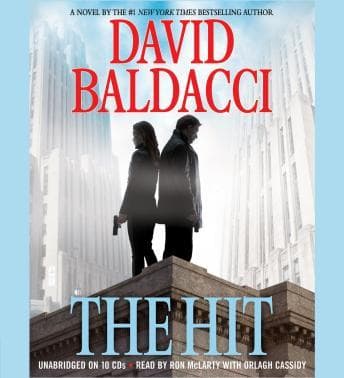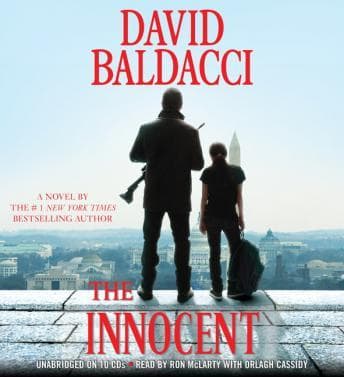

Let me cut to the chase: The Innocent is solid Baldacci. Not his absolute best, but definitely worth your windshield time. I'd put it right alongside End Game in terms of pacing and operational authenticity. I burned through this one on a series of client visits around Austin, and Ranger perked up at least twice during the action sequences—which is basically his version of a five-star review.
So here's the setup. Will Robie is a government hitman—and before you roll your eyes at another assassin protagonist, Baldacci actually does his homework here. The operational details feel right. The way Robie thinks through angles, exits, contingencies—that's how professionals operate. I've worked with guys who think in those patterns. When Robie refuses to pull the trigger on a job that doesn't smell right, his reasoning tracks. That's not Hollywood heroism. That's operational instinct.
Two Voices, One Mission
Ron McLarty handles Robie's chapters and honestly? He nails it. There's this controlled intensity that fits a man who kills people for a living but isn't a sociopath about it. Orlagh Cassidy takes the other perspectives, including Julie—the fourteen-year-old runaway at the center of this whole mess. Some folks apparently found her delivery too direct. I didn't have that problem. The girl's parents just got murdered and she's running for her life. Direct seems appropriate.
(And look, I'll admit it—the grumpy assassin protecting a kid trope has been done to death. But it works here because Baldacci doesn't make it sappy. Robie doesn't suddenly become a father figure. He's a professional who recognizes another survivor when he sees one.)
Twelve Hours That Actually Move
The plot moves. I mean it really moves. This isn't one of those thrillers where you're checking how much time is left because the author's padding chapters with breakfast descriptions. The conspiracy goes deep—we're talking multiple government agencies, cover-ups that reach pretty high up the food chain. Is some of it contrived? Yeah, probably. There's a couple twists where I thought "okay, that's convenient." But I was never bored, and at 12 and a half hours, that's saying something.
Here's where it lost me a bit though. The dialogue can get clunky. There are moments where characters explain things to each other that they would obviously already know—that classic thriller problem where the author needs to inform the reader but hasn't found a smooth way to do it. And there's some sound effects and music layered into the production. Personally? I could do without it. I'm listening at 1.25x anyway, and the little audio flourishes feel like someone doesn't trust me to understand that a scene is tense. I get it. There's shooting. I don't need the dramatic sting.
But the core relationship between Robie and Julie carries the book. She's not a damsel. She's a smart, angry kid who's been through the foster system and doesn't trust adults—for good reason, as it turns out. When Robie starts piecing together why her parents were killed, you actually care about the answer. That's harder to pull off than it sounds.
Audio Intel
The audio quality is clean. McLarty's got this gravelly authority that works for the action sequences, and he shifts gears well for the quieter investigative moments. Cassidy brings genuine emotion to Julie's scenes without overdoing it. The two styles complement each other—you never get confused about whose head you're in.
Who's This Op For?
If you like political thrillers with some actual tradecraft, this delivers. If you need every plot point to be airtight and realistic, you might get frustrated. Baldacci writes cinematic books—they're meant to move fast and hit hard, not hold up under a microscope. Edge operates on the same principle—high-velocity storytelling that trusts you to keep up. For a long commute or a road trip, this is exactly what you want. Enough complexity to keep your brain engaged, enough action to keep you from zoning out in traffic. Skip it if clunky exposition dialogue is a dealbreaker for you.
I've seen this scenario play out in real life—not the conspiracy part, but the way organizations will sacrifice individuals to protect themselves. Baldacci gets that institutional ruthlessness right. The people hunting Robie aren't mustache-twirling villains. They're bureaucrats protecting their positions. That's way scarier, honestly.
Mission Accomplished
Ranger approved this one.