
Fifteen hours and thirteen minutes. That's what I committed to, and I don't regret a single one - but I need to be honest about what you're signing up for here.
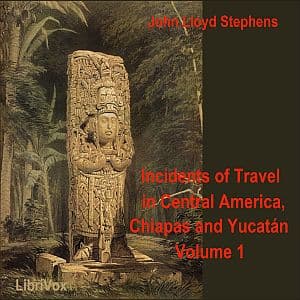
This is John Lloyd Stephens writing in 1838 about stumbling through the Honduran jungle, dodging civil wars, and accidentally rediscovering Mayan civilization. The man was basically a 19th-century disaster tourist with diplomatic credentials and an artist buddy named Frederick Catherwood who sketched ruins while Stephens tried to figure out which revolutionary government he was supposed to present his papers to. That setup alone? I was hooked.
A Diplomat With a Machete and Zero Chill
Stephens has this energy I wasn't expecting. He's funny. Not in a modern way, but in that dry, "I nearly died of dysentery and here's a witty aside about my mule" way that makes 19th-century travel writing either unbearable or deeply entertaining. For me, it landed. When he describes finding that first stone column at Copán - fourteen feet high, carved with a figure "solemn, stern and well fitted to excite terror" - you can feel the man losing his mind in real time. He's standing in front of something nobody in the Western world has paid attention to in centuries, and he knows it. That passage got me through the last twenty minutes of my drive home when I was fighting to keep my eyes open after a brutal night in the trauma bay.
But here's the thing - this is also a product of its time. Stephens is a white American man in the 1830s writing about Indigenous civilizations and Central American politics. He's actually more respectful than you'd expect for the era, genuinely awed by Maya engineering and art, comparing the stonework favorably to Egyptian monuments. But there are moments where you'll wince. He's still a man of his century. I didn't yell at my dashboard over this one, but I did mutter a few times.
The pacing is... well, it's 1838 pacing. He goes on extensive tangents about local governance, road conditions, and the particulars of every single meal and sleeping arrangement. Some of these are fascinating (the civil war stuff is genuinely wild - multiple factions, nobody knows who's in charge, and Stephens is just trying to find literally anyone official to hand his diplomatic papers to). Some of them are not. I'll be real: there are stretches in the middle where I needed to bump the speed up because the political maneuvering got dense in a way that my post-shift brain couldn't track.
Sue Anderson Reads You a Very Long, Very Good Letter
Sue Anderson narrates this as a LibriVox volunteer recording, and I want to set expectations appropriately. This is not a professional studio production with atmospheric jungle sounds and dramatic pauses. It's a clear, steady read by someone who obviously cares about the text. Anderson's delivery is even and articulate - she handles the Spanish place names and the dense 19th-century sentence structures without stumbling, which is no small thing when Stephens is dropping paragraph-long descriptions of architectural details.
What she doesn't do is give you characters. There's no attempt to voice the various generals, guides, or local officials Stephens encounters. It's a straightforward reading, which honestly fits the material - this is one man's account, one man's voice, and Anderson keeps it consistent. But at 15 hours, a single narrator with a single register can get monotonous. I found myself needing to take breaks, which I rarely do. Two or three chapters per shift commute was my sweet spot. Though I'll say this - on the nights when post-shift decompression required something less demanding on my attention, I ended up with Aware: The Science and Practice of Presence queued up as a palate cleanser, which tells you something about the cognitive load Stephens occasionally requires.
Who Should Climb These Ruins
If you're into exploration history, early archaeology, or you've ever been curious about how the Western world "discovered" (yes, quotes) Maya civilization - this is essential primary source material wrapped in genuinely entertaining travel writing. If you've read anything about Copán or Palenque and wondered what it looked like before the tourist infrastructure, Stephens is your guy.
If you need tight pacing and modern narrative structure, this will test your patience. Hard. This is a book that was written in serial installments for Victorian-era readers who had nothing but time and candlelight. You need to meet it where it is.
Perfect for that post-shift decompression when you want something absorbing but not emotionally devastating. After twelve hours of actual human emergencies, I don't always want another thriller. Sometimes I want a guy from 1838 complaining about his mule while accidentally making one of the most important archaeological discoveries of the century.
My mom would love this (she still thinks I should've been a doctor) - she'd appreciate a man who went to medical school, said "nah," and became an explorer instead. Stephens and I understand each other.
Night Shift Prescription
A free LibriVox recording of a genuine classic of exploration literature. It's long, it's uneven, it's occasionally dated in ways that matter - and it's also the real thing. Stephens standing in front of those ruins, knowing he's looking at something extraordinary, trying to find the words. That part never gets old. Worth your time if you have the patience. Carlos found me still sitting in the driveway with the car running, listening to the Copán chapters. I blamed the heat.








![Steve Jobs [unabridged audiobook] audiobook cover](/_next/image?url=https%3A%2F%2Fcovers.audiobooks.com%2Fimages%2Fcovers%2Ffull%2F9788499923406.jpg&w=1920&q=75)