
Every American who's held a security clearance should read this book. And probably half the ones who haven't.
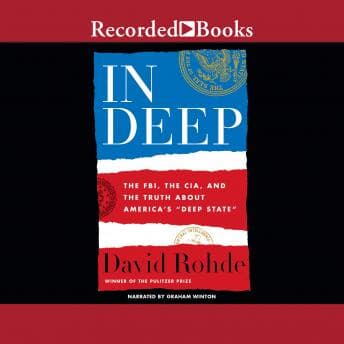
I was up past midnight finishing this one — Linda already asleep, Ranger curled up at my feet, just me and Graham Winton's steady voice walking through fifty years of institutional paranoia, political gamesmanship, and the slow erosion of trust between the people who govern and the people who serve. As someone who spent 25 years taking orders from people whose decisions were shaped by the very agencies Rohde investigates, this one hit personal.
The Briefing You Should've Gotten in Civics Class
Let me cut to the chase: David Rohde does his best work in the first third of this book. The early history of FBI and CIA overreach — COINTELPRO, the Church Committee hearings, the institutional arrogance that let these agencies run operations on American soil against American citizens — is genuinely excellent reporting. Rohde lays out the timeline with the precision of a good intelligence brief. He connects dots between Cold War abuses and the structural problems we're still dealing with today, and he does it without the breathless conspiracy-mongering you get from cable news pundits on either side.
The author clearly did their homework. Rohde's interviews with career CIA operatives and FBI agents give you the ground-level view that most political books completely miss. These aren't faceless bureaucrats — they're people who took oaths, who wrestled with impossible directives, who watched political appointees blow through guardrails and then blame the career staff when things went sideways. I've seen this scenario play out in real life, just at a different level. The colonel who gets blamed for a policy failure that originated three stars above his pay grade. Same dynamic, different acronyms. The institutional loyalty and quiet betrayal that Rohde captures in these career officers reminded me of what Ron Chernow excavates in George Washington — the way men who built something get slowly written out of their own story by the politicians who inherit it.
Where the Convoy Stalls
This is where it lost me — or at least where it lost momentum. The middle stretch covering the Carter through Obama administrations feels like Rohde shifted from investigative journalism to a rushed survey course. Iran-Contra, WMD intelligence failures, Snowden — each of these deserves a book of its own (and has gotten them). Cramming them into what amounts to a fast-forward through four decades means none of them gets the depth the early sections promised. Some listeners have called it a "rushed school report" and honestly, that's not unfair. It reads like Rohde was trying to establish completeness at the expense of the sharp analysis that made the opening sections so good.
The Trump-era material is where things get most interesting again, but also where Rohde's thesis — that Trump and his allies built their own "deep state" operating outside official channels — needed more surgical precision. He makes the argument, and it's not a bad one, but the evidence feels curated rather than exhaustive. For a book that's supposed to cut through partisan noise, there are stretches where I could feel the editorial lean. Not heavy-handed, but present. I'd have respected the book more if it had been even harder on both sides.
Winton Gets the Job Done
Graham Winton narrates this like a seasoned news anchor reading a long-form piece — clear, measured, professional. No theatrics, no weird vocal choices, just clean delivery that lets the material breathe. At 1.25x he's perfectly paced for absorbing dense policy material without your attention wandering. He won't win any awards for dramatic range because this isn't that kind of book, but he doesn't need to. His job is to keep you locked in during a 10-hour policy deep dive, and he does it.
No production issues I noticed. No sound effects, no music, just straight narration. For this kind of material, that's exactly right.
Who Needs This Intel
If you're the type who throws around "deep state" at dinner parties — from either direction — you owe it to yourself to actually understand the institutional history behind the term. Rohde gives you that foundation. If you're a national security professional, a veteran who wants context for the policy decisions that shaped your service, or just someone who's tired of cable news shouting matches and wants actual reporting — worth your time.
If you want a polemic that confirms your existing political views, look elsewhere. Rohde's going to challenge you regardless of which side you're on, even if he doesn't challenge everyone equally.
Skip this if you need action or narrative drive. This is a policy book. A solid one, but still a policy book.
Mission Debrief
Worth your time? Here's the debrief: strong start, saggy middle, solid finish. Rohde's at his best when he's working from primary sources and original interviews rather than summarizing history you can find on Wikipedia. The book's central question — whether career government officials can truly be politically neutral — is one that deserves serious examination, and Rohde mostly delivers, even when the middle sections feel like he's sprinting through material that needed a slower pace. Not a must-listen, but a worthy credit spend for anyone who wants to argue about American institutions with actual facts loaded. Ranger slept through most of it, but he's not much for policy debates.






![Steve Jobs [unabridged audiobook] audiobook cover](/_next/image?url=https%3A%2F%2Fcovers.audiobooks.com%2Fimages%2Fcovers%2Ffull%2F9788499923406.jpg&w=1920&q=75)