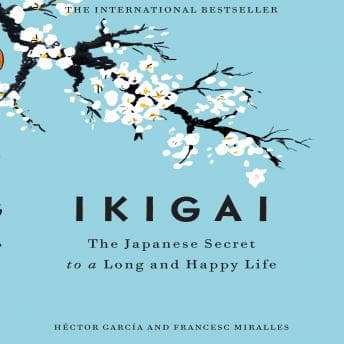

I'm going to be honest with you. I started this audiobook during my morning jog through Cambridge, fully expecting to roll my eyes at another Western interpretation of Eastern philosophy. You know the type - some author spends two weeks in Japan, eats sushi, and suddenly they've unlocked the secrets of the universe.
But here's the thing. García and Miralles actually did their homework. They went to Ogimi, a village in Okinawa with one of the highest concentrations of centenarians on the planet, and they just... listened. As a behavioral psychologist, I found myself nodding along more than I expected. The research actually shows that purpose-driven living correlates strongly with longevity and mental health outcomes. This isn't woo-woo nonsense. It's backed by data.
Walter Dixon's Wise Uncle Energy
Dixon's narration is interesting. He's got this soothing, almost whispering quality - like a wise uncle sharing family secrets over tea. It works for the material. Self-help audiobooks can go wrong in two directions: either the narrator sounds like they're selling you a timeshare, or they're so flat you forget you're listening to anything at all. Dixon threads the needle. His voice is pleasant, conversational, the kind of thing you can have on while cooking dinner without wanting to throw your phone across the room.
(And yes, I was cooking dinner. Palak paneer, if you're curious. My mother's recipe, though she'd say I use too much cream.)
That said - and this genuinely bothered me - the Japanese pronunciation is rough. Like, noticeably rough. For a book literally titled with a Japanese word, you'd think someone would've coached him on the basics. Every time he said "ikigai" or referenced other Japanese terms, I winced a little. It's not a dealbreaker, but if you're someone who cares about cultural accuracy, fair warning.
What the Okinawan Elders Actually Taught Me
Now, the content itself. This is a fascinating case study in how we package wisdom for Western consumption. The book covers the intersection of passion, mission, vocation, and profession - the famous ikigai Venn diagram that's probably already on your Pinterest board. But beyond the concept itself, there's genuinely useful material here about diet, movement, community, and staying mentally engaged as we age. The interviews with Okinawan elders are the heart of the book, and they're lovely.
Psychologically, this tracks. We know from decades of research that having a reason to get up in the morning - a sense of purpose, whatever form it takes - is protective against depression, cognitive decline, and even cardiovascular disease. The book doesn't dive deep into the academic literature (this isn't a research paper, thank god), but the principles are sound.
Where the Framework Falls Short
Here's where I get a little critical, though. At three hours and fifteen minutes, this book still feels padded. There are sections on basic exercise routines and dietary advice that feel like filler - stuff you could find in any wellness magazine. The core insights about ikigai could probably be condensed into a long essay. Some listeners have complained that they finished the book still not knowing how to actually find their ikigai, and... yeah. I get that. The book is better at describing what ikigai looks like than prescribing how to discover your own.
I found myself asking: why does this concept grip Western audiences right now? We're overworked, disconnected, scrolling through our phones at 2 AM wondering what the point of it all is. Ikigai offers a tidy framework, a four-circle diagram that promises clarity. Whether it actually delivers that clarity is another question. My therapist would have thoughts about our tendency to seek external frameworks for internal questions.
Then again, POSITIVE THINKING POWER tries to provide that framework too, though with mixed results.
But you know what? Sometimes a framework helps. Sometimes you need someone to give you permission to ask the question in the first place.
The audiobook format works well here. Dixon's measured pacing matches the contemplative tone. I wouldn't speed it up - this isn't a book you're trying to get through. It's meant to be absorbed. Perfect for a long walk, a slow commute, or that weird 3 PM slump when you're questioning all your life choices. (Just me? Okay.)
Who This Is (and Isn't) For
If you're in a reflective mood, curious about Japanese philosophy, or just need a gentle nudge to think about what actually matters to you - this is worth your three hours. Skip it if you're looking for a rigorous academic treatment of the subject or you'll be annoyed by imperfect pronunciation. Maybe read the book instead. Or find a different book entirely.
The Psychologist's Take
The audiobook won't change your life. But it might make you pause and ask some useful questions. Stillness is the Key does something similar - creates space for reflection rather than prescribing answers. And honestly? That's pretty much all you can ask from self-help.