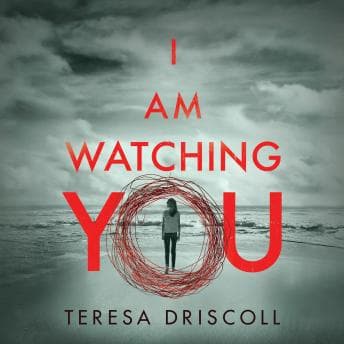

Look, I need to talk about the bystander effect. Not in the abstract, academic way I'd discuss it in my research papers that nobody reads. I mean the visceral, stomach-churning version that Teresa Driscoll shoves in your face within the first twenty minutes of this audiobook.
Ella Longfield sees something. She knows something is wrong. And she does nothing.
I was chopping onions for chana masala when this setup unfolded, and I had to put down the knife. Not because of the onions. Because Driscoll had just constructed the most elegant psychological trap I've encountered in a thriller. The protagonist exhibits classic diffusion of responsibility—that tendency we all have to assume someone else will handle it. Except here, nobody does. And a teenage girl vanishes.
Why Your Brain Will Hate Ella (And Then Hate Itself)
Here's what makes this a fascinating case study in guilt psychology: Ella isn't a bad person. She's a mother. She noticed the red flags—two men, fresh out of prison, chatting up young girls on a train. Her instincts screamed danger. And then... rationalization kicked in. Maybe she was overreacting. Maybe it was fine. Maybe someone else would call.
The research actually shows that the more witnesses present, the less likely any individual is to intervene. Driscoll clearly understands this. She weaponizes it.
Elizabeth Knowelden's narration captures Ella's first-person sections with this quiet, gnawing quality—like someone who can't stop replaying a moment in their head. The shift between Ella's internal monologue and the third-person chapters covering other characters took me a few chapters to adjust to. (Apparently I'm not alone—other listeners mentioned the same thing.) But once you settle into the rhythm, it works. The POV switches become part of the paranoia. You're never quite sure whose perspective to trust.
Everyone's Lying, And I Found Myself Making a Spreadsheet
By hour four, I'd mentally catalogued every character's potential motive. Anna's best friend Sarah? Definitely hiding something. The parents? Keeping secrets that made me pause my run and just stand there on the Cambridge sidewalk, processing. The threatening letters Ella receives? Someone knows she was on that train. Someone is watching.
Psychologically, this tracks. Driscoll—a former BBC journalist—understands how people behave under pressure. The lies aren't melodramatic. They're the small, protective lies we all tell ourselves. What Alice Forgot explores that same gap between the stories we construct and the truth we avoid—though from a completely different angle. The "I didn't see anything" when we saw everything. The "I don't remember" when we remember too much.
What makes this character work compelling is that nobody is purely villain or victim. Even Anna, the missing girl, emerges through flashbacks as complicated—not the perfect green-eyed angel the media portrays. My therapist would have thoughts about how this book handles the gap between public narrative and private truth.
Knowelden's Voice Grows On You (Like Guilt)
Knowelden's British accent suits the material. There's a measured quality to her delivery that mirrors the slow-burn tension—this isn't a breathless thriller. It's a psychological pressure cooker. Some listeners apparently started off not loving her style, but I'd argue that's intentional. Ella isn't meant to be immediately likeable. She's meant to be relatable in the worst way. That uncomfortable recognition of "I might have done the same thing."
The production is clean, no distracting sound effects or music. Just voice and story. At 8 hours 25 minutes, it's the right length—long enough to build dread, short enough that it doesn't overstay its welcome.
A Note on Content
This is a thriller about a missing teenage girl. It goes to dark places. References to abuse, self-harm, and violence are present. If you need content warnings, they exist for good reason here.
Who Should Queue This Up (And Who Should Keep Walking)
Perfect for: Anyone who devours psychological thrillers that prioritize character motivation over cheap twists. If you liked Big Little Lies for the slow unraveling of suburban secrets, this scratches a similar itch. Power of the Dog operates in that same psychological space—characters whose moral compromises accumulate until you can't look away.
Skip if: You want a fast-paced action thriller. This is cerebral. It asks you to sit with discomfort. Also skip if bystander guilt will genuinely ruin your week—Driscoll is effective enough that you might find yourself replaying your own "I should have said something" moments.
The Case File, Closed
I finished this at 2 AM, staring at my ceiling, thinking about every time I've looked away from something I should have addressed. That's not a comfortable feeling. But it's the mark of a thriller that understands human nature—our capacity for rationalization, our talent for selective blindness, our desperate hope that someone else will be the hero.
Ella Longfield is not a hero. She's a case study. And that's exactly why this works.