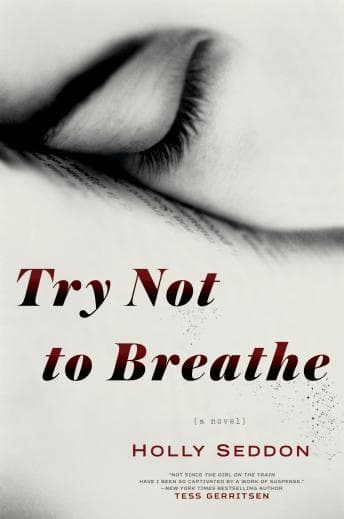

Everyone kept telling me this was basically The Girl on the Train but better, and I'm sitting in my car in the garage at 9:47 PM thinking—okay, prove it. Eleven hours is a commitment when you're stealing time in 25-minute chunks between school drop-off and Sophie's nap strikes. But here's the thing. They were right. And I'm kind of mad about it because now I have another author's backlist to add to my queue.
Two Voices, Two Broken Women, One Devastating Secret
The dual narrator setup here is genuinely clever. Elizabeth Knowelden handles Alex—our alcoholic former journalist spiraling through life—while Katharine Lee McEwan voices Amy, the girl who's been locked in a coma for fifteen years but is still conscious inside her own body. Just... sitting there. Aware. Reliving everything.
I had to pause after that concept fully landed. Sophie was crying for her sippy cup and I'm standing in the kitchen having an existential crisis about consciousness and what it would mean to be trapped in your own mind for over a decade. Normal Tuesday.
The narrators do something smart with pacing that matches their characters. Alex's sections feel urgent, messy, a little breathless—like she's running from something (which she literally is, every morning until her body aches). Amy's sections are slower, more dreamlike, because that's her reality. She's stuck in memory, replaying the past because it's all she has.
Fair Warning: Those Pauses Are... A Choice
Okay, I have to be honest about something. There are moments—particularly with one narrator—where the pauses at the end of sentences stretch just a beat too long. Like she's waiting for dramatic effect but it lands more like "did my phone freeze?" I noticed it most during car time when I was already slightly impatient. During nap time listening, when I was folding laundry and less focused on every breath, it bothered me less.
Some people apparently couldn't get past the breathing sounds either. I didn't find it that distracting, but I also have three kids so my tolerance for background noise is... extensive. If you're someone who notices every audio imperfection, maybe bump this to 1.25x like I do anyway.
The First Half Requires Patience (But It Pays Off)
Here's my real talk: the first half of this book is work. You're jumping between present-day Alex investigating and past-Amy living through the events leading up to her attack, and it takes a while to get your bearings. I almost gave up around hour three—not because it was bad, but because I kept losing the thread every time Lucas needed help finding his other shoe.
But somewhere around the midpoint, everything clicks into place. The structure stops feeling confusing and starts feeling inevitable. You realize Seddon has been laying groundwork the whole time, and suddenly you're invested in a way that sneaks up on you.
The scene near the end where Alex gives this raw, heartfelt speech—I was in the pickup line at Emma's school and had to pretend I had allergies. Made me cry at school pickup. Worth it though.
Who Should Listen (And Who Should Bail)
Perfect for multitasking moms who want something with more teeth than a cozy romance but don't have the bandwidth for a 40-hour epic with seventeen POV characters. This is contained. Two women, one mystery, satisfying ending—exactly what I needed.
Skip it if you need constant action or if ambiguity in the first act makes you crazy. Also skip if audio quality issues pull you out of stories—those pauses are real and some people apparently bailed at 38%. (I get it. We're all just trying to survive.)
The Villain Question
Some readers felt the reveal came out of nowhere. I didn't—there were breadcrumbs if you were paying attention, though I'll admit "paying attention" while also preventing a toddler from eating Play-Doh isn't exactly my strong suit. But the emotional payoff landed for me regardless of whether I'd guessed correctly. Sometimes the who matters less than the why and the how-do-we-prove-it.
Minivan Cry Session: Approved
I finished this over about eight days of stolen moments, and it survived 47 pauses and still made sense. That's genuinely impressive for a thriller with this much structural ambition. Not groundbreaking, but sometimes you don't need groundbreaking. Sometimes you need a book that respects your intelligence, delivers on its promises, and lets you have a good cry in your minivan before you go inside and pretend you're a functional adult. Last Trial gave me that same satisfying cry-in-the-car moment, though for completely different reasons.
My book club will love this (if I ever have time for book club again).