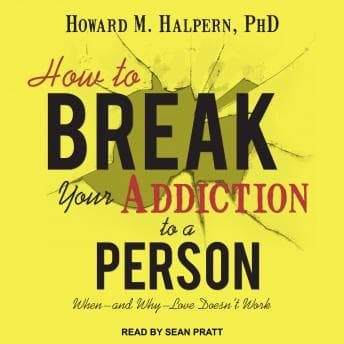

"If the relationship is bad, why is it so hard to leave? Because you're going through withdrawal."
I paused the audio right there. Sitting in my home office at 11:30 PM, staring at a spreadsheet that wouldn't balance, realizing this applies to more than just romance. Bad clients. Failing startups. That gym membership I haven't used since 2019. Halpern hits you with the logic of a CFO auditing a failing division: you aren't staying for the potential future returns; you're staying because you're terrified of realizing the loss.
THE SUNK COST FALLACY OF THE HEART
Halpern frames toxic relationships exactly how I frame a bleeding startup to a stubborn founder. It's not about "destiny" or "passion." It's an addiction cycle. The intermittent reinforcement—the crumbs of affection your partner drops just when you're about to walk out—is the same psychological hook that keeps people playing slot machines.
He breaks down the "why" with brutal precision. We deceive ourselves with phrases like "He really loves me, he just doesn't know how to show it." My parents ran a dry cleaning business for thirty years. If a machine didn't work, they fixed it or junked it. They didn't stand around saying the press machine "meant well." This book forces you to adopt that same operational ruthlessness toward your love life.
THE INEFFICIENCY REPORT
Here's where my 2.0x speed button got a workout. Halpern spends a massive chunk of this eight-hour runtime digging into childhood attachment and "healthy parenting." Look, I get it. Root cause analysis is important. But when you're in a burning building, you don't need a history of arson; you need the location of the exit.
The middle section drags. It loops. It reiterates the same childhood trauma points until I felt like I was trapped in a therapy session that ran over time but I was still getting billed. If this were a slide deck, I'd have cut 40 slides and kept the appendix. The core insights are gold—specifically the tactics for handling guilt trips—but you have to wade through a lot of Freudian swamp to find them.
SEAN PRATT: DISAPPOINTED IN YOUR CHOICES (A COMPLIMENT)
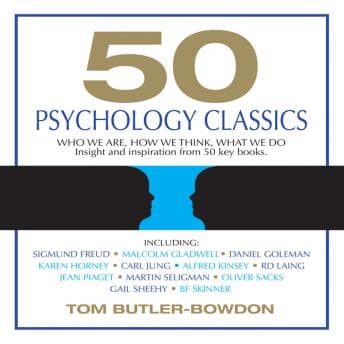
Pratt narrates this like a man who has seen it all and is unimpressed with your excuses. He doesn't do the soft, empathetic "there there" voice that plagues the self-help genre. He sounds authoritative, clinical, crisp. It matches the material perfectly. Pratt brings that same no-nonsense authority to 50 Psychology Classics, where the clinical delivery is exactly what dense material demands. When he reads the sections about power moves and manipulation, his tone is so matter-of-fact that it strips away the romantic drama and leaves you looking at the cold, hard mechanics of your dysfunction.
WHO GETS VALUE HERE (AND WHO DOESN'T)
If you're stuck in a relationship that's bankrupting your spirit—or you keep cycling back to the same type of person—this delivers real ROI. Skip it if you want quick fixes or can't tolerate repetitive deep-dives into childhood psychology.
If the psychological spiral here hits too close to home, What Made Maddy Run approaches the same internal pressure from a completely different angle—and it's the rare book that left me more unsettled than this one.THE BOTTOM LINE ON YOUR BALANCE SHEET
This book is a toolkit for emotional sober living. It's bloated, yes. It repeats itself, absolutely. But if you're actually stuck in a relationship that's draining your reserves, the return on this listen is infinite. Just be ready to hit the skip button when he starts talking about your toddler years for the fifth time.