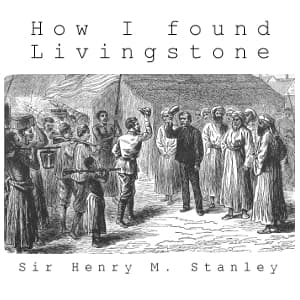

I wasn't expecting to spend my Saturday morning grading sophomore essays on The Great Gatsby while listening to a Victorian explorer describe his porters dying of fever in East Africa. But here we are. Denise was out at her sister's, the coffee was strong, and somewhere around hour three, I stopped marking papers entirely. Stanley had me.
This is why we still read the classics. Not because they're assigned, not because they're "important" - but because a Welsh-American journalist from 1871 can still grab you by the collar and drag you through the African interior with prose that makes you forget you're listening to volunteers read into microphones.
The Man Who Wrote Like He Explored
Stanley's writing is relentless. The man doesn't pause for reflection - he catalogs. Every fever, every mutiny, every village headman who demanded tribute before allowing passage. There's a clinical precision to his observations that my students would probably call "boring" before they realized they'd read fifty pages without stopping. (My students would hate this. I love it.)
What struck me most was Stanley's complete lack of self-pity. He records near-death experiences with the same detachment he uses to describe breakfast. "The fever returned. I took quinine. We marched twelve miles." This is a man who understood that pause is punctuation - he doesn't linger because lingering would be a lie. The expedition didn't linger. Neither does the prose.
The famous "Dr. Livingstone, I presume?" moment? It arrives with almost anticlimactic restraint. After seventeen hours of disease, desertion, and diplomatic negotiations with local leaders, Stanley finds his man and... underplays it. There's something almost British about the restraint, which is ironic given Stanley's complicated national identity.
The LibriVox Reality Check
Let's talk about what you're actually getting with this recording. LibriVox is volunteer-driven, which means you're essentially listening to a literary potluck. Some contributors bring grandmother's heirloom recipe. Others bring store-bought cookies.
The quality varies - and I mean genuinely varies - from chapter to chapter. One reader might nail Stanley's matter-of-fact tone, capturing that journalist's detachment perfectly. The next might stumble over Swahili place names or rush through passages that need breathing room. I found myself adjusting my expectations with each new voice, which isn't ideal but isn't a dealbreaker either.
Here's the thing: I've spent twenty years listening to teenagers read Shakespeare aloud in class. I've developed a tolerance for imperfect delivery. If you're the type who needs polished Audible production values, this will frustrate you. If you can appreciate the democratic chaos of volunteers preserving public domain literature for free - and I genuinely can - then the inconsistencies become part of the experience.
What Stanley Actually Found
The book's real revelation isn't Livingstone. It's the expedition itself. Stanley spends maybe ten percent of the narrative with the famous doctor. The rest is pure Victorian adventure journalism - the kind of detailed, sometimes tedious, often fascinating account of what it actually took to cross East Africa in 1871.
This reminds me of what Hemingway said about writing: the dignity of movement of an iceberg is due to only one-eighth of it being above water. Stanley shows you the whole iceberg. The negotiations for pack animals. The calculation of cloth and beads as currency. The slow attrition of men to disease. If you loved Heart of Darkness, this is its spiritual ancestor - the real thing Conrad fictionalized. That same unflinching look at difficult truths shows up in Adult Children of Emotionally Immature Parents, though the territory being mapped is internal rather than geographical.
There are passages that haven't aged well. Stanley's attitudes toward the African people he encounters range from patronizing to worse, and the colonial assumptions are baked into every page. I won't pretend otherwise. But that's also why this document matters - it's primary source material for understanding how exploration and empire intersected. Worth pausing the faculty meeting for, if only to understand the mindset.
Who Should Make the Trek (And Who Should Stay Home)
If you want a polished audiobook experience with consistent narration, skip this version. Wait for a professional recording, or read the text yourself. But if you're the type who listens at 1.0x because the author chose those words, if you can tolerate variable audio quality for the sake of hearing a genuine historical voice, if you find yourself more interested in the journey than the destination - this works. It's seventeen hours of Victorian expedition journalism, warts and all.
Class Dismissed
I finished it while Denise was making dinner, still not done grading those Gatsby essays. She asked what I'd been listening to all day. "A guy who walked across Africa to ask another guy if he was who he thought he was," I said.
"Was he?"
"Yeah. He was."
Sometimes the classics earn their reputation.








![Steve Jobs [unabridged audiobook] audiobook cover](/_next/image?url=https%3A%2F%2Fcovers.audiobooks.com%2Fimages%2Fcovers%2Ffull%2F9788499923406.jpg&w=1920&q=75)