
Look, I'll be honest with you. I picked this up expecting to be a snob about it.
Patterson gets dismissed in literary circles. We English teachers tend to roll our eyes at the airport bookstore display racks, clutching our dog-eared Faulkner like it's a talisman against commercial fiction. But here's the thing - I was grading sophomore essays on The Great Gatsby at 11 PM, my red pen had run dry, and I needed something that wouldn't require me to think about symbolism. Just for once.
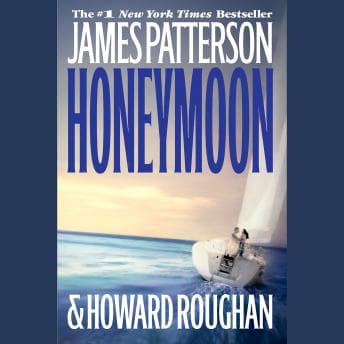
So. Patterson. Honeymoon. Seven hours of FBI agents and femme fatales.
And you know what? The man knows exactly what he's doing.
The Dual-Voice Gambit That Actually Works
Campbell Scott handles John O'Hara's perspective with this measured, slightly obsessive quality - you can hear the FBI agent's brain working overtime, convincing himself he's pursuing justice when we all know he's pursuing something else entirely. Hope Davis, meanwhile, gives Nora Sinclair this cool, almost clinical edge. She's not playing the seductress card too hard. That restraint? It makes her infinitely more unsettling.
What I appreciated - and this is the teacher in me talking - is how the gender-split narration creates instant dramatic irony. We're inside both heads. We know things O'Hara doesn't. We know things Nora doesn't know we know. It's Hitchcock's bomb-under-the-table principle, and Patterson (with Howard Roughan, who deserves co-credit) executes it cleanly.
The Cheese Factor (Let's Not Pretend)
Is it cheesy? Parts of it, absolutely. There are moments where the plot asks you to suspend disbelief so hard you might pull something. Some geographic details don't quite track - Westchester versus Fairfield County gets a little fuzzy, and there's a grave vault situation that had me muttering "wait, that's not how that works" into my empty coffee mug.
But here's what I realized, somewhere around hour four: Patterson isn't trying to write literature. He's writing a ride. And if you approach it as a ride - the way you'd approach a really solid episode of a crime procedural - the implausibility becomes part of the fun.
My students would get this immediately. They don't need every novel to be meaningful. Sometimes you just want to know what happens next. That same propulsive energy drives One Plus One: A Novel, which similarly refuses to let you put it down. I've spent twenty years trying to convince teenagers that Hemingway's iceberg theory matters. Patterson's operating on a different principle entirely: show them the whole iceberg, make it fast, make it twist.
When the Misdirection Actually Earns Its Keep
The red herrings keep coming until the final chapters. I won't spoil anything, but there's a particular misdirection involving O'Hara's investigation that had me - a guy who's read enough mysteries to see most twists coming from three chapters away - genuinely surprised. Not shocked. Not gasping. But pleasantly surprised, which is harder to achieve than you'd think.
The pacing is relentless. This is not a book that lets you drift. (Which, incidentally, made it terrible for grading papers. I kept having to rewind because I'd stopped marking essays entirely and was just... listening. Principal Martinez's budget meeting would've been over in minutes with this in my ears.)
Who Should Queue This Up (And Who Should Pass)
If you need your thrillers to be plausible down to the forensic details, skip this. If you're looking for deep character psychology or prose you'll want to underline, this isn't it. Patterson writes in short chapters, punchy sentences, dialogue that moves. The prose is meant to be consumed, not savored.
But if you want something that grabs you by the collar and doesn't let go for seven hours? If you're stuck in traffic, or powering through housework, or - yes - pretending to pay attention to something you shouldn't be ignoring? This works. It works really well.
I listened at 1.0x because I'm constitutionally incapable of speeding up narration, but honestly? This one could handle 1.25x without losing anything. The sentences are built for speed.
Worth Pausing the Faculty Meeting For
I'm not going to pretend this changed my life or taught me something profound about the human condition. But I finished those Gatsby essays. I stayed awake until midnight. And when Denise asked what I was listening to, I didn't feel the need to apologize.
Sometimes that's enough. Sometimes a book just needs to do its job - entertain you, keep you guessing, deliver on its promises. Honeymoon does exactly what it says on the tin. No more, no less.
My students would love it. And for once, I'm not saying that as an insult.