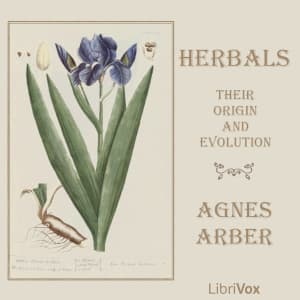

I was debugging a particularly nasty race condition at 11 PM, too wired to sleep but too fried to actually think, when I decided to put on something that wouldn't require plot tracking. A history of botanical textbooks from the 1400s seemed safe. Three hours later, I'm still awake, but now I'm reading Wikipedia articles about medieval mandrake harvesting rituals and wondering why nobody told me pre-scientific botany was this weird.
Bottom Line: Worth your commute if you're into history of science. Skip if you need narrative momentum.
When Botany Was Basically Magic With Footnotes
Agnes Arber wrote this in 1912, and honestly? Her prose holds up better than most modern science writing. She's walking you through these early printed herbals—basically plant encyclopedias from the 1470s onward—and showing how they evolved from "this plant cures melancholy because it looks sad" to actual empirical observation. The transition is gradual and fascinating.
What got me was the sheer confidence of medieval plant lore. These herbalists weren't guessing—they were absolutely certain that peony roots prevented nightmares if worn around the neck, or that fern seeds (which don't exist, by the way) could make you invisible. Arber treats all of this with such dry academic respect that the absurdity lands even harder. She's not mocking them. She's documenting the slow, messy process of science emerging from superstition. Great Influenza tracks a similar evolution in medical science, though with much higher stakes and a tighter narrative arc.
The book is structured chronologically through major herbals—German fathers of botany like Brunfels and Fuchs, the English tradition with Turner and Gerard. If those names mean nothing to you, that's fine. They meant nothing to me either. But Arber makes their contributions specific: who first insisted on drawing plants from life instead of copying degraded copies of copies of ancient illustrations. Who first organized plants by actual botanical features instead of alphabetically. Small innovations that seem obvious now but weren't.
The LibriVox Reality Check
Okay, here's the thing about LibriVox recordings. They're free, they're volunteer-read, and the quality varies wildly. This one is... fine? Multiple volunteers means multiple reading styles, which can be jarring when you're used to a single narrator carrying you through. Some readers are clearly more comfortable with Arber's academic prose than others. Nobody's bad, exactly, but nobody's Ray Porter either.
The bigger challenge is the source material itself. Arber loves her Latin plant names and her references to obscure 16th-century German publications. There are passages that read like citation strings. At 1.5x speed (my default), some of the denser sections blur into academic white noise. I dropped to 1.25x for the chapters on woodcut illustration techniques, which actually turned out to be the most interesting parts—how early printers solved the problem of botanical accuracy with the technology they had.
At 5 hours 26 minutes, this isn't a massive commitment. I finished it across maybe four sessions—two late-night debugging accompaniments, one Saturday morning while reorganizing my cable drawer, one on an unusually empty Caltrain car. It's not a page-turner, but it's not trying to be.
Who Gets Value Here (And Who Won't)
Listen if you've ever wondered how we went from "plants have souls and sympathies" to modern botany. History of science nerds, this is your thing. People who like understanding how knowledge systems evolve. If you've read about the Scientific Revolution and wanted more granular detail on one specific field, this delivers.
Skip if you need narrative. There's no protagonist, no drama, no arc. Arber is a scholar writing for scholars, and while she's readable, she's not entertaining in the conventional sense. Also skip if you need pristine audio production—the LibriVox format means occasional background noise, varying recording quality between chapters, and no sound design whatsoever.
I found myself genuinely appreciating Arber's perspective. She was writing this when the history of science barely existed as a discipline, and she's making an argument that these "primitive" herbals weren't just wrong—they were necessary steps. The errors taught future botanists what to look for. The superstitions funded the observations. It's a generous reading of intellectual history that feels surprisingly relevant to anyone working in a field that's still figuring itself out.
The fact that Arber became the first female botanist elected to the Royal Society in 1946—thirty-four years after writing this—adds a layer. She knew her field's history because she was fighting to be part of its future.
Solid Background Listening When Your Brain Needs a Break
This is basically a really good undergraduate lecture series but for your ears. The science actually holds up—Arber knew her botany and her bibliography. The audio is functional rather than polished. And the subject matter is niche enough that you'll either find it fascinating or completely irrelevant to your life.
I'm glad I listened. I'm not sure I'll revisit it. But the next time someone mentions medieval medicine, I'll have opinions about whether Gerard's Herball was derivative of Dodoens. That's worth something.





![Steve Jobs [unabridged audiobook] audiobook cover](/_next/image?url=https%3A%2F%2Fcovers.audiobooks.com%2Fimages%2Fcovers%2Ffull%2F9788499923406.jpg&w=1920&q=75)