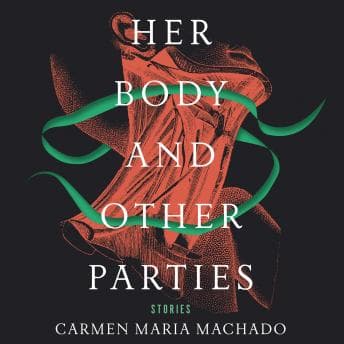

I was grading a stack of sophomore essays on The Great Gatsby at 11:30 PM—my third glass of Merlot in hand—when I started listening to this collection. Perfect setting, honestly. There's something about the quiet desperation of a suburban house at midnight that syncs up with Carmen Maria Machado's brand of domestic horror.
Machado writes the kind of fiction that makes my students uncomfortable because it refuses to answer the question, "But what really happened?" She takes the urban legends we grew up with—like the girl with the green ribbon around her neck—and turns them into meditations on bodily autonomy. If you loved Shirley Jackson but wished she watched more Law & Order: SVU, this is your book. The prose is thick, visceral, and demands you pay attention. Not a background listen. I tried listening while cleaning the gutters and ended up standing on the ladder for twenty minutes, staring at a dead leaf, completely engrossed in a story about women fading out of existence in prom dresses.
## Amy Landon's Cool Detachment (Mostly) WorksGreat narration is about interpretation, but it's also about mechanics. Landon has a voice I'd describe as "coolly detached," which actually works for the dissociation many of these characters feel. I heard that same controlled reserve in Queen’s Gambit, though Machado gives her much sharper knives to carry. In "Inventory," where a woman recounts her sexual history as a virus wipes out humanity, her dry delivery hits the right note of numb survivalism.
But here's the rub: the editing does this book dirty. There are moments where one story ends and the next begins with barely a breath in between. I spent the first five minutes of "Especially Heinous" thinking it was still part of the previous story about the surgery-induced ghost. For a collection that relies so heavily on distinct atmospheres, that lack of pause is a cardinal sin. It's like reading a book where the chapters aren't started on new pages.
There are also some weird technical flubs. At one point, I'm pretty sure Landon reads "cardboard" instead of "cupboard." Small thing, but when you're dealing with prose this precise—where the author has agonized over every syllable—those slip-ups pull you right out of the dream state. The audio equivalent of a typo in a final draft.
## Mr. Williams's Office HoursI'm torn. The stories themselves are magnificent—"The Husband Stitch" alone is worth the price of admission. It reimagines that old scary story about the girl with the green ribbon in a way that made me look at my own marriage differently (don't tell Denise). But the audio presentation feels like a rush job.
Landon is stronger in Protected, which is why I’m blaming the booth more than the woman at the microphone here.If you have the time, read the physical book. The words deserve to be seen. But if, like me, your eyes are shot from reading 120 essays about the Green Light, the audiobook is a decent compromise—just be prepared to check your phone to see which story you're actually in. Skip this if you need clean transitions between stories or prefer horror that explains itself. But if you want fiction that trusts you to sit with ambiguity? Pull up a ladder and a dead leaf. You'll be there a while.