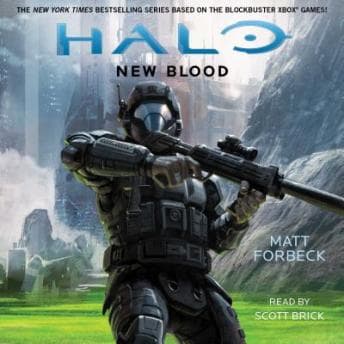

Halo: New Blood is basically a 6-hour character study wearing power armor, and I am absolutely here for it.
I was up way too late reorganizing my board game shelf - you know, that thing where you tell yourself "I'll just alphabetize the small boxes" and three hours later you're debating whether Gloomhaven counts as a legacy game for shelving purposes - when I threw this on. And honestly? It grabbed me harder than I expected a tie-in novel to grab anybody.
Buck Deserves His Own Campaign
Here's what surprised me: Matt Forbeck doesn't just write a military sci-fi romp. He writes Edward Buck as a guy who's been through hell and is trying to figure out what comes next. The whole structure is Buck looking back on his career - from ODST grunt work through the Covenant War to the moment ONI shows up with the Spartan-IV pitch - and it reads like a soldier sitting across from you at a bar, telling you how he got here. First-person narration in tie-in fiction can go sideways fast, but Forbeck nails Buck's voice. He's sarcastic, weary, loyal to a fault, and genuinely funny in that gallows humor way that military characters earn when the author actually respects them.
The progression is satisfying. You start with Buck as this scrappy ODST who's proud of what he does, and by the time the UNSC comes knocking with augmentation offers, the decision actually carries weight. It's not just "do you want to be stronger?" It's "are you willing to leave behind everything that made you who you are?" That's a D&D character arc right there. That's the fighter multiclassing into paladin and wondering if he's still the same person.
And look - the book bridges ODST and Halo 5, so if you played those games, you're getting the connective tissue that the games themselves never bothered to give you. Buck's relationship with his squad, the tension with the Rookie's fate, the complicated thing with Veronica Dare - it all gets space to breathe here in a way that cutscenes never allowed.
Scott Brick in a Drop Pod
Scott Brick is one of those narrators who's won basically every award that exists - five Audies, a Grammy nom, sixty-something Earphones Awards - and you can hear why. The man knows how to handle action. When Buck's squad is dropping into a hot zone, Brick ratchets up the intensity without going full theater kid about it. He keeps the pacing tight during firefights and pulls back during the quieter reflective moments.
Here's my honest take though: I don't have a ton of specifics on how he differentiates individual squad members vocally, and in a book with a tight-knit fireteam, that matters. Buck's first-person voice is strong and consistent - Brick gives him this grounded, slightly rough military cadence that fits perfectly. But I'd be lying if I said I could tell you exactly how his Mickey sounds versus his Romeo. It's a single-narrator production with no sound effects or music, so it's really just Brick and the prose doing all the heavy lifting. For a 6-hour listen, that's fine. For a 20-hour epic, I might want more.
Who's Dropping In and Who Should Stay on the Pelican
If you're a Halo fan who played ODST and wondered what happened to Buck's crew? This is mandatory. If you don't like info-dumps, this isn't for you (but you're wrong). Forbeck weaves in enough lore context that newcomers won't be totally lost, but let's be real - this book rewards investment in the universe. The emotional beats hit harder when you know what New Mombasa looked like, when you remember fighting through those streets. Nightfall pulls off something similar in the Isaac Asimov universe—it rewards existing fans with deeper lore connections while still working as a standalone story.
If you're coming in cold with zero Halo knowledge, you'll get a solid military sci-fi novella about a soldier facing an identity crisis. Not bad. But you'll miss about 40% of what makes it land.
My D&D group would love this - specifically the guy who always plays the grizzled veteran fighter who insists on having a backstory longer than the campaign itself. This IS that backstory.
Roll for Initiative on That Credit
At just over 6 hours, this is a lean listen. No fat on it. I read this instead of writing my thesis, and I don't regret a single minute. It's not Sanderson-level world-building - it's operating inside an established sandbox - but Forbeck plays in that sandbox with genuine affection and craft. Buck feels like a real person making a real choice, and that's more than most tie-in fiction ever manages. Worth your time if you're in the ecosystem. Just maybe catch it on sale if you're not already invested in the lore.