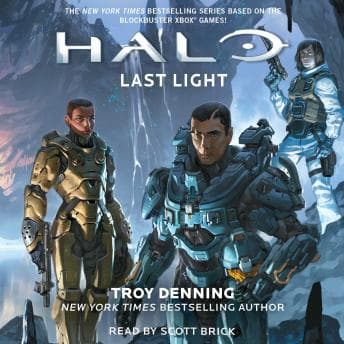

Look, I'm just gonna say it: Halo novels shouldn't work as well as they do. We're talking about books based on a video game where you shoot aliens and occasionally flip a Warthog for fun. But Troy Denning gets it. He actually *gets* what makes the Halo universe compelling beyond the shooty bits.
I burned through this one during a marathon thesis-avoidance session (Dr. Patel, if you're reading this, I was definitely working on my literature review). Twelve hours of military sci-fi murder mystery instead of procedural generation research? Worth it.
When Your Spartans Get Tangled in Red Tape
The setup here is genuinely clever. Post-war UNSC shows up on Gao to investigate some Forerunner tech, bodies start dropping in the cave systems, and suddenly you've got a jurisdictional nightmare between military brass and local law enforcement. Veta Lopis—a Gao detective who absolutely does not trust the UNSC—gets assigned to investigate murders that might involve Spartans. *Spartans.* You know, the seven-foot-tall supersoldiers in power armor who could snap her like a twig.
The tension between Veta and Blue Team is where Denning shines. Fred-104 is trying to complete his mission while also cooperating with an investigation that might implicate his people. There's this constant push-pull of military objectives versus civilian authority, and Denning doesn't make either side cartoonishly wrong. The Gao government has legitimate grievances. The UNSC has legitimate security concerns. Everyone's operating with incomplete information and the bodies keep piling up.
This is Sanderson-level world-building for the Halo universe. I got similar vibes from the political complexity in A Feast for Crows, where post-war factions are all jockeying for position with their own legitimate grievances. Denning actually thinks through what post-Covenant War politics would look like—the Insurrectionists didn't just disappear, the colonies have complicated relationships with Earth, and not everyone sees the UNSC as liberators.
The Scott Brick Situation (Let's Address the Elephant)
Okay. Scott Brick. The internet has Opinions about this man, and they're... polarized. Some folks call his Halo narrations "top notch." Others say he has "the personality of a brick." (The pun writes itself, and yes, I'm ashamed I laughed.)
Here's my honest take: Brick's style is military-functional. He's not doing theatrical character work—this isn't Steven Pacey giving you twelve distinct personalities. His delivery is consistent, professional, and a bit flat. For a military thriller with lots of tactical chatter and formal dialogue? It works well enough. For the emotional beats between characters? It's... adequate.
The lack of strong voice differentiation between characters can get confusing during rapid dialogue exchanges. I found myself rewinding a few times to figure out who was speaking. Not ideal when you're trying to track a murder mystery with multiple suspects.
A Whodunit That Actually Plays Fair
I appreciate that Denning plays fair with the whodunit elements. The killer reveal isn't pulled from nowhere—the clues are there if you're paying attention. Though honestly, I was too busy nerding out about the Forerunner tech implications to properly detective my way through it. (My D&D group would be disappointed. I'm usually the one who spots the plot twist three sessions early.)
The pacing does drag in the middle section. There's a lot of political maneuvering and committee meetings that, while narratively important, don't exactly set the pulse racing. The action sequences hit hard when they come, but you'll wade through some slower chapters to get there. Red Rising has a similar rhythm—intense action punctuated by slower strategic maneuvering—though Pierce Brown keeps the pacing tighter overall. At nearly twelve hours, this isn't a quick listen.
Who Should Gear Up (And Who Should Stay on the Pelican)
If you're already invested in Halo lore, this is essential reading. The Blue Team characterization adds depth to Spartans beyond "efficient killing machines," and the post-war political landscape is genuinely interesting. If you loved *Ghosts of Onyx* or the Kilo-Five trilogy, you'll find familiar quality here.
New to Halo novels? Maybe start elsewhere. *Last Light* assumes familiarity with Spartan programs, Covenant factions, and UNSC structure. You won't be completely lost, but you'll miss layers.
And if you can't stand Scott Brick's narration style—and some people genuinely can't—this won't convert you. His approach is consistent across Halo titles, so if previous books grated, this one will too.
Roll for Thesis Procrastination
Denning delivers a solid military mystery that respects both the source material and readers who want more than just action sequences. The Forerunner tech has actual consequences, the political intrigue has teeth, and the Spartans feel like people rather than walking weapons.
Brick's narration is the weak link, but it's not a dealbreaker. Think of it like a competent dungeon master who reads the boxed text well but doesn't do voices. The story's strong enough to carry the weight.
Now if you'll excuse me, I have a thesis to pretend to work on while actually starting the next book in the series.