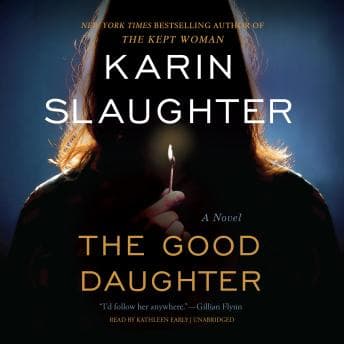

Standing over a pot of dal tadka at 7 PM on a Tuesday, waiting for the mustard seeds to pop, and I'm absolutely frozen. Not because I forgot the recipe (impossible, it's in my DNA), but because Karin Slaughter has just dropped a bomb in my ear and I can't move to turn the burner down.
(My mother always says listening to "murder stories" while cooking poisons the food with bad energy. She might be right this time. Sorry, Mom.)
I just finished The Good Daughter, and frankly, I need a drink. Or a session with my own therapist. Probably both.
Trauma as Engine, Not Decoration
Look, I analyze fictional characters for a living—well, mostly for fun, but don't tell the tenure committee. Usually, thrillers rely on what I call "Plot-Induced Stupidity." You know the type: the protagonist goes into the dark basement because the plot needs them to get bonked on the head.
This isn't that.
Slaughter actually understands trauma. Like, really understands it. Two sisters, Charlie and Sam, went through hell twenty-eight years ago. A school shooting. A home invasion. The death of their mother. It's a lot. Most authors would use that as simple backstory flavor text. Here? It's the engine.
Charlie exhibits this fascinating, heartbreaking freeze response that has calcified into her personality over decades. She's the "good daughter" because she's still trying to fix what broke when she was a kid. As a psychologist, watching her navigate her relationship with her father—Rusty, a defense attorney who is arguably the most complex, infuriating narcissist I've read in years—was compulsive. A longitudinal case study on how secrets rot a family from the inside out.
Kathleen Early's Sisterhood of Scars
I hadn't listened to Kathleen Early before. (I know, I know, she narrates all of Slaughter's books. I'm late to the party.)
She is terrifyingly good.
Here's the thing about narrating sisters: it's easy to make them sound like caricatures. The "wild one" and the "responsible one." Early doesn't do that. She plays the history between them. When she voices Charlie, there's this heaviness, a weariness in the tone that sounds like someone who has been holding her breath for thirty years. It's the kind of nuanced character work I haven't heard since Silent Woman, where the narrator had to carry similar psychological weight. Then she switches to Sam, and the edges get sharper, more defensive.
And the flashbacks? Yikes. Scenes involving children in extreme peril. Early delivers these with a breathless, jagged pacing that made my heart rate spike. My Fitbit actually congratulated me on my "workout" while I was just chopping onions. That's how visceral the performance is.
A Fair Warning (Seriously)
I need to be real with you guys. This book is brutal.
I read dark stuff. I analyze the criminal mind. But the opening chapters are a lot. We're talking graphic violence, sexual assault, and the kind of cruelty that sticks to your ribs. It's not gratuitous—it serves the psychological profile of the story—but it is heavy.
If you're the type of listener who wants a cozy mystery where a cat solves a crime and everyone drinks tea, run away. This is not that. But if you're like me—fascinated by resilience, by the weird ways the human brain rewires itself after tragedy, and by the question of why we hurt the people we love—then you have to listen to this.
Just maybe don't do it while you're cooking. I burned the garlic. It was worth it.