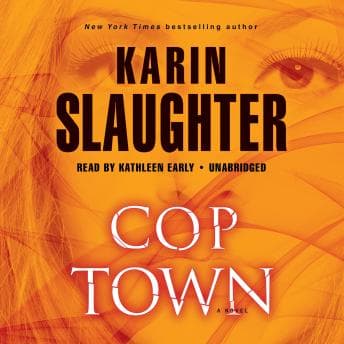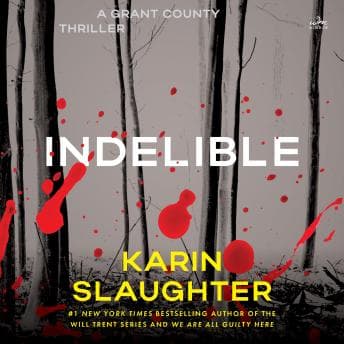

What happens when the people who are supposed to protect you become the ones trapped and bleeding out on the floor?
I was driving home after a brutal night shift - we'd had three codes back to back, and I was running on caffeine and spite - when this audiobook grabbed me by the throat and didn't let go. A hostage situation in a police station. Kids involved. And Sara Linton, a medical examiner, watching her ex-husband bleed out while armed men control everything. As someone who's actually worked a code, who's been in rooms where seconds matter and chaos reigns, Karin Slaughter gets it. The panic. The way your training kicks in even when your hands are shaking. The horrible math you do in your head about who you can save.
The Voice That Got Under My Skin
Kathleen Early's narration is the reason I almost missed my exit. Twice. Her southern drawl isn't performative - it's lived-in, the kind of accent that makes you trust a character before they've done anything to earn it. And when the tension ratchets up? She doesn't go big and dramatic. She goes quiet. Controlled. Like someone who's seen enough trauma to know that screaming doesn't help anyone.
The thing that really got me was her consistency with the characters. This is the fourth Grant County book, and Early knows these people. Jeffrey's stubborn authority. Sara's competence masking her fear. When the narrative shifts between the present-day hostage crisis and flashbacks to an earlier crime, Early adjusts her tone so subtly you might not even notice - but your gut does. The past feels warmer, more naive. The present is all sharp edges.
When the Timeline Clicks
Slaughter does this thing where she weaves two timelines together, and honestly, it could be a mess. But it works. The flashbacks aren't just backstory dumps - they're pieces of a puzzle you don't realize you're solving until suddenly you do. I was about seven hours in, stuck in traffic because apparently everyone in Phoenix forgot how to drive, when something clicked and I actually said "Oh, that's why" out loud. To no one. In my car. Night shift energy.
The pacing is relentless without being exhausting. There are moments to breathe, but they're earned. And the violence - look, I work in a trauma center. I've seen gunshot wounds. I've watched people die. Slaughter doesn't shy away from the reality of what bullets do to bodies, but she's not gratuitous about it either. It's clinical when it needs to be. Emotional when it needs to be. What Alice Forgot hit me the same way - that balance between emotional precision and gut-punch moments. (Carlos asked why I was crying in the car. I blamed allergies. He didn't believe me.)
The Scene I Can't Shake
There's a moment - I won't spoil it - involving one of the children in the hostage situation. My stomach dropped. Not because of gore or shock value, but because Slaughter understands that the worst horror is the anticipation. The knowing something terrible might happen and being powerless to stop it. Early's narration during this section was so controlled, so measured, that it made everything worse. In the best possible way.
The medical details are accurate. Finally. When Sara assesses Jeffrey's wounds, when she makes decisions about triage and intervention, it's not Hollywood nonsense. It's what an actual medical professional would do. I didn't yell at my dashboard once. (Okay, once, but it was about a minor procedural thing, and I'm willing to let it slide because everything else was so solid.)
Who's This For?
If you're sensitive to violence or hostage situations, skip this one. But if you want a thriller that respects your intelligence, that trusts you to handle darkness without holding your hand, that features a narrator who absolutely nails every single character? This is not a light listen. It's not background noise for folding laundry. Silent Woman was the same - demanded every bit of my focus, no multitasking allowed.
Clocking Out
Night shift approved. My mom would love this - she's always asking for "something exciting" to listen to during her morning walks. (She still thinks I should've been a doctor, but at least we can bond over crime thrillers now.)
Thirteen hours flew by. I actually sat in my driveway for twenty minutes to finish a chapter before going inside to make breakfast. The kids thought I was on a work call. I let them believe it.