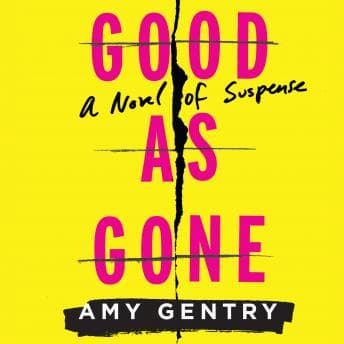

Let me cut to the chase: Good As Gone had me second-guessing myself in a way I haven't experienced since trying to confirm identities at checkpoints in Fallujah. Is she the daughter? Isn't she? Amy Gentry keeps yanking that thread just when you think you've got it figured out. But - and this is a significant but - the book nearly lost me around the midpoint when the narrative structure goes from intriguing to borderline disorienting.
I finished this one on a late Tuesday night, sitting on the back porch with Ranger while Linda was already asleep. Couldn't stop even though I had an early client meeting. That says something about the hook of this story, even if the execution wobbles.
The Identity Shell Game That Actually Works
Here's what Gentry gets right: the central premise isn't just "is this girl really Julie?" - it's the way Anna, the mother, desperately wants it to be Julie while simultaneously cataloging every inconsistency. That psychological tug-of-war is the engine of this book, and it runs hot for the first few hours. The backwards-chaining narrative - where you're piecing together what happened to Julie during those eight missing years through fragmented reveals - is genuinely clever. It's not a gimmick. It serves the story's obsession with identity and survival.
What surprised me is that this isn't really a mystery about finding a kidnapper. It's about what happens to a family after trauma hollows it out. The guilt Anna carries for sleeping through her daughter's abduction, the way the other daughter basically becomes invisible, the father who retreated into academia - Gentry nails the specific ways people fracture. I've seen families of soldiers who didn't come home do exactly this. Everybody grieves differently and nobody's grief fits together anymore. Language of Flowers cracked me open in a similar way — that same specific grief of a family hollowed out by absence, where everyone's surviving but nobody's actually together.
The vengeance angle the NYT review mentions? It sneaks up on you. By the time you understand what's really driving the plot, you're already invested enough to follow it even when the structure gets messy.
Where the Mission Goes Sideways
This is where it lost me - or nearly did. Around the halfway mark, the story splinters into multiple timelines and perspectives, and Gentry doesn't always signal the transitions clearly. In print, you'd have chapter breaks and maybe different fonts. In audio, you've got Karen Peakes doing her best, but her character differentiation is minimal enough that I had to rewind twice to figure out whose head I was in. One moment I'm with Anna processing her doubts, and then suddenly I'm in a completely different time period with a character whose voice sounds nearly identical.
Peakes does some smart things - there's a deliberate vagueness she brings to Julie's sections that keeps you off balance about her credibility. That's effective. Her portrayal of Anna's emotional swings between joy and suspicion is genuinely good work. But when you've got a novel that's already playing shell games with identity and timeline, and the narrator isn't giving you strong vocal markers to differentiate POV shifts, you're asking a lot of your listener. I was focused and it still got confusing. If you tried this while multitasking? Forget it.
Some listeners apparently found the whole back half confusing rather than suspenseful, and I get it. There's a fine line between withholding information for tension and withholding it because your structure can't quite support the weight of what you're doing. Gentry crosses that line a few times. Not fatally, but enough that I noticed.
A Debut That Punches Above Its Weight (Mostly)
For a first novel, this is impressive. Gentry clearly did her homework on trauma, on the psychology of missing persons cases, on how families reconstruct themselves around absence. The ending pulls several threads together in a way that recontextualizes earlier scenes - I actually went back and relistened to a couple of early chapters after finishing, which is something I almost never do. That's the mark of a plot that rewards attention.
At 7 hours and 41 minutes, it's a reasonable commitment. Not bloated. The pacing issues in the middle aren't about length - it's structural confusion, not padding. Big difference.
Peakes' narration lands around a 3 for me. Competent, occasionally graceful, but the similar-sounding characters in a book that depends on you knowing exactly who's talking? That's a real problem. A full cast or even a second narrator for Julie's sections would've elevated this significantly.
Who Should Gear Up For This
If you like identity thrillers where the psychology matters more than the body count - think Tana French territory - this is worth your time. If you need action-driven pacing or crystal-clear plotting, you'll get frustrated around hour four. Definitely not a background listen. This demands your attention or it'll punish you for wandering.
Worth your time? Here's the debrief: Good As Gone is a smart, ambitious debut that's about 80% successful. The central mystery is genuinely unsettling, the family dynamics ring true, and the ending lands. The structural confusion in the middle and Peakes' too-subtle vocal differentiation knock it down from great to good. Ranger fell asleep during the slow stretch in the middle, but he perked up for the last two hours. I trust his instincts.