
"I will never forget you."
That's the meaning of a single pink carnation. And somewhere around hour seven, driving home after a brutal night shift where we lost a nineteen-year-old to a motorcycle accident, I understood why Diffenbaugh chose to include that flower dictionary at the end. Some pain doesn't have words. Sometimes you need petals instead.
The Foster Care System Done Right (Finally)
As someone who's actually worked with kids aging out of the system—we get them in the ER more than anyone wants to admit—this book made me want to throw things. In a good way. In a "finally someone gets it" way.
Victoria Jones is not likeable. She's prickly, self-sabotaging, and makes decisions that had me muttering "girl, no" at my steering wheel multiple times. But here's the thing: she's accurate. I've held the hands of eighteen-year-olds who aged out with nothing but a garbage bag of belongings and zero idea how to exist in a world that never taught them they were worth existing in. Victoria's inability to accept love, her assumption that every good thing is temporary, her pushing away the people trying to help—that's not naivete. That's survival instinct formed by a system that failed her at every turn.
Diffenbaugh, who's a foster mother herself, doesn't romanticize any of it. The verbal and physical abuse Victoria experienced isn't presented for shock value. It's woven into who she became. The way she flinches from touch. The way she hoards food. The way she can communicate through flowers but not through words.
About That Narrator Situation
Okay. Tara Sands. I need to be honest here.
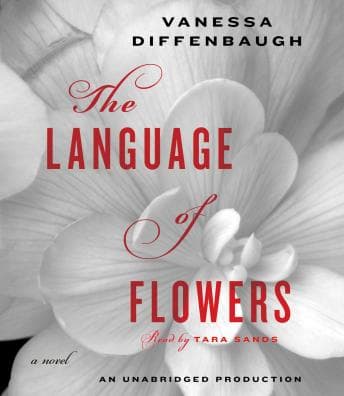
Some listeners have called her voice flat and monotone. I get it. There are stretches—especially in the middle hours—where the pacing drags and her delivery doesn't help. But here's my take after almost eleven hours with this woman's voice in my car: the flatness works for Victoria. This is a character who has deliberately numbed herself to survive. Sands captures that guardedness, that careful emotional distance, in a way that felt intentional rather than lazy.
The subtle tone shifts between characters are there if you're paying attention. Elizabeth's warmth versus Victoria's clipped responses. Grant's quiet steadiness. It's not dramatic voice acting—you're not getting different accents or theatrical performances. But for a story this internal, this focused on one woman's damaged psyche, I think a more theatrical approach would have felt wrong.
That said—and I say this with love—this is not a background listening book. I tried folding laundry during one chapter and missed an entire emotional beat. This one demands focus. Night shift approved, but only on the drive home when you're tired enough to be emotionally vulnerable anyway.
Why the Flower Language Actually Works
I was skeptical. Victorian flower meanings as a plot device? Sounded precious. Sounded like something my mom would love (she still thinks I should've been a doctor and also has opinions about centerpieces).
But Diffenbaugh makes it work. The flowers become Victoria's emotional vocabulary—thistle for misanthropy, white roses for unworthiness, rhododendron for danger. When she can't say "I'm scared" or "I love you," she says it in bouquets. And the mysterious vendor at the flower market—without spoiling anything—represents everything Victoria has trained herself not to want.
There's a painful secret from her past that the book slowly unravels, and when it finally clicked into place, I was sitting in my driveway for an extra ten minutes. Carlos asked why I was crying in the car. I blamed allergies. He didn't believe me.
Who Should Listen (And Who Should Skip)
This is for people who can handle slow emotional builds. If you need action beats every chapter, you'll be frustrated. If you want a protagonist who makes smart choices, you'll want to throw your phone. But if you've ever worked with trauma survivors, if you've ever loved someone who couldn't accept love back, if you understand that healing isn't linear—this will gut you in the best way.
Skip it if you need your audiobooks as background noise. Skip it if flat narration genuinely ruins your experience (some people are more sensitive to this than others, and that's valid). Skip it if you're looking for a thriller with plot twists—the "Mystery & Thriller" genre tag is misleading. This is literary fiction with some suspense about the past, not a whodunit. Though if you're looking for an actual whodunit with solid pacing, Great Train Robbery delivers on that front without the emotional devastation.
Night Shift Prescription
I've listened to a lot of books about damaged women finding their way. Most of them feel written by people who've never actually met one. This doesn't. Diffenbaugh knows the foster care system from the inside, and it shows in every detail—the caseworkers who mean well but can't save everyone, the group homes that break kids instead of healing them, the way aging out feels like being pushed off a cliff.
The medical details are accurate. Finally. (There's a brief hospital scene that didn't make me yell at my dashboard, which is high praise.)
Perfect for that post-shift decompression when you need something that acknowledges life is hard but doesn't pretend hope is impossible. Just maybe have tissues ready. And don't try to multitask.