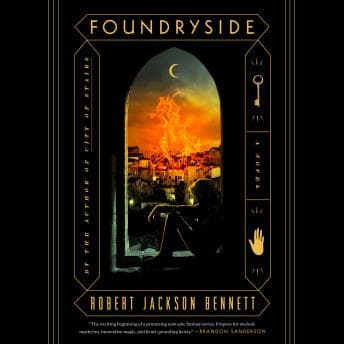

I was reshelving our horror section at the branch - it was one of those dead-quiet Tuesday afternoons where the only sound is the HVAC humming and the occasional page turn from the one retiree who comes in to read newspapers - and I had Foundryside going through my earbuds. Figured a fantasy heist novel would be safe background listening for work hours. Reader, I stopped reshelving. I stood there holding a copy of The Shining in one hand and completely forgot what shelf it belonged on because I was too busy trying to understand how scriving works.
Bennett built something here that my horror-obsessed brain wasn't expecting to love this much.
Magic That Functions Like Malware
So here's the thing about Foundryside's magic system - scriving is basically programming reality. You convince objects they're something else through coded commands. A wheel that believes it's rolling downhill when it's on flat ground. A door that thinks it can't be opened. The implications are horrifying in the best way, and Bennett knows it. This isn't whimsical fantasy magic. This is corporate-controlled technology wielded by merchant houses who've essentially built a capitalist dystopia on the back of reality manipulation. The Merchant Houses don't just use scriving - they weaponize it, monopolize it, and the Commons (where everyone else lives) are basically left to rot. That particular flavor of power-hoarding dressed up as civilization is something I kept bumping into in Queen of Cursed Things too - the rot always runs up from the infrastructure, never down from some lone villain.
What got me, as someone who spends most of her time thinking about systems of control in horror, is that Bennett's scriving is indistinguishable from the kind of existential dread I chase in the genre. When you start learning what the founders actually DID with scriving - what they did to people, what they did to gods - it crosses into body horror territory. Sancia herself is a product of that violation. She can "hear" scrived objects, feel what they feel, because someone carved commands into her skull as a child. That's not just a cool power. That's trauma weaponized into utility. Shirley Jackson walked so this author could run, honestly.
Tara Sands and the Clef Problem
Okay, let's talk about Tara Sands, because the listener community is genuinely split on this one, and I get why.
Sands gives Sancia this sarcastic, slightly rough-edged read that I think absolutely works. There's a youthful quality to her voice that some people are going to clock as "too young" or even whiny for a hardened thief. I didn't hear it that way - I heard a young woman who's been through hell and covers it with sharp edges and dark humor. The sarcasm in Sands' delivery gave Sancia a personality I'm not sure she'd have had if I'd just read the text cold.
But Clef. Clef is where things get divisive, and I understand both sides. Clef is a sentient key (yes, really, and yes, it works) who talks directly into Sancia's mind, and Sands gives him this sort of... buddy-comedy energy? It's distinct, it's committed, but it borders on cartoonish in spots. I personally thought the humor landed - there's a scene where Clef is essentially narrating his own existential crisis about being a key that had me grinning on the library floor - but I can see how listeners wanting a darker, grittier tone would find it jarring. The narrator commits. That's rare. Whether the commitment works for you is going to depend entirely on your tolerance for personality in your fantasy.
Her villain voices, though? No complaints. She scrubs the girlish qualities clean for older male characters, drops into something colder and more aristocratic for the Merchant House types. The class divide between Commons and campo characters is audible before anyone says a word about it.
This Is a 19-Hour Commitment - Here's Whether You Should Make It
Nearly twenty hours. That's significant. And Foundryside earns most of that runtime, but not all of it. The first few hours are a propulsive heist that hooked me immediately. The middle stretches into worldbuilding and political maneuvering that - while genuinely interesting - could've been tighter. By the final act, though, Bennett starts pulling threads together in ways that made me realize those slower sections were load-bearing walls. The revelations about the founders, the history of scriving, what Clef actually is - it pays off.
This is not a background listen. The scriving system alone demands your full attention, because Bennett doesn't hold your hand through the technical stuff. If you zone out for ten minutes, you'll miss a crucial piece of how the magic works and then a plot point three hours later won't land. I learned this the hard way and had to rewind twice.
If you scare easily - well, this isn't horror exactly, but there are moments of genuine dread when the implications of rewriting reality sink in. If you love systems-based magic, heist structures, and worlds where the power dynamics are baked into the infrastructure itself (literally), you need this. If you're allergic to sarcastic protagonists or narrator voices with strong personality, you might want to sample first.
Shelving This One in the "Will Absolutely Discuss on the Podcast" Section
My podcast listeners are going to love this - not because it's horror, but because it understands something horror understands: that the scariest thing in any world is the system that was built to control you, and the people who built it. Bennett wrote a fantasy novel that functions like a tech thriller wrapped in a heist wrapped in an existential crisis about the nature of reality. Tara Sands delivered it with enough personality to make 19 hours fly (mostly). And somewhere in the middle of it all, a sentient key had a more compelling identity crisis than most human characters I've listened to this year.
Shirley (my cat) was unimpressed. I was rearranging my entire TBR to get to book two.