
I was stress-cooking biryani at 10 PM on a Tuesday—the kind of elaborate, multi-step dish you make when your brain needs to focus on something other than the three grant proposals sitting in your inbox—when Aria Nichols started using genealogical DNA databases to track down a dead woman's baby daddy. And I stopped stirring the rice because I needed to process what I was hearing.
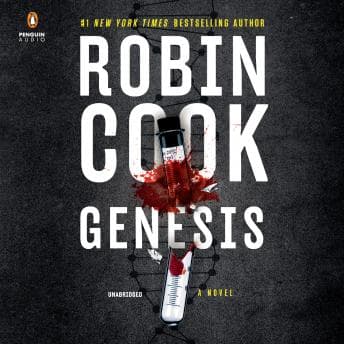
Robin Cook has been writing medical thrillers since before I was born. Coma came out in 1977. The man essentially invented this genre. So when he tackles the ethical minefield of ancestry DNA databases being used for criminal investigation—the same technology that caught the Golden State Killer—I expected psychological complexity. I expected moral wrestling. What I got was... something more frustrating.
The Protagonist Exhibits Classic Impulsivity Without Consequence
Let me be clear about Dr. Aria Nichols: she is a fascinating case study in how NOT to write a morally gray character. She's described as "brilliant but enigmatic," but the research actually shows that readers found her "absolutely dreadful." And honestly? I get it. There's a difference between a character who makes questionable choices and wrestles with them, and a character who barrels through ethical boundaries like they're suggestions.
Aria decides to use fetal DNA to trace the biological father through ancestry websites. This is genuinely cutting-edge, genuinely controversial, and genuinely interesting territory. But Cook doesn't seem interested in the psychological weight of that decision. What makes a person comfortable violating privacy norms? What does it cost her internally? The book treats these questions as obstacles to plot rather than the actual story.
My therapist would have thoughts about this character. Many thoughts.
When Procedural Accuracy Replaces Character Development
Cook knows his medicine. He's a physician. The autopsy details feel authentic, the medical examiner's office politics ring true, and the DNA genealogy process is explained with the confidence of someone who actually did his homework. But here's the thing about medical thrillers: the procedure isn't the point. The people doing the procedure are the point.
Laurie Montgomery, the Chief Medical Examiner, gets sidelined by a "medical emergency" partway through—which feels like a structural choice to give Aria room to be reckless without adult supervision. Psychologically, this doesn't track. A character with Laurie's experience wouldn't just step back when a case starts looking like murder. The convenience of it pulled me out of the story.
Compared to Cook's earlier work, where the medical horror felt visceral and personal, Genesis reads more like a Wikipedia article on forensic genealogy with a thriller wrapper. I Am Pilgrim manages that balance beautifully—the procedural details serve the character's psychology rather than replacing it. The information is here. The soul is missing.
George Guidall: A Legend Having a Rough Day
Here's where I have to be honest about something complicated. George Guidall has won three Audie Awards. He's narrated over 800 books. The man is a legend. And some listeners found him "short of breath and sounding like an old man with a gruff voice about to have an asthma attack."
I landed somewhere in the middle. His delivery is professional—you can hear the decades of experience in his pacing, his clarity, his commitment to the text. But there are moments where his voice does sound strained, where the gruffness makes certain passages harder to parse. For an eleven-hour listen, that inconsistency matters.
The production is clean. No weird audio artifacts, no jarring transitions. Just a single narrator doing his best with material that doesn't always give him much to work with. When your protagonist is hard to like and your plot is more procedural than emotional, even a legend can only do so much.
Who Gets Their Eleven Hours' Worth (And Who Doesn't)
If you're fascinated by forensic genealogy and want a fictional exploration of how that technology might be used (and misused), this delivers on that specific promise. Longtime Robin Cook readers who enjoy his methodical approach to medical settings know what they're getting.
But if you need characters whose psychology makes sense? If you want to understand why someone would risk their career and ethics to solve a case? If you're like me and you analyze fictional characters like case studies? Skip this one. You'll spend more time frustrated than engaged.
The premise is genuinely timely. The execution is... competent. That's the most honest thing I can say.
Case Notes: Closed
I finished the biryani. I finished the audiobook. One of those things turned out better than expected. The other left me with questions I don't think the author intended me to ask—like why Aria's recklessness is framed as heroic rather than examined as a character flaw.
Robin Cook understands medicine. He understands technology. What he doesn't seem to understand, at least in this book, is that the most interesting thing about a character who breaks rules isn't that they break them—it's why they can't stop themselves. If It Bleeds explores that compulsion in ways that actually made me understand the protagonist's choices, even when I disagreed with them.