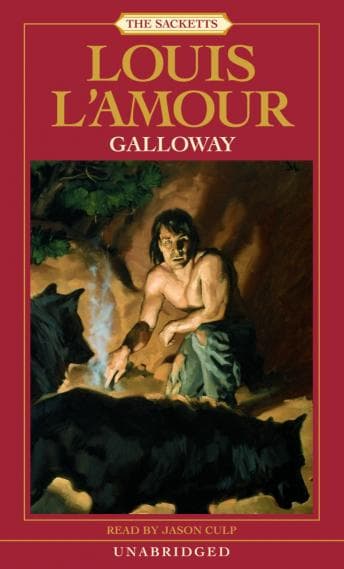

"As long as other Sacketts lived, they would not fight alone."
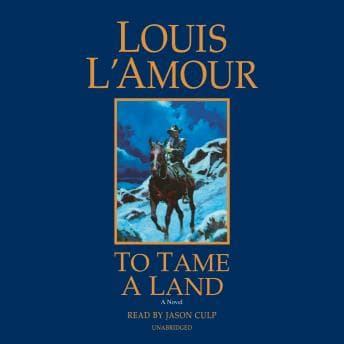
That line kept rattling around my head while I was up late cleaning my Beretta at the kitchen table - Linda already asleep, Ranger curled up by my feet, and Jason Culp's voice coming through the speaker at 1.25x. There's something about a Louis L'Amour western at midnight that just fits. The quiet of the house, the smell of Hoppe's No. 9, and two brothers trying not to die in the San Juans.
Let me cut to the chase: Galloway is a solid, lean western that does exactly what it sets out to do in five hours flat. It's not the best Sackett novel - I'd put Sackett's Land and Lonely on the Mountain ahead of it - but it scratches an itch that not many modern authors can reach anymore.
Two Brothers, One Bad Situation, Zero Quit
The setup is classic L'Amour. Flagan Sackett gets captured and tortured by Apaches, escapes into some of the roughest country in Colorado, and has to survive long enough for his brother Galloway to track him down. Once they reunite, they decide to ranch in a valley that the Dunn clan has already claimed - and the Dunns aren't the "let's talk this over" type. They're the "kill you and leave your body for the coyotes" type.
What I appreciated is how L'Amour handles the survival sequences. Flagan doesn't just magically escape and ride to safety. He's beat up, dehydrated, making bad decisions born from desperation. I've seen guys in worse shape than Flagan make similar calls in the field - you don't think straight when your body's shutting down. L'Amour understood that, and it shows in those early chapters.
The fistfights have that signature L'Amour grit to them - no choreographed movie nonsense, just men hitting each other hard and trying not to fall down. The gunfights are quick and messy, which is how they actually were. Nobody's fanning a six-shooter from fifty yards here.
Where the Trail Gets a Little Muddy
Here's the thing that almost lost me. The POV shifts are disorienting. The book is called Galloway, but it's really Flagan's story for most of the runtime. Then L'Amour will jump perspectives without much warning, and around the second half, the narrative gets a bit loose - like a patrol that's lost its rally point. You're following one thread, then suddenly you're somewhere else with different characters, and you have to spend a minute reorienting.
At five hours, this isn't a huge problem. You can power through the confusion pretty quickly. But if you're listening while driving through Austin traffic on I-35 (which, let's be honest, requires at least 40% of your brain), you might miss a transition and wonder how you ended up with different characters.
I also wanted more from the Dunn clan. They're set up as serious antagonists, but they never quite develop beyond "bad men who want the land." L'Amour's best villains have a logic to them, even if it's twisted. The Dunns are more functional than memorable.
Culp Gets the Job Done
Jason Culp narrates like a man who's spent time around westerns. His voice has that weathered quality that suits the genre - not theatrical, not overdoing the frontier dialect. He reads L'Amour the way L'Amour should be read: straight ahead, no fancy tricks.
That said, I couldn't always tell characters apart by voice alone. When the Sackett brothers are talking to each other, or when multiple Dunns are in a scene, you're relying on dialogue tags more than vocal distinction. Not a dealbreaker, but it means this isn't the kind of audiobook where you can zone out and still track who's speaking.
The pacing at 1.25x felt right. L'Amour's prose is already economical - the man never used three words where one would do - so speeding it up doesn't lose anything. At normal speed, I think it might drag slightly between action sequences.
Who Saddles Up for This One
If you're working through the Sackett series, this is required reading. Period. If you're new to L'Amour, don't start here - grab Sackett's Land or The Daybreakers first. But if you already know and love the family, Galloway delivers what you're after: brotherhood, survival, frontier justice, and the quiet understanding that some land is worth bleeding for.
Skip it if you need complex character arcs or morally ambiguous storytelling. L'Amour dealt in clear lines between right and wrong, and that's either your thing or it isn't. I will say this - when I want the opposite end of that spectrum, where nothing is clean and every character is hiding something, Wife Between Us is the kind of read that makes you question every assumption you brought into it.
Ranger's Ears Perked Up for the Gunfights
Worth your time? Here's the debrief: It's a five-hour western that hits its marks without wasting your time. Not L'Amour's finest hour, but the man's B-material is still better than most writers' A-game in this genre. The Sackett family loyalty angle hits different when you've served with people you'd take a bullet for. I wouldn't spend a full credit on five hours of content, but if you catch it on sale or stream it through your library app, mission accomplished. Ranger approved this one - mostly during the Apache escape sequence, when he lifted his head and actually looked at the speaker. High praise from a dog who's heard everything.