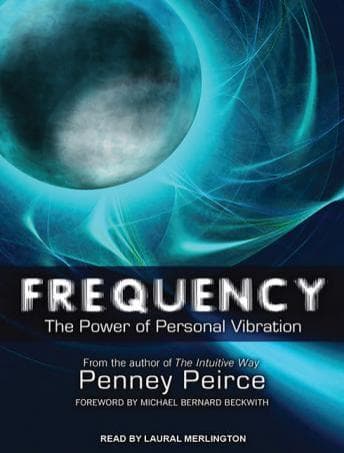

Look, I'll be upfront: the phrase "personal vibration" makes my McKinsey-trained brain itch. When a book tells me everything is energy and I need to find my natural frequency, I instinctively reach for a peer-reviewed study. So when I queued this up during a late-night hotel stay in Austin - couldn't sleep, consulting gig from hell, figured I'd hate-listen to something Jenny recommended - I expected to be writing a very different review.
Here's where it gets complicated. I didn't hate it. I didn't love it either. But I kept listening, which at 11 hours and 10 minutes is saying something for a book I almost DNF'd three times.
The Consulting Framework Nobody Asked For
Peirce structures this thing like a slow-drip curriculum. She walks you through what she calls the "home frequency" concept - essentially your baseline energetic state before external noise messes with it - and then builds outward into exercises about clearing emotional clutter and raising your awareness. If you strip away the spiritual language, about 40% of this maps surprisingly well onto mindfulness and cognitive behavioral principles I've seen Fortune 500 companies pay serious money for. Reframing negative thought loops. Noticing when you're operating from fear versus clarity. Getting quiet enough to hear your own signal through the noise.
My parents didn't call it "raising their vibration." They called it staying focused when the rent was due and three pressing machines broke in the same week. But the underlying discipline - stilling your mind, choosing your response, not letting chaos set your emotional thermostat - that tracks. This is what my parents did instinctively. Now it has a TED talk. Glennon Doyle covers similar ground in Untamed — that same idea of getting back to some uncluttered authentic self — but she anchors it in lived experience rather than metaphysical mechanics, which lands harder for me.
The problem is the other 60%. Peirce makes claims about energy and universal laws that she presents as fact without much scaffolding. There's a section where she discusses how your thoughts literally change physical reality at a quantum level, and I could feel my internal BS detector flashing red. Not because consciousness isn't interesting - it is - but because the leap from "mindfulness helps you make better decisions" to "your vibration attracts specific outcomes" is enormous, and she crosses it like it's a crack in the sidewalk.
Laural Merlington Does the Heavy Lifting
Here's the thing that kept me from bailing: Merlington's narration. She has this warm, measured delivery that somehow makes the more out-there concepts feel less like a late-night infomercial and more like a patient conversation. She doesn't oversell. Where a lesser narrator might've gone full breathless-guru on the exercises, Merlington reads them straight, almost clinical. It works. When Peirce asks you to close your eyes and feel into your body's energy, Merlington's tone is calm enough that you almost - almost - want to try it.
That said, 11 hours is a LOT of this tone. Around the middle chapters, the pacing flattens out and Merlington's consistency becomes a double-edged sword. There's no gear shift. No variation to signal "okay, this next part is the really important stuff." It all arrives at the same measured pace, which made my attention drift during a few stretches. My 2.0x speed couldn't save this one. Even at 1.5x, some sections felt like they were circling the same concept with slightly different vocabulary.
Who Gets Value Here (and Who Should Run)
If you're already in the mindfulness/spiritual growth space and want a structured framework for thinking about energy and intention, this delivers. The exercises are the best part - practical, specific, and actually usable if you're willing to engage. Multiple listeners mention wanting the physical book to reference back to the exercises, and I get it. Audio isn't the ideal format for a book that periodically asks you to stop and do inner work.
If you're a skeptic like me looking for evidence-based approaches to self-improvement, this will frustrate you. There are genuine insights buried in here about attention management and emotional regulation, but they're wrapped in metaphysical claims that Peirce treats as settled science. I kept wanting her to say "I believe" instead of "this is how it works."
Jenny would say I'm being harsh. Jenny is right. But also - 11 hours. That's a serious time investment, and I think you could get 70% of the actionable value from the exercise sections alone.
The Efficiency Verdict
Bottom line: there's a decent 4-hour book hiding inside this 11-hour listen. The core framework about clearing mental noise and operating from your authentic baseline is genuinely useful - I've recommended similar concepts to founders burning out on reactive decision-making. But the metaphysical padding and repetitive pacing make this a hard sell at full credit price. Skip to the exercises. Skim the philosophy. And maybe don't listen in a hotel room at midnight unless you want to accidentally fall asleep during a guided energy meditation and wake up confused at 3 AM. Not that I'd know anything about that.