
"The medical examiner has determined that the victims died from drinking coffee laced with rat poison."
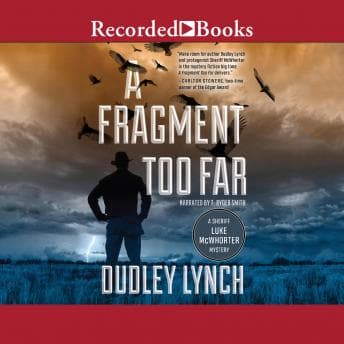
Nine physicists. Dead. At a dinner party. And I'm supposed to believe this isn't about the alleged Roswell debris hidden somewhere in small-town Texas? The protagonist exhibits classic cognitive dissonance here—he's a Yale Divinity School graduate working as a West Texas sheriff, and honestly, that psychological profile alone had me hooked before the first body dropped.
I finished this one during a particularly long cooking session. I was attempting my mother's dal makhani recipe, which requires about three hours of stirring and gives you plenty of time to think about why nine scientists would agree to attend the same dinner party in rural Texas. Research shows that group dynamics in high-stakes intellectual communities are fascinating, and Dudley Lynch—a journalist with bylines in everything from Newsweek to the Times—clearly understands this. His fiction debut reads like someone who's spent decades watching how smart people behave badly.
The Contradiction at Sheriff McWhorter's Core
What makes this character compelling is the tension he carries. A divinity school education paired with law enforcement? That's not just quirky backstory—that's a man trained to ask questions about meaning AND evidence. Luke doesn't just investigate the murders; he's essentially conducting a psychological autopsy of an entire county's seventy-year obsession with secret societies and extraterrestrial artifacts.
And look, I'm a skeptic by training. My therapist would have thoughts about characters who believe in UFO debris. But Lynch does something clever here—he doesn't ask you to believe. He asks you to watch Luke believe, or not believe, or struggle with the question. That's way more interesting than a straightforward answer.
The relationship with FBI agent Angie Steele adds another layer. Psychologically, this tracks—he needs someone who operates in his world of evidence but brings federal resources and a different investigative lens. Their dynamic isn't just romantic subplot filler. It's functional.
T. Ryder Smith's Ominous Weight
Okay, so here's where I have to be honest about something. T. Ryder Smith's narration is... a lot. And I mean that as both compliment and warning.
His delivery is dramatic and clear—no mumbling, no weird pacing issues, clean production throughout. That commitment to darkness reminded me of the atmospheric weight in Just After Sunset: Stories, where the narration has to carry some genuinely unsettling material. When the story gets dark (and nine poisoned physicists is pretty dark), he leans INTO that darkness. Every revelation feels weighted. Every clue sounds like it matters.
But—and this is a real but—some listeners have found his ominous tone makes the more complex concepts harder to follow. I get it. When you're trying to wrap your head around secret societies and paranormal physics and small-town Texas politics, having everything delivered like a prophecy of doom can be exhausting. I found myself rewinding a few sections, not because the writing was unclear, but because Smith's intensity made me feel like I'd missed something crucial.
For me? I actually liked the weight. This is a story about dead scientists and seventy-year conspiracies. It should feel heavy. But if you prefer narrators who vary their emotional register more—lighter moments feeling actually light—you might want to sample first.
The Slow Burn That Paid Off
This is a fascinating case study in how to structure a mystery debut. Lynch doesn't rush the reveals. He lets you sit with the questions: Is the fragment real? Who benefits from finding it? Why has this county been weird for seven decades?
At nearly nine and a half hours, there's room to breathe. The pacing isn't breakneck thriller territory—it's more True Detective than Jack Reacher. If you're craving that same methodical intensity but with more political intrigue, Transfer of Power delivers on the slow-burn investigative front. (The "True Detective meets X-Files" comparison in the marketing is actually pretty accurate, which is rare.) You're watching a methodical investigator piece together something that might be supernatural, might be human greed, might be both.
I found myself asking: why does a community protect a secret for seventy years? What psychological mechanisms sustain that kind of collective silence? Lynch seems to understand that conspiracy isn't just about the thing being hidden—it's about the relationships and power structures that form around the hiding.
The plot stays genuinely unpredictable. I thought I knew where it was going around the four-hour mark and I was wrong. That's increasingly rare in mystery fiction, and I appreciated it.
Who's This For?
Best for: Anyone who likes their mysteries with a paranormal edge but grounded in actual investigation. Fans of police procedurals who want something weirder. People who enjoy character-driven narratives where the protagonist's psychology matters as much as the clues.
Skip if: You need humor to balance darkness. You prefer fast-paced, action-heavy thrillers. Heavy narration styles genuinely bother you—and you'll know if they do.
Content-wise: violence, poisoning, murder. Nothing gratuitous, but the body count is real.
Case Notes
I'm genuinely curious where Lynch takes this series. Sheriff Luke McWhorter is the kind of protagonist who could sustain multiple books—complex enough to grow, competent enough to trust. And honestly? I want to know more about what's buried in Abbot County.