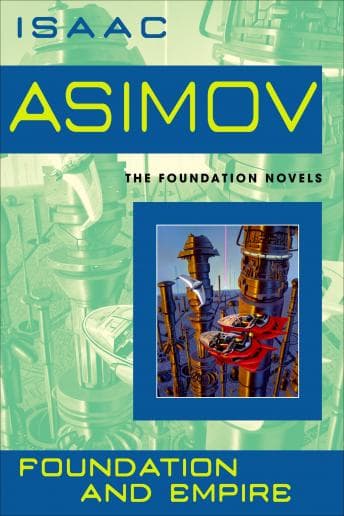

So I'm knee-deep in my thesis code at 2 AM, debugging a procedural dungeon generator that keeps spawning rooms inside other rooms (don't ask), and I've got Foundation and Empire playing in my headphones. And here's the thing - Asimov's psychohistory is basically procedural generation for civilizations. Math predicting the fall of empires. My advisor would probably say I'm procrastinating. I call it research.
Look, if you haven't read the Foundation series, what are you even doing with your sci-fi life? This is the ur-text. The template. Every galactic empire story you love - Star Wars, Dune's political machinations, half the space operas on your shelf - they're standing on Asimov's shoulders. And this second book? This is where things get interesting.
When Psychohistory Meets Its Match
The first half deals with the dying Empire making one last desperate grab at the Foundation. Standard stuff if you've read the first book - clever Foundation folks outmaneuvering military might with economic and political judo. It's satisfying in that "I told you so" kind of way.
But then the Mule shows up.
And honestly? The Mule is one of the best curveballs in classic sci-fi. Here's Seldon's whole deal - he can predict the behavior of masses of people, not individuals. Psychohistory only works because individual randomness averages out. But what happens when one person is so anomalous, so outside the statistical norm, that they break the model?
Asimov keeps hammering at that same fear in Nightfall, where an entire civilization's model of the universe quietly falls apart in a single night.As someone trying to build systems that generate coherent content from random inputs, this hit different. The Mule is basically an edge case that crashes your entire algorithm. Except the algorithm is the future of humanity.
Scott Brick's Baritone Does the Heavy Lifting
Scott Brick has this rich baritone that just works for golden age sci-fi. It's got that slightly formal, slightly theatrical quality that matches Asimov's style. Some people complain he's melodramatic - and yeah, there's a bit of a lilt at the end of some sentences that I can see bugging certain listeners.
But here's my take: Asimov's writing is already pretty formal. It's dialogue-heavy, idea-driven, not exactly naturalistic. Brick's slightly elevated delivery actually fits. He's not trying to do gritty realism because the source material isn't gritty realism. It's a story about mathematicians predicting the future and traders manipulating planetary economies. A little drama is appropriate.
Brick gets a much darker workout in Book of the Dead, and the tonal whiplash coming off Foundation is genuinely fun.The character voice distinction thing - okay, fair criticism. Brick doesn't do wildly different voices for each character. If you're coming from something like a Graphic Audio production or Steven Pacey's First Law (and if you haven't listened to Pacey, seriously, go do that), you might find it flat. But for Asimov? I think it works. The ideas are the characters here.
Two Halves, Two Speeds
At 9 and a half hours, this isn't a massive commitment. But I'll be honest - the first half moves slower than the second. The General Bel Riose storyline is good, but it's kind of predictable if you've internalized how Foundation stories work. You know the Foundation will win. The question is just how.
The Mule section though? That's where I stopped half-paying attention while coding and actually paused my work to listen. The mystery of who the Mule is, how he's doing what he's doing, the psychological horror of what he represents - it's genuinely gripping. Asimov was writing this in the 1940s and it still holds up.
I'd recommend 1.25x speed for the first half if you're an experienced audiobook listener. The second half? Normal speed. You'll want to catch everything.
I keep Caves of Steel around for nights when I want Asimov's big ideas without the galactic sweep - it's a murder mystery, and it moves fast.Roll for Initiative (Or Don't)
If you're into hard sci-fi, political intrigue, or you want to understand where half of modern space opera comes from - this is essential listening. My D&D group would eat this up, especially the ones who like when I run intrigue-heavy campaigns.
Skip it if you need action every chapter, if you want visceral combat and explosions, or if Asimov's somewhat dry prose style doesn't work for you on the page. Brick's narration is good, but it's not going to transform the source material into something it isn't.
Also worth noting: some listeners mentioned the audiobook has those old "continue on the next disk" instructions baked in. Minor annoyance, but it's there.
Thesis Complete (Eventually)
This is classic sci-fi done right in audio form. Not flashy, not revolutionary in its production, but solid and engaging. I finished my thesis chapter that night. (Okay, I finished it the next night. But I thought about finishing it.)