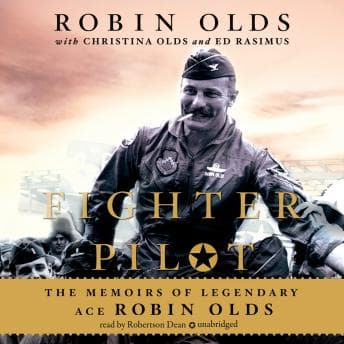

I was up at 2 AM last Tuesday finishing a logo rebrand that was due in the morning - one of those nights where you've had too much coffee and Diego is sleeping on your mouse hand - and I had this playing through my headphones. Seventeen hours with Robin Olds. Seventeen hours with a man who shot down enemy planes before he could legally rent a car. And here's the thing: I'm a romance-and-memoir girl. I don't read military history. My abuela's idea of war stories was the telenovela where the general's wife poisoned his mistress. But this book? This book felt like sitting next to a grandpa at a bar who starts telling you about his life and suddenly it's four hours later and you haven't moved.
Let me be honest about something first. This is not my genre. At all. I picked this up because a designer friend who does work for veterans' organizations told me it would wreck me emotionally, and I trust her judgment the way I trust Julia Whelan's pacing. She was right. The last time a recommendation that good wrecked me in an entirely different direction was Bossypants — another memoir where the voice on the page made me feel like I was sitting across a table from someone who had genuinely lived their life at full volume.
The Man Who Flew Like He Had Nothing to Lose
Robin Olds was... a lot. West Point grad, college football hall of famer, married a Hollywood pinup, grew a nonregulation mustache in Vietnam basically as a middle finger to military bureaucracy. On paper he sounds like a character someone invented for a movie that would get rejected for being too unbelievable. But Robertson Dean reads his memoirs in this steady, unwavering first-person voice that strips away the legend and gives you the man. There's a scene - flak is exploding outside the canopy, and the way Dean narrates it, his voice doesn't spike into action-movie drama. It stays controlled, almost eerily calm, the way I imagine you'd actually have to sound inside a cockpit when the sky is trying to kill you. That restraint hit me harder than any dramatic performance would have.
What surprised me is how much this book is about loneliness. Not in an obvious way. But Olds became a squadron commander at twenty-two. Twenty-two! I was dropping out of art school at twenty-two and crying in a Whataburger parking lot. He was leading men into combat. And the weight of that - the way he talks about motivating pilots in Vietnam by putting himself under junior officers, by saying essentially "teach me, I'm one of you" - that's not macho posturing. That's a man who understood people. The leadership stuff reads almost like a love language, honestly.
Robertson Dean and the Art of Not Overselling Death
Here's where I want to compare, because I think it matters. I listened to Educated by Tara Westover last year (Julia Whelan narrating, obviously), and the thing that made that memoir land was how the narrator let the horror speak for itself. Robertson Dean does something similar here. His voice is deep - genuinely booming in a way that fills your headphones - but he keeps this ageless, stoic quality whether Olds is describing shooting down his twelfth enemy aircraft or talking about his marriage to Ella Raines falling apart. There's no shift into "sad voice" or "angry voice." He trusts the words. The anger is there in what Olds wrote, not in what Dean performs, and somehow that makes the patriotism feel earned instead of performative.
Is it perfect? I mean - seventeen hours is a commitment, and there are stretches in the middle about military politics and chain-of-command stuff that made my eyes glaze. I won't pretend otherwise. This isn't a book that made me ugly-cry (my spreadsheet remains unchanged), but it did something different. It made me feel a kind of quiet awe. Like watching someone live with so much intensity that you feel a little embarrassed about your own Tuesday night logo crisis.
Who Needs This in Their Ears
If you're a military history person, you probably already own this. But if you're like me - if you read memoirs for the emotional architecture, for understanding how a human being is built - this is worth the listen. It's not a rainy Sunday book. It's a "driving alone on I-35 at night" book. A "staring out the window during a thunderstorm" book. You need space for it.
Skip it if you need romance or interpersonal warmth as your primary fuel. The Ella Raines marriage stuff is there but it's not the heart of the book. The heart is the sky. The cockpit. The terrible beautiful math of staying alive.
Abuela wouldn't have loved this one - she would've said "mija, why are you listening to war things" - but she would've understood the part about a man who refused to be small. She always understood that.
My Heart Is in That Cockpit Somewhere
I went into this expecting background noise for a long design night. I came out of it having genuinely rethought what courage looks like at 1.0x speed. That mustache alone deserves a credit.




![Steve Jobs [unabridged audiobook] audiobook cover](/_next/image?url=https%3A%2F%2Fcovers.audiobooks.com%2Fimages%2Fcovers%2Ffull%2F9788499923406.jpg&w=1920&q=75)