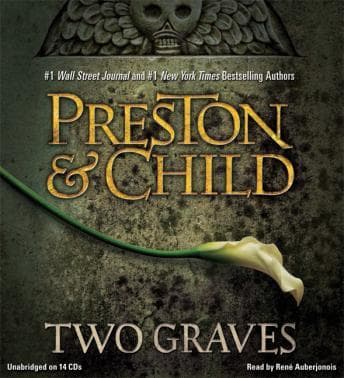

What happens when the person you loved most turns out to be someone you never actually knew?
That question kept circling my brain at 1 AM while I was stress-cooking chicken tikka masala and listening to Pendergast unravel twelve years of grief-soaked lies. I should've been finishing revisions on my paper about narrative identity construction in trauma survivors. Instead I was standing over a simmering pot, spatula in one hand, completely wrecked by a fictional FBI agent's emotional breakdown. My therapist would have thoughts about this character. She'd also have thoughts about me using audiobooks to procrastinate, but that's a separate session.
The Psychology of a Man Who Married a Stranger
This is a fascinating case study in attachment disruption. Pendergast — normally the coldest, most cerebral character in modern thriller fiction — gets absolutely gutted here. Preston and Child take their hyper-competent protagonist and do the cruelest possible thing: they don't threaten his body or his intellect. They threaten his narrative. The story he told himself about his own marriage. About Helen.
The protagonist exhibits classic disorganized attachment responses once the revelations start piling up. He oscillates between methodical investigation and barely contained rage, between idealizing Helen's memory and questioning every moment they shared. And the authors understand human nature well enough to let that contradiction breathe. They don't resolve it neatly. Pendergast doesn't suddenly become an action hero who compartmentalizes his feelings. He's confused. He's furious. He's grieving someone who might not have existed.
I found myself asking: why does Pendergast really pursue this investigation? Is it justice? Revenge? Or is it the desperate need to reconstruct a coherent identity after discovering the central relationship of your life was built on secrets? The book's tagline says "Revenge is not sweet: It is essential." But psychologically, what Pendergast is actually doing is identity repair. And that's way more interesting than a revenge plot.
Auberjonois: Gravitas With Some... Interesting Choices
René Auberjonois — and let me just say, the man had a voice like aged bourbon poured over velvet — brings genuine emotional weight to Pendergast's unraveling. His default register is this honeyed, aristocratic baritone that makes you believe Pendergast is exactly the kind of person who has a family estate in Louisiana and reads obscure German philosophers for fun. When Pendergast discovers another layer of Helen's deception, Auberjonois shifts something subtle in his delivery — a slight thinning of the voice, a micro-pause before responding — that conveys more psychological damage than any melodramatic outburst would.
But. And this is a significant but.
The character voices are... a journey. His African characters sound vaguely Italian, which is the kind of accent drift that once you notice, you cannot un-notice. His female voices occasionally veer into territory that — I'm going to be generous here — sounds like someone doing an impression of someone doing an impression of a woman. One reviewer said "RuPaul" and honestly? I can't unhear it. And the Southern accents. Listen, I grew up in New Jersey watching Bollywood movies and British murder mysteries, so I'm not exactly an authority on Southern dialect authenticity, but even I could tell some of these portrayals were skating dangerously close to Hee-Haw territory.
Here's the thing though: when Auberjonois is in Pendergast's head — which is most of the book — he's genuinely excellent. The gravitas is real. The emotional range is real. The problem is that this book has a LOT of characters spread across multiple countries and cultures, and one narrator can only stretch so far before the seams show.
Where the Plot Psychology Works (And Where It Doesn't Quite Track)
At 14 hours, this is a commitment. The pacing is deliberate — not slow exactly, but methodical in the way Pendergast himself is methodical. The investigation takes you from Louisiana bayous to Africa to pharmaceutical conspiracies, and Preston and Child are skilled enough plotters to keep the reveals coming at intervals that maintain tension without feeling manipulative.
What makes this entry in the series particularly compelling is the vulnerability. Ten books in, they finally cracked Pendergast open. The mystery itself — who was Helen, really — functions as both a whodunit and a character study. Every secret uncovered doesn't just advance the plot; it retroactively reframes everything Pendergast (and the reader) thought they knew.
Psychologically, there's one moment that doesn't quite track for me: Pendergast's shift from grief to tactical vengeance happens a beat too fast in the middle act. Real disillusionment is messier. But I'm willing to forgive it because the emotional foundation is solid enough to carry the thriller mechanics.
Who This Is Really For
If you've been following the Pendergast series, this is where it gets personal. Literally. If you're new to the series — you can start here, but you'll miss the impact of seeing this particular character broken open after nine books of controlled brilliance. If unreliable narration accents bother you to the point of distraction, maybe read the print version. If you want a thriller that's actually interested in what grief and betrayal do to identity? Pull up a chair.
My Case Notes Say: Recommend With Caveats
I finished this at 3 AM with an empty pot of tikka masala and a very specific ache in my chest. The kind you get when a story asks a question you recognize from your own research: can you love someone you never really knew? Preston and Child don't answer it. They're smart enough not to. Auberjonois — accent wobbles and all — made me feel Pendergast's confusion in my bones. That's not nothing. That's actually pretty rare. The same-genre thrillers I've reviewed recently — like Locked On — are technically competent but don't come close to cracking their protagonists open this way, which makes Fever Dream feel like a genuinely different animal.