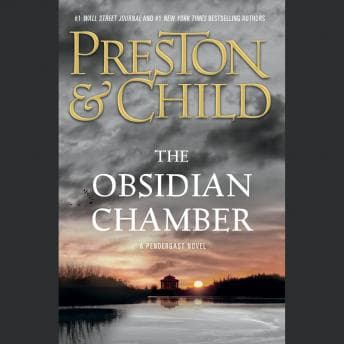

"The sins of the past are still very much alive."
That line hit me somewhere around hour three, while I was stress-cooking biryani at midnight because my research paper wasn't writing itself. The rice was threatening to burn, Rene Auberjonois was describing a skeleton bricked up in a wine cellar, and I found myself thinking: this is a fascinating case study in how communities bury their collective guilt. Literally, in this case.
Why Small Towns Make the Best Psychological Petri Dishes
Preston and Child understand something fundamental about human nature that too many thriller writers miss: evil doesn't announce itself. It marinates. It becomes tradition. Exmouth, Massachusetts isn't just a setting—it's a character study in generational denial. A town doesn't just "have secrets." A town actively maintains them. There's infrastructure. Social pressure. Unspoken agreements about what questions you don't ask.
The protagonist exhibits classic Pendergast behavior—that detached, almost clinical observation style that makes him such an effective investigator. But what makes this pairing compelling is Constance Greene, whose own troubled past gives her insight into darkness that Pendergast's intellectual approach can't quite access. She's not just a ward or a sidekick. She's the emotional intelligence to his analytical mind. My therapist would have thoughts about this dynamic—specifically about how we often partner with people who see what we can't.
The witch trial connection tracks beautifully from a psychological standpoint. Research actually shows that communities which participated in historical atrocities often develop elaborate mythologies to distance themselves from culpability. "The real witches escaped" is exactly the kind of narrative a town would construct to avoid examining what their ancestors actually did. The evil wasn't supernatural. It was human. It always is.
Auberjonois and the Art of the Measured Performance
Rene Auberjonois brings something interesting to Pendergast—a crisp tenor voice that matches the character's precision. His delivery is clear, measured, almost forensic. For a series about an FBI agent who approaches cases like scientific puzzles, this works. He's not overdoing the melodrama, which I appreciate. Too many thriller narrators think louder equals scarier. Echo Burning has a similar narrator challenge—capturing authentic Texas voices without veering into caricature.
That said, I found myself asking: why does the southern accent attempt fall so flat? Auberjonois handles FBI colleagues and thugs with appropriate distinction, but his southern characters sound like someone who learned the accent from a particularly bad dinner theater production. Minor characters blend together too—by hour seven, I'd lost track of which townsperson was speaking unless they were named directly.
If you're coming from Scott Brick's earlier Pendergast performances, there's an adjustment period. Brick has a different energy—more urgent, maybe. Auberjonois is cooler. Neither is wrong, but your brain needs time to recalibrate.
The Salt Marsh as Psychological Landscape
The setting deserves its own analysis. Salt marshes are liminal spaces—not quite land, not quite water. To Die For uses its setting with similar psychological precision—the landscape becomes inseparable from the darkness it conceals. Things get lost there. Things get preserved there. Preston and Child use this landscape to externalize the town's psychology: murky, treacherous, hiding what should have decomposed long ago. The mysterious carvings, the demonic symbols—these aren't just plot devices. They're the physical manifestation of guilt that refuses to stay buried.
I kept thinking about how we all have our salt marshes. The places where we've hidden the parts of ourselves we don't want to examine. (My mother would say I'm overthinking a thriller again. She's probably right.)
Who Should Wander Into Exmouth—And Who Should Stay Away
This is for readers who want their mystery with a side of historical darkness and don't mind when the supernatural elements turn out to have very human explanations. If you need constant action, the eleven-hour runtime might test you—this is a slow burn that rewards patience. Perfect for long drives or, apparently, midnight cooking sessions when you're avoiding your dissertation.
Skip it if inconsistent accents pull you out of a story, or if you're looking for a standalone. This is book fifteen in a series, and while you can follow the plot, you'll miss the accumulated weight of Pendergast and Constance's relationship.
Closing the Case File
Preston and Child have constructed something that functions on multiple levels—as a straightforward mystery, as a meditation on historical guilt, as an exploration of how communities protect their darkest secrets. Auberjonois delivers the material competently if imperfectly. The AudioFile Earphones Award suggests I'm not alone in finding value here, even with the accent issues.
The biryani burned, by the way. But I finished the book. That's probably the most honest review I can give.