
Gabriel Allon is the spy I compare every other fictional spy to, and most of them lose. Without Fail is one of the few that actually holds up in that comparison - Reacher operates on a different frequency than Allon, blunter and less patient, but Lee Child does the same thing Silva does where you believe every decision the protagonist makes.
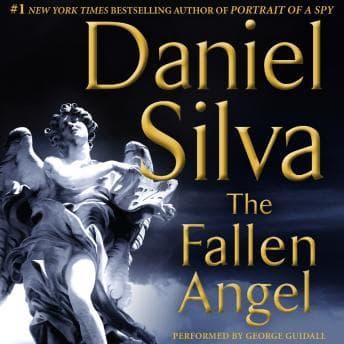
I've been working my way through the Silva series for months now - they're perfect length for my post-shift drive home plus a little extra decompression time before I start making breakfast. The Fallen Angel is book twelve, and here's the thing about getting this deep into a series: you either trust the author to keep delivering, or you start hate-listening. This one? Still delivering.
A Murder in the Vatican That Actually Makes Sense
Silva opens with a death at the Vatican, and the way it unfolds - the institutional cover-up instincts, the politics layered on top of politics, the way powerful people protect themselves first and ask questions never - it felt uncomfortably real. As someone who's actually worked a code in a building full of people who care more about liability than the patient, I recognized that energy immediately. The Vatican in this book operates like every bloated institution I've ever dealt with: information flows upward slowly and downward not at all.
Gabriel gets pulled into investigating because of course he does - art restorer cover, intelligence operative underneath, and the kind of quiet competence that makes people in power nervous. What I appreciate about Silva is that he doesn't make Allon superhuman. He's methodical. He calls in his team. He follows threads that take him from Rome to places I won't spoil, but the globe-trotting feels earned rather than gratuitous. Every location shift has a reason.
The antiquities smuggling angle was something I didn't expect. Silva layers in the black market art and artifact trade with the kind of research density that makes you wonder how many museum curators he interviewed. It's the same feeling I get when a medical thriller actually describes chest tube placement correctly - you can tell someone did the homework.
Guidall Is the Reason You Don't Switch Narrators Mid-Series
George Guidall narrating Gabriel Allon is like having the same attending physician who already knows your entire medical history. You don't have to re-explain anything. He's been voicing these characters long enough that when a recurring team member shows up, you recognize them by voice before Silva even names them. That's not a small thing in a series with this many players.
His delivery has this quality where conversations between intelligence operatives actually sound like conversations between people who've known each other for years - clipped, loaded with subtext, a little tired. I was driving home after a brutal night, four-car pileup that kept us running until 5 AM, and Guidall's pacing matched my headspace perfectly. Controlled. Steady. Not rushing toward the next plot point but not dragging either. At one point there's a scene where Gabriel is processing something devastating and Guidall just... pauses. Lets the silence do work. That takes confidence from a narrator.
The one thing I'll say - and this isn't really a weakness, more of a style choice - Guidall's female voices aren't dramatically different from each other. You can tell them apart, but they're not as distinctly drawn as his male characters. For a series where Chiara is such an important character, I sometimes wished her voice had a little more of its own signature.
Where It Sits in the Allon Universe
If you've been reading the series in order (and you should, I'm not one of those "start anywhere" people despite what the marketing says), The Fallen Angel works as both a standalone mystery and a continuation of Gabriel's larger arc. The Vatican setting gives it a different flavor than the more traditional spy-vs-spy entries. It's slower in the first third - more investigation, less action - but by the midpoint things accelerate hard.
Compared to something like Portrait of a Spy, which came right before this one, Fallen Angel feels more contained. Fewer moving pieces, tighter focus. I actually preferred that. Sometimes you don't need twelve subplots. Sometimes a murder and a conspiracy and a man who's very good at his job is enough.
At ten and a half hours, it's substantial without being punishing. I finished it across maybe five post-shift drives, and each time I got out of the car a little reluctantly.
Night Shift Prescription
This is for anyone who likes their espionage smart, their research solid, and their heroes competent without being cartoonish. If you need constant explosions every chapter, look elsewhere. If you appreciate the tradecraft - the planning, the patience, the slow tightening of a net - this is your book.
Carlos asked why I was sitting in the driveway for ten extra minutes last Tuesday. I blamed the ending. He didn't buy it. Night shift approved.