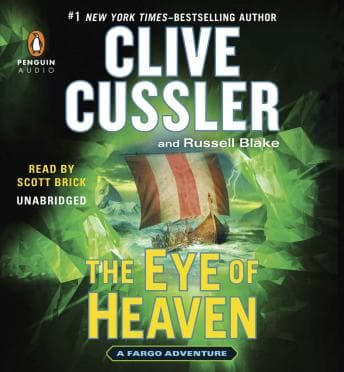

I'll be honest - I expected to dismiss this one. Treasure-hunting billionaires gallivanting around the world solving ancient mysteries? Sounds like the kind of thing my students would binge on Netflix while ignoring their Steinbeck assignment. But here I am, three weeks later, still thinking about Vikings in Mexico.
Denise and I were walking the lakefront on a particularly brutal February morning - the kind where Lake Michigan looks like it's personally offended by your existence - when the Fargos discovered that Viking ship frozen in Arctic ice. There's something almost too perfect about shivering through Chicago wind while listening to characters chip away at permafrost. The cold felt earned.
When the History Teacher Perks Up
Look, I teach English, not history. But twenty years of sneaking historical context into every lesson has given me a nose for when writers actually did their homework. Cussler and Blake clearly spent time with the Toltec material. The connection between Vikings and Quetzalcoatl - the feathered serpent god - sounds like pure pulp fiction nonsense. Except it's built on just enough archaeological speculation to make you wonder. Pre-Columbian artifacts on a Norse vessel? There are actual fringe theories about this. The authors thread that needle between "this is ridiculous" and "but what if..." with surprising skill. That same balance between skepticism and wonder shows up in Little Fires Everywhere, though Ng applies it to family secrets instead of ancient artifacts.
The Eye of Heaven itself - this legendary gem at the center of everything - becomes more than a MacGuffin. By the time Sam and Remi are dodging cartel enforcers through temple ruins, you've absorbed enough Toltec mythology to actually care what happens to the thing. This reminds me of what Hemingway said about the iceberg theory - you only show ten percent, but the ninety percent underneath gives it weight. There's research under this adventure that you can feel without being lectured.
Scott Brick Does What Scott Brick Does
I've listened to enough Brick narrations to know what I'm getting. The man is reliable the way a well-maintained Honda is reliable. Not flashy. Gets you there. His Sam Fargo has this confident baritone that works for a wealthy adventurer without tipping into smug. Remi gets subtle warmth - not a different voice exactly, but a shift in how he approaches her dialogue. It's understated character work.
Here's the thing though - and I say this as someone who believes the narrator understands that pause is punctuation - Brick plays it safe. The villains don't sound particularly menacing. The cartel members don't carry any vocal danger. Everyone sounds... competent. Pleasant. Like they're all attending the same dinner party. For nearly eleven hours, that consistency is both a strength and a limitation. You never get pulled out of the story, but you also never get that electric moment where a performance transcends the page.
Brick's voice is genuinely easy on the ears. I mean that literally - I finished a stack of sophomore essays on "The Great Gatsby" without once wanting to throw my red pen across the room. That's worth something.
The Pacing Problem (That Isn't Really a Problem)
I've seen complaints that this starts slow. And yes, the Arctic expedition takes its time. The Fargos examine artifacts. They make calls to experts. They research. But here's my English teacher confession: I liked it. The setup earns the payoff. By the time they're running through jungles and dodging bullets in ancient tombs, you understand the stakes because you watched them build.
My students would hate this. I love it.
Though I'll admit - around hour six, during a particularly long faculty meeting about standardized testing (sorry, Principal Martinez, I definitely wasn't listening to your presentation), the middle section dragged slightly. There's a formula to these Fargo adventures: discover clue, research clue, travel to location, encounter danger, repeat. The structure works, but you feel the gears turning.
Who Should Listen (And Who Should Skip)
If you loved "The Da Vinci Code" for the puzzle-box history, this is its spiritual successor - less pretentious, more fun. If you've read other Fargo novels, you know exactly what you're getting. Sam and Remi are wealthy, capable, and madly in love with each other in a way that's either charming or insufferable depending on your tolerance for competence porn. (Some listeners found them "cocky rich people." They're not wrong. But they're fun cocky rich people.)
Skip this if you need deep character development or moral complexity. The Fargos are good. The villains are bad. Nobody's having an existential crisis. Second Wife lives in that same morally clear-cut space - you know who to root for from page one. Also skip if you need your narration theatrical - Brick won't give you that.
But if you want smart adventure that respects your intelligence while still delivering temple raids and treasure maps? Worth pausing the faculty meeting for.
Final Grade
This won't change your life. It won't make you see literature differently. What it will do is make an eleven-hour commitment feel like six, fill your head with genuinely interesting historical speculation, and pair beautifully with a February lakefront walk or a late-night grading session. Sometimes that's exactly what you need. Cussler understood something about adventure fiction that too many literary snobs miss - entertainment, done well, is its own kind of art.
I'm already eyeing the next Fargo novel in my queue. Don't tell my podcast listeners. They think I only read Faulkner.