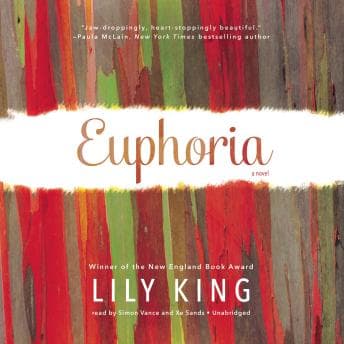
What happens when you put three brilliant, broken people in a place so remote that the only witnesses are mosquitoes and a river tribe that hasn't seen outsiders before?
I finished Euphoria during a Saturday morning walk along the lakefront with Denise, and she had to physically stop me from walking into a cyclist because I was so deep in the final hour that I'd forgotten I had legs. That's the kind of book this is. Under seven hours, tight as a fist, and it leaves a mark.
Margaret Mead's Shadow, But Not Her Story
Let's talk about what Lily King is really doing here. Yes, it's inspired by Margaret Mead - the Nell Stone character carries echoes of Mead's early fieldwork, her controversial conclusions about sexuality in Pacific island cultures, her complicated marriages. But King isn't writing biography. She's writing about the fever dream of intellectual obsession - the way ideas can become as intoxicating as desire, and just as destructive. Bankson doesn't fall for Nell because she's beautiful. He falls for her because she sees a female-dominated tribe and immediately starts rethinking everything Western anthropology assumes about gender. That's the seduction. The intellectual electricity between them crackles harder than any romance I've listened to this year.
King's voice is unmistakable, and I felt the same quiet pull in Writers & Lovers.This reminds me of what Hemingway said about writing - you leave things out and the reader feels them anyway. King's prose works that way. The New Guinea setting is vivid but never overwritten. The Tam people emerge as real without being exoticized. And the love triangle - Nell, Bankson, Fen - operates on about four different levels simultaneously: romantic, professional, colonial, existential. My students would hate this. I love it.
Two Narrators, Two Temperatures
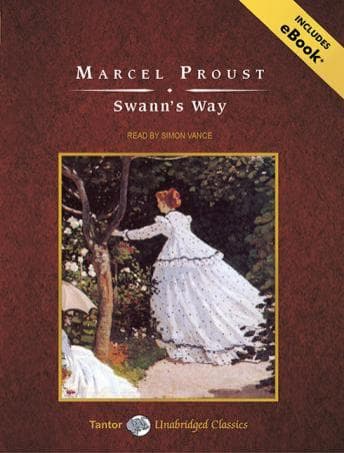
Simon Vance narrates Bankson's chapters. Xe Sands takes Nell's. And here's the interesting thing - they're not just splitting duties, they're offering two completely different emotional temperatures of the same events. Vance plays Bankson with a kind of measured restraint that some listeners have called "drab." I'd push back on that. Bankson is a man standing at the edge of a cliff - literally, in the opening - and Vance's careful, almost too-controlled delivery captures someone who's holding himself together with academic discipline and not much else. The narrator understands that pause is punctuation. When Bankson describes his brothers' deaths, Vance doesn't reach for emotion. He pulls back. And it's devastating.
Vance brings that same heavy, deliberate gravity to Interview with the Vampire.Sands brings a different energy to Nell - warmer, more immediate, with a pace that feels like Nell's mind racing ahead of her body. There's a legitimate complaint that her voice can be harder to parse in certain passages, and I'll be honest - there were moments where I rewound because I'd lost a word or two. But when she's locked in, particularly during Nell's observations of the Tam women's power structures, it's genuinely exciting narration.
Here's the real production issue nobody warns you about: there are no chapter titles indicating whose perspective you're in. You have to figure it out from context. For the first hour, I kept getting briefly disoriented during transitions. Once I locked into the rhythm - Vance means Bankson, Sands means Nell - it worked. But if you're listening while distracted? While, say, pretending to review a colleague's lesson plan? You'll lose the thread.
Fen Is the Character You'll Argue About
Fen is the third point of this triangle, and King does something smart with him - she never gives him his own narration. You only see him through Bankson's eyes and Nell's, which means you're always slightly suspicious of him, always reading his charm as potential manipulation. Is he a brilliant anthropologist being overshadowed by his more famous wife? Or is he a possessive man using intellectual competition as a cover for control? Both narrators shade their versions of Fen differently, and neither lets you settle into a comfortable answer. If you loved The Great Gatsby's unreliable narration of Gatsby through Nick's eyes, this pulls a similar trick - but with two unreliable narrators instead of one.
The prose deserves to be savored. I listened at 1.0x, as God intended, and at under seven hours this is basically a long afternoon. That careful attention to language shows up just as strongly in Heart the Lover. King writes sentences that do three things at once - advance plot, develop character, and smuggle in commentary about what it means to observe a culture without consuming it. That last question haunts the whole book. These anthropologists study "primitive" societies while their own civilization is sliding toward World War II. The irony isn't subtle, but it doesn't need to be.
Worth Pausing the Faculty Meeting For
This is a book for people who want their historical fiction literate and their love stories tangled up with ideas. If you need action set pieces or neat resolutions, look elsewhere. If you loved The Signature of All Things by Elizabeth Gilbert or West with the Night by Beryl Markham - that sense of a woman pushing against the boundaries of what her era allows - this is their spiritual successor, compressed into a sharp, intimate frame.
Don't listen to this one as background. It demands your attention. But it earns it.