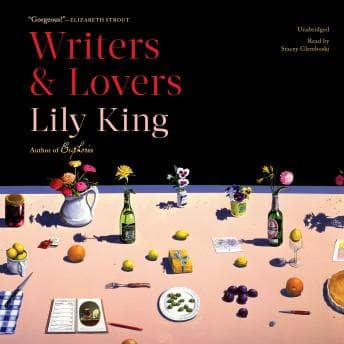

People keep telling me this book is about a woman choosing between two men. And sure, there's that. But listening to it while walking the lakefront at dusk with Denise - who was half a block ahead of me because I kept stopping to process things - I realized that's like saying Middlemarch is about a girl who picks the wrong husband. Technically correct. Spiritually bankrupt.
The Novel About Writing a Novel That Doesn't Make You Want to Scream
Here's what Lily King gets right that so many "writer" novels get catastrophically wrong: Casey Peabody's creative life isn't romantic. It's a moldy room beside a garage. It's six years on a manuscript that she can't finish. It's the specific humiliation of being thirty-one, watching your friends send wedding invitations while you're juggling final notices from debt collectors and the ghost of your dead mother.
The 1997 setting matters more than you'd think. No social media to perform your artistic struggle on. No MFA Twitter discourse. Just Casey, her yellow legal pads, and the quiet, private terror that she might be wasting her life. King writes Casey's anxiety with this physical specificity - the panic attacks, the way grief lodges in her body - that Glemboski delivers with this tight, held-breath quality. You feel Casey's chest constrict.
And the waitressing scenes. Lord, the waitressing scenes. If you've ever worked food service, you'll feel phantom table-side stress. King nails the rhythm of a dinner rush in a way that's almost percussive, and Glemboski matches that energy - the pace quickens, the sentences clip shorter, and you're right there in Harvard Square with Casey trying not to drop a tray while her novel sits at home, unfinished, judging her.
Two Men Walk Into a Metaphor
So about those two guys. Oscar is the older, established writer - widowed father of two, settled, safe in the way that means you'd never have to explain your life choices at Thanksgiving again. Glemboski gives him this Pierce Brosnan-adjacent warmth, charming without tipping into smarmy. Then there's Silas - younger, rougher, the kind of passionate that's indistinguishable from chaos when you're thirty-one and broke. Glemboski slows down for him, drops the register, gets a little gravel in the voice.
Here's what my students would miss and what I think King is really saying: this isn't actually a love triangle. It's Casey choosing between two versions of herself. The version who settles into someone else's finished life, and the version who keeps writing the novel, keeps living in the moldy room, keeps believing the work matters. This is why we still read literary fiction, even when people tell you it's "quiet" like that's a bad word.
Now - the accents. Glemboski does a posh British accent for Harry that mostly works, but some of the non-American voices wobble. It's noticeable. It doesn't wreck anything, but if you're accent-sensitive, you'll clock it. One star off the narration for that, which feels fair.
The Pacing Argument (And Why the Complainers Are Half Right)
I've seen readers call this meandering. Short chapters that "go nowhere." And look, I teach teenagers who think anything without a murder by page ten is slow, so I'm predisposed to defend a book that takes its time. But I'll be honest - there are stretches in the middle where Casey's indecision starts to feel like the book's indecision. The prose deserves to be savored, but around hour five, I did briefly wonder if King knew where she was heading.
She did. The last two hours pull everything tight. There's a moment - and I won't spoil it - where Glemboski delivers what I can only describe as a breath-catching ballad, this vocal shift that lands like a gut punch. I was standing on the lakefront path near Montrose and I literally said "oh" out loud. A jogger looked at me.
The thing is, the meandering IS the point. Casey's life doesn't have a plot. She's in that terrible limbo between who she was and who she might become, and the novel's structure mirrors that beautifully - all these short chapters that feel like false starts because Casey's life is full of false starts.
Who Should Listen (And Who Should Probably Skip This)
If you've ever been broke and ambitious simultaneously - if you've ever questioned whether the thing you're building is worth the years you're burning - this one is going to hit. If you loved Jenny Offill's Dept. of Speculation, this is its spiritual successor, but warmer, funnier, more willing to let you breathe between punches. I had a similar feeling with Book of Two Ways - another novel that gets misread as a love triangle when it's really a woman reckoning with the life she chose versus the one she abandoned.
If you need strong plot momentum or find introspective protagonists frustrating, this will test your patience. I'd also say: this isn't great background listening. It rewards your attention. The sentences are too good to half-hear.
(My students would hate this. I love it.)
Worth Pausing the Faculty Meeting For
At eight hours and change, Writers & Lovers is the kind of audiobook that reminds you why first-person literary fiction works so well in audio. Glemboski's soprano warmth makes Casey feel like someone sitting across from you at a coffee shop, telling you the truth about the worst and most important year of her life. The accent wobbles are real but minor. The pacing complaints are understandable but, I think, miss the design. And that ending - quiet, earned, exactly right - stayed with me for days.
Listen at 1.0x. The author chose those words. Glemboski chose those pauses. Let them land.