
"Keta'ib Hezbollah, an Iranian-funded militia group operating in Iraq" — when Pike Logan drops that line early in the book, I actually sat up straighter in my truck. Because I've been briefed on Keta'ib Hezbollah. In a SCIF. With people who don't smile much. And Brad Taylor clearly has too, because the way he threads real-world Iranian proxy operations into this plot isn't just plausible — it's the kind of scenario that would make a real intelligence analyst reach for their coffee and say "yeah, that tracks."
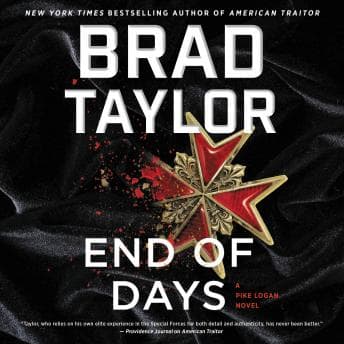
Let me cut to the chase: End of Days is a solid entry in the Pike Logan series, and if you've been riding with Pike and Jennifer since book one, this one won't disappoint. If you're jumping in cold at number sixteen — well, you can do it, but you'll miss some of the weight behind the Aaron and Shoshana dynamic.
When the Author Actually Knows What a SCIF Smells Like
Brad Taylor is one of maybe three thriller writers I trust with military and intelligence details. The man was Delta Force. He did OEF and OIF. You can feel it in the way Pike moves through operational planning — there's no Hollywood nonsense where one guy kicks down a door and takes on twelve armed hostiles with a pistol and a witty one-liner. Pike coordinates. He uses comms correctly. The Taskforce operates with the kind of bureaucratic friction that anyone who's dealt with interagency knows is absolutely real. Taylor gets the tension between political authority and operational necessity right, and that's where a lot of thriller writers fall flat on their faces.
The Knights of Malta angle is genuinely interesting. I was expecting a straight Iran-proxy-terrorism plot, and Taylor pivots into this murky world where ancient religious orders intersect with modern geopolitics. The connection between the serial killer loose in Rome and the broader assassination conspiracy unfolds at a good clip — not too fast to feel cheap, not so slow you're checking your phone. Setting chunks of the action against the backdrop of COVID-19 lockdowns was a bold choice. It grounds the timeline in a way that feels authentic even if some readers might be tired of pandemic references. For me, remembering those early months when everything shut down and my consulting firm's phone wouldn't stop ringing — it worked.
Rich Orlow Knows His Way Around an International Cast
I've listened to Orlow across multiple Pike Logan books now, and the guy is consistent. What he does well is differentiate the international characters without turning them into caricatures. Aaron's Israeli inflection feels natural rather than like a bad impression at a comedy club. The Iranian and Iraqi characters get their own vocal space without Orlow resorting to lazy stereotypes. Pike himself comes through with the right mix of competence and controlled aggression — not too gruff, not too smooth.
Where Orlow doesn't blow me away is in the quieter emotional beats. There are moments between Pike and Jennifer that should land harder than they do, and I think it's because Orlow's delivery stays pretty even-keeled when the material calls for him to shift gears. It's not a dealbreaker — not by a long shot — but if you compare him to some narrators who can make your chest tight with a whispered line, he's playing in a different lane. Solid. Professional. Just not transcendent.
At 12 hours and 10 minutes, this is a comfortable listen at 1.25x. Gets you through about a week of Austin traffic and client site visits if you're me.
Where the Op Goes Sideways
Here's where it lost me a bit: the villain's motivation. Without spoiling anything, when you finally understand why the assassinations are happening and who's pulling the strings, it felt... a little tidy. The geopolitical setup is strong, the tradecraft is strong, but the "why" behind it all wraps up in a bow that didn't quite match the complexity of everything that came before. I wanted more moral gray area. Taylor hints at it with the religious and political fractures in the Middle East — the Sunni-Shia tensions, the Israeli political divisions — but then backs away from the really uncomfortable questions.
Also, and this is minor, but the COVID setting creates some logistical constraints that occasionally feel forced. Characters masking up and dealing with travel restrictions is realistic, sure, but it sometimes slows the operational tempo in ways that made me impatient. Though I'll admit — Pike being stir-crazy in Charleston during lockdown is extremely relatable. I was climbing the walls too, Linda can confirm.
Who Should Strap In
If you're already in the Pike Logan universe, this is a no-brainer. If you're a thriller fan who gets irritated by authors who clearly Googled "how does special forces work" for twenty minutes and called it research — Taylor is your guy. Military and intelligence professionals will appreciate the accuracy. If you want deep character study and literary prose, look elsewhere. This is mission-driven fiction by a mission-driven author. Now, if you do want a thriller that leans harder into the missing-person mystery side with real emotional weight, Local Woman Missing scratches that itch — different world from Pike Logan, but the tension is just as real.
Ranger slept through the quieter chapters but perked up during the Rome sequences. Take that as you will.
Mission Debrief
Worth your time? Here's the debrief: End of Days is a well-executed thriller that benefits enormously from Taylor's real-world experience. The plot is ambitious — maybe slightly more ambitious than its resolution earns — but the ride is engaging and the tradecraft is legitimate. Orlow delivers a clean, professional narration that serves the material well. Not Taylor's absolute best Pike Logan entry, but a strong one. Book sixteen in a series and still operating at this level? That's worth respecting.