
Rain, Tea, and Suburbia's Rot
It was raining. Of course it was raining—I live in Oregon. I was reorganizing my shelf of "Books That Actually Scared Me" (it's a short shelf, let's be real), with Shirley the cat judging my organizational skills from her perch on the armchair. I needed something that felt like a wet blanket of dread. You know the vibe? That specific heaviness where you know something is wrong, but nobody is saying it out loud.
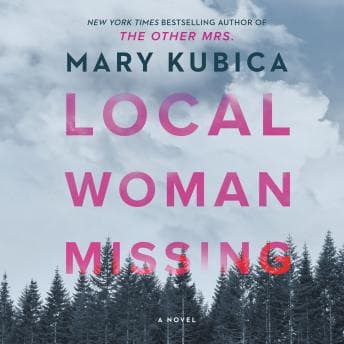
So I hit play on Local Woman Missing.
I'm usually skeptical of the "Domestic Thriller" label. Too often it's just people drinking wine and making bad choices. But Mary Kubica? She gets that horror isn't always a monster under the bed—sometimes it's the neighbor who waves at you every morning. She nailed that same creeping paranoia in The Good Girl, which still lives rent-free in my head. And frankly, I was in the mood to be suspicious of everyone.
Four Narrators, Zero Gimmicks
Okay, let's talk about the cast. We've got Brittany Pressley, Gary Tiedemann, Jennifer Jill Araya, and Jesse Vilinsky.
(Yes, I know that sounds like a lot. Usually, when I see four narrators, I roll my eyes because it feels like a gimmick.)
But here? It's necessary. The timeline is... let's call it "ambitious." We're jumping back eleven years to when people started vanishing, then forward to the present day where the missing girl, Delilah, just shows up. Without distinct voices, this would have been a mess. An absolute mess.
Brittany Pressley—basically thriller royalty at this point—nails the "frantic suburban mom trying to hold it together" vibe. But honestly? It was the variety that kept me hooked. You get distinct textures of grief from different angles. One narrator sounds weary, beaten down by a decade of not knowing. Another sounds sharp, hiding something.
It stops being an audiobook and starts feeling like you're eavesdropping on a town meeting where everyone is lying. And if you know me, you know I live for that messy drama.
The Saggy Middle (And the Sprint That Saves It)
Here's the thing, though. I have to be honest because I respect you guys too much to lie.
The middle of this book? It sagged.
There was a solid hour—maybe around the 60% mark—where I found myself scrubbing the kitchen counters a little too aggressively because the plot felt like it was spinning its wheels. We get it. Secrets. Darkness. The basement is creepy. Move it along.
(Shirley actually left the room during this part. She has zero patience for slow burns.)
But—and it's a big but—the last quarter? Pure adrenaline. The way Kubica weaves the timelines together towards the end is genuinely impressive. I had a theory about who did it. I was so confident. Ready to record a smug little voice note to my friend about how I cracked the case.
I was wrong. Kubica pulled a similar trick on me with The Other Mrs., though that one didn't stick the landing quite as well.
And I love being wrong. The twist isn't just for shock value; it recontextualizes everything you heard in the first half. Makes you want to go back and listen to certain chapters again to catch the clues you missed because the narrators were distracting you with their emotional performances. That's the magic trick.
The Final Verdict
Is it "horror" in the way The Haunting of Hill House is horror? No. There are no ghosts (unless you count the memories of missing women). But it captures that suffocating feeling of a small town closing ranks.
If you want high art, go read some Tolstoy. If you want to stand in your kitchen with a glass of wine, mouth open, ignoring your boiling pasta because you just found out what happened to Shelby Tebow? You need this.
Who should listen: Fans of domestic thrillers who can tolerate a slow middle for a killer payoff, and anyone who likes their suburbia with a side of dread. Skip it if: You need constant action or can't handle fractured timelines.
The production value is crisp, the acting is top-tier, and despite the saggy middle, the payoff is worth the wait. Just maybe keep a light on. You know. Just in case.