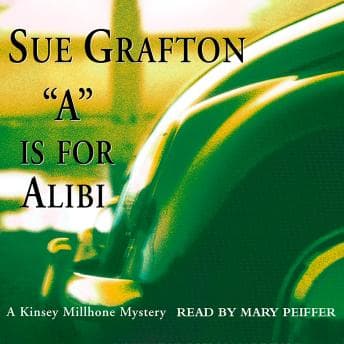

What happens when a PI becomes her own client?
That's the setup for book five in Grafton's alphabet series, and I'll tell you - it's a solid premise. I caught this one during a late-night drive back from a client site in Houston, the kind of empty highway where your headlights feel like the only thing keeping the world from swallowing you whole. Good atmosphere for a frame-up story.
The Frame Job That Actually Works
Let me cut to the chase: someone drops five grand in Kinsey Millhone's bank account, and suddenly she's the prime suspect in an insurance fraud case she was investigating. It's a tight little trap, and Grafton does the work to make it believable. The mystery connects to a family secret buried for two decades - the kind of thing that festers and eventually explodes. I've seen similar scenarios play out in corporate security. Someone always thinks they're clever enough to frame the investigator. Golden Lion explores that same dynamic—operatives caught in traps designed by people who underestimated them. They rarely are, but watching Kinsey untangle the web is satisfying.
The pacing runs about six hours, which is lean for a mystery. No fat on this one. Grafton knew how to keep things moving without sacrificing the procedural details that make PI fiction work. Kinsey's methodical approach - the door-knocking, the record-pulling, the careful observation - feels authentic. The author clearly did her homework on how investigations actually function.
Peiffer's Kinsey - Still Finding Her Footing
Mary Peiffer's narration is where things get complicated. She's got Kinsey's voice down cold - that dry, no-nonsense California PI with just enough vulnerability to keep her human. When she shifts to secondary characters, you can tell who's who. Her Tilly sounds like every tough older woman I've ever met in a VFW hall. Pat Usher comes across as exactly the kind of low-rent character you'd find lurking around an insurance scam.
But - and this is the mission-critical intel - Peiffer runs hot in this one. The pacing clips along faster than the story sometimes needs. During interrogation scenes, there's a flatness that can make Kinsey sound more like she's bullying witnesses than questioning them. (Ranger perked up during one of these scenes. Even he noticed something was off.) This is early-series Peiffer, and you can hear her still finding her footing. Listeners who've heard her later alphabet work say she smooths out considerably.
I bumped it to 1.0x for the dialogue-heavy sections. At my usual 1.25x, some of the character differentiation got lost in the speed.
Who Gets the Green Light (And Who Doesn't)
If you're working through Grafton's series, this is worth your time. It's not the strongest entry - the family secret reveal doesn't hit as hard as it should, and some of the middle sections drag despite the short runtime. But Kinsey as both investigator and victim adds personal stakes that elevate the standard PI procedural.
New to the series? Start at A. The character development builds, and Peiffer's narration improves with each book. Jumping in here means missing context that makes Kinsey's vulnerability land harder.
Skip this if you need distinct character voices from minute one, or if fast-paced narration pulls you out of the story. The audio quality is clean - no production issues - but the performance style is an acquired taste.
Cooper Out
Solid mystery, competent narration with some rough edges. Grafton delivers a premise that works and executes it efficiently. Peiffer's Kinsey is recognizable and engaging, even if the supporting cast occasionally blurs together at speed. At just over six hours, it's a single road trip or a couple of long runs.
Worth a credit? If you're committed to the alphabet series, yes. As a standalone purchase, I'd wait for a sale. The narration issues in this early entry knock it down from an automatic buy. But Ranger and I finished it in one sitting, which says something. When the frame tightens around Kinsey in the final act, you're invested in watching her fight her way out.
Grafton knew how to write a PI who feels real - flawed, stubborn, and smart enough to survive her own mistakes. That's worth the price of admission, even with an imperfect performance.