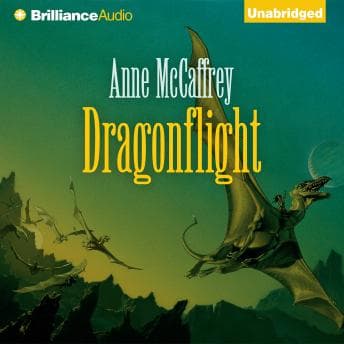
Anne McCaffrey's dragons aren't really dragons. They're genetically engineered creatures on a planet that humans colonized. This is science fiction wearing fantasy's skin, and the fact that people still categorize it wrong after fifty years drives me absolutely up the wall. (My podcast listeners have heard this rant. Multiple times. They're tired.)
But here's the thing—that genre-bending is exactly why Dragonflight still works. I was reorganizing the horror section at the library last week, audiobook playing through one earbud while I alphabetized Shirley Jackson next to Henry James, and I found myself completely stopped. Just standing there with a copy of The Haunting of Hill House in my hand, listening to Lessa's first telepathic connection with Ramoth. The intimacy of it. The way McCaffrey writes mental bonds isn't romantic or magical—it's almost invasive. Uncomfortable in the best way. That same invasive intimacy shows up in Guilty Pleasures, where the supernatural bonds feel equally uncomfortable and compelling.
McCaffrey gets something horror writers understand: the most terrifying threats are the ones everyone has forgotten are real.
Thread Falls Like Nightmares
Thread—the mindless, devouring spores that fall from the sky—is genuinely unsettling if you let yourself think about it. There's no negotiating with it. No understanding it. It just consumes. The scenes where Thread falls and dragons flame it from the sky should feel triumphant, but McCaffrey writes them with this undercurrent of desperation. These people are holding back an apocalypse with their bare hands (and dragon fire), and they've been doing it for so long that most of Pern has forgotten why.
Dick Hill's narration catches this tension, mostly. His voice work is solid—F'lar gets this commanding authority while Lessa sounds appropriately defiant without becoming shrill. The dragons themselves have this rumbling quality that works surprisingly well for telepathic communication. Mnementh's dry observations actually made me laugh out loud at one point, which startled Shirley (the cat, not the author) right off my lap.
But—and this is where I get conflicted—Hill runs hot. His pacing clips along faster than I expected, even at 1x speed. For action sequences, this works beautifully. For the quieter worldbuilding moments, the political maneuvering between Weyrs and Holds? I found myself rewinding. Missing things. The pronunciation choices are also... interesting. If you've been reading Pern books for decades, hearing names pronounced differently than your internal voice might throw you.
Robinton's Speech Hit Different
There's a moment—Robinton's speech about wolves at the heights—where Hill absolutely commits. The emotional delivery is the kind of thing that separates good narrators from great ones. I was driving home from work when it happened, and I sat in my parking lot for an extra five minutes just to let it land properly. When Hill is on, he's really on.
The problem is consistency. His accents wander a bit, not quite matching the world McCaffrey built. Some characters feel distinctly voiced in one chapter and slightly different in the next. It's not enough to ruin the experience, but it's noticeable if you're paying attention. And this is a book that demands attention—the political structures, the timeline manipulation in the later sections, the way dragon bonds work—you can't half-listen to this.
Who Should Saddle Up (And Who Should Stay Grounded)
If you're coming to Pern for the first time, this audiobook is a solid introduction. Hill's performance, despite its quirks, captures the scope of McCaffrey's vision. The nine-hour runtime feels appropriate—long enough to establish the world, short enough that it doesn't drag.
If you're a longtime Pern reader with very specific ideas about how names should sound? Maybe preview a sample first. The pronunciation differences might pull you out of the story.
If you scare easily... well, this isn't horror. But Thread is nightmare fuel if you think about it too hard. And Lessa's backstory—parents murdered, birthright stolen, years spent in hiding and rage—has a darkness to it that the fantasy packaging sometimes obscures. Skip this if you need your dragons purely magical and your fantasy uncomplicated by science fiction DNA.
My podcast listeners are going to love this recommendation, actually. It's the kind of book that rewards analysis, that has layers beneath its dragon-riding surface. McCaffrey was doing something genuinely innovative here, blending genres before that was fashionable.
Clear Skies, Dragonrider
Dragonflight is foundational for a reason. It's not perfect—the pacing runs fast, some of the gender politics haven't aged gracefully, and Hill's narration is good rather than transcendent. But the core of it? The bond between Lessa and Ramoth, the desperate fight against Thread, the way McCaffrey builds a world that feels lived-in rather than constructed?
That holds up. Fifty years later, that still holds up.
I finished it at 2 AM, lights on because old habits die hard, Shirley (the cat) judging me from her perch on my horror bookshelf. Worth it? Absolutely. Will I listen to the rest of the series? Already downloaded Dragonquest. I'm also queuing up From Dead to Worse for my next late-night listen—another series that knows how to blend genre conventions.
Science fiction that respects its fantasy disguise. Finally.