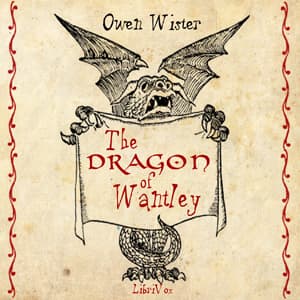

Owen Wister wrote a dragon comedy in 1892 and basically nobody talks about it anymore.
This feels criminal. The guy who gave us The Virginian—the book that invented the Western genre as we know it—also wrote a medieval Christmas burlesque about a dragon terrorizing the English countryside. And it went through four editions! People loved this thing! Where has it been hiding?
I stumbled onto this during one of my classic thesis-avoidance sessions. Dr. Patel wanted draft pages by Friday. I gave him... well, I gave him nothing, but I did discover that 19th-century authors were absolutely unhinged in the best way.
When Parody Actually Commits to the Bit
Here's what I wasn't expecting: Wister goes hard on the medieval romance parody. This isn't some half-hearted satire where the author winks at the camera every two pages. He's constructed an entire 13th-century Christmas setting, complete with the overwrought language, the courtly drama, the heroic knight-versus-beast setup—and then just... lets it be absurd. The dragon's "voracity" isn't played for cheap laughs. It's treated with this deadpan seriousness that makes the whole thing funnier.
The magic system is chef's kiss—wait, no, there isn't really a magic system. Old habits. But the world-building commitment? That's real. Wister clearly did his homework on medieval tropes just so he could lovingly make fun of them.
At 3 hours 45 minutes, it's the perfect length for this kind of thing. Any longer and the joke would wear thin. Any shorter and you wouldn't get properly immersed in the absurdity. My D&D group would love this—it's basically what happens when the bard writes the campaign recap after too much mead.
David Wales and the LibriVox Question
So here's the thing about LibriVox recordings: you're getting volunteer narrators, which means quality varies wildly. David Wales handles this one solo, which is actually impressive for a nearly four-hour commitment. The research didn't give me much on his specific strengths or weaknesses, and honestly? That tracks with my experience. He's competent. He reads clearly. He doesn't make weird pronunciation choices that pull you out of the story.
Is it Steven Pacey? No. Steven Pacey walked so other narrators could run, and Wales is doing a respectable jog here. But for a free audiobook of a 130-year-old parody novel, I'm not going to complain. He gets the comedic timing mostly right, which matters more than vocal range for material like this.
The production is clean LibriVox standard—no weird audio artifacts, no jarring chapter transitions. If you've listened to their stuff before, you know what you're getting.
The Actual Dragon Stuff
Right, the dragon. His rise, his voracity, his downfall—it's all there in the subtitle, so I'm not spoiling anything. What makes it work is that Wister treats the dragon with the same mock-seriousness as everything else. This isn't Smaug. This isn't even Puff. This is a dragon filtered through Victorian comedy sensibilities, which means he's simultaneously menacing and ridiculous.
The romance subplot exists because of course it does—it's a burlesque of medieval romance, after all. But it's not the focus. The focus is the escalating absurdity of a community dealing with a dragon problem while maintaining all the social niceties of courtly life.
(I kept thinking about how this would play at a Renaissance Faire. Someone needs to adapt this for dinner theater. The jokes would land perfectly.)
Who Should Brave the Dragon
If you can't stand Victorian prose density, skip this one. Wister's sentences wind around like drunk snakes, and if you need modern pacing, you'll bounce off hard.
But if you're the type who reads Pratchett footnotes out loud to people who didn't ask, or if you've ever described something as "Monty Python but make it literary," this is your jam. Fantasy fans who appreciate the genre's roots will find a lot to love here. It's a reminder that people have been affectionately mocking fantasy conventions for over a century.
Also: it's free. LibriVox. Public domain. Zero risk.
My Thesis Can Wait Another Day
Look, is this going to change your life? No. Is it Sanderson-level world-building? Obviously not—it's a parody from before Tolkien was even born. But it's charming, it's weird, it's historically interesting, and it's the exact kind of obscure literary curiosity that makes procrastination feel productive. That same sense of delightful weirdness carried me through 1986 - Book 3: At the End of Time, though that one leans more cosmic than comedic.
I listened to this instead of writing my thesis, and I regret nothing. The Dragon of Wantley earned its four editions. It deserves a few more listeners in 2024.