
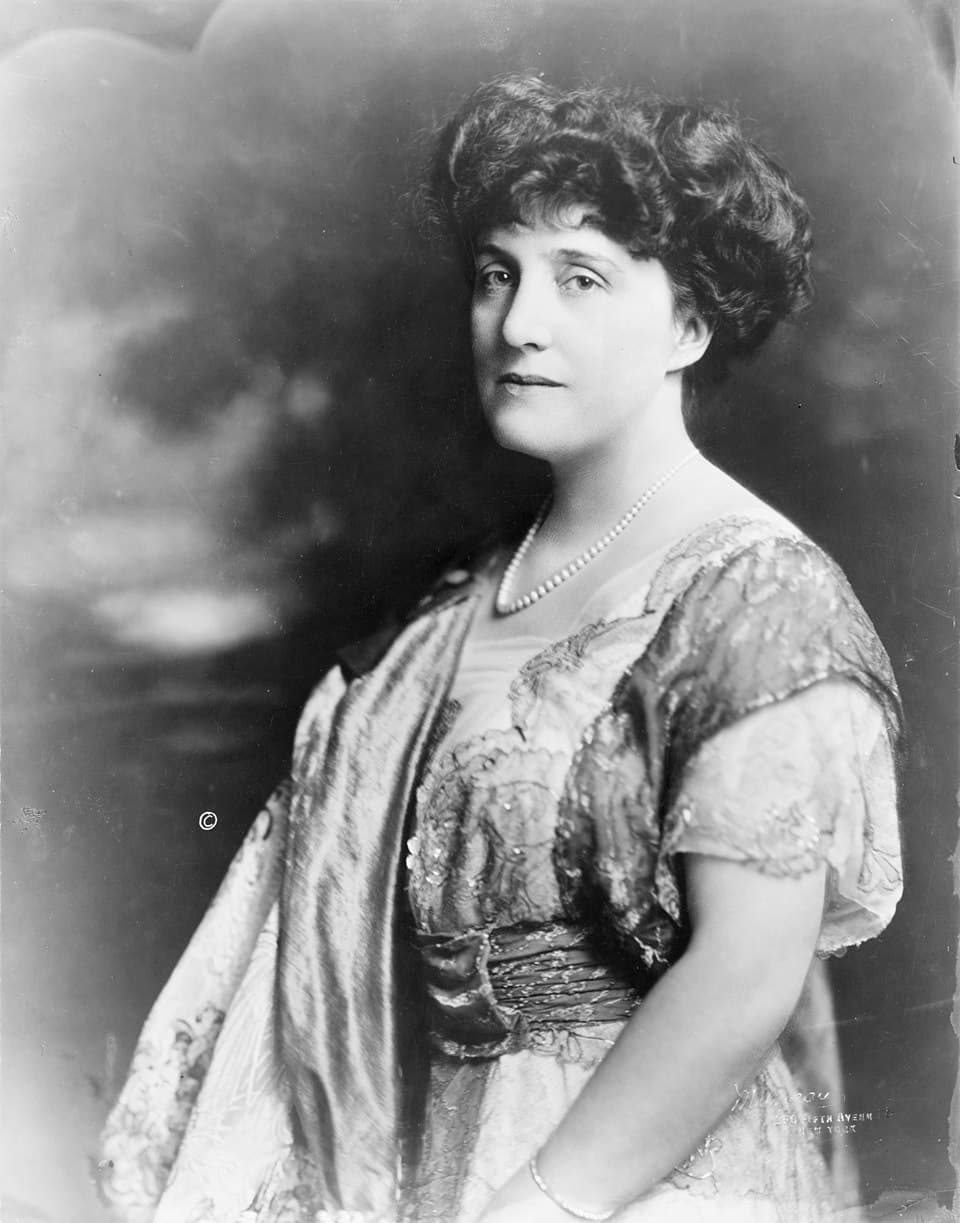
Look, I have a complaint. Mary Roberts Rinehart - the woman they called the American Agatha Christie, the bestselling mystery novelist of the 1910s and '20s - wrote one of the most delightful travel narratives I've encountered, and almost nobody alive knows it exists. That's the complaint. A hundred-plus years later, this little gem sits in the public domain like a wildflower nobody bothers to photograph, and that's a shame.
I found this one on a Sunday morning while Denise was still asleep and I was scrolling for something short to fill a lakefront walk. An hour and thirty-four minutes. Perfect. I hit play somewhere around Montrose Harbor and finished right as I looped back, and the whole time I had this grin on my face that probably made passing joggers uncomfortable.
A Mystery Writer Walks Into the Wilderness
Here's what you need to know about Rinehart in 1915: she's already famous, already wealthy, already the kind of woman who could've spent her summers in a Newport parlor. Instead she gets on a horse and rides through what had only just become Glacier National Park - established 1910 - with legendary outfitter Howard Eaton and a party of other adventurers. And she writes about it with this wonderful blend of genuine awe and self-aware humor about her own incompetence on horseback.
Rinehart's comic timing here reminds me of the dry wit she deployed in her mysteries—if you've never read Window at the White Cat, you'd be surprised how funny she can be when bodies aren't piling up.The prose is period-appropriate, which means longer sentences, more formal diction, the kind of thing my students would immediately tune out. But Rinehart has this knack for puncturing her own grandeur. She'll describe a mountain vista with real reverence and then pivot to complaining about saddle sores or the indignity of crossing a glacial stream while trying to maintain some shred of dignity. She's funny. Not trying-to-be-funny funny. Actually funny. The way sharp, observant people are funny when they're genuinely out of their element.
What struck me most is how she writes about the Blackfeet and the landscape with - well, with the lens of 1915, which means there are moments that feel dated in their framing of Indigenous peoples. You can't escape that. But there's also a real attempt at respect, and a clear argument running through the whole thing that Americans should see their own country before chasing European tours. "Seeing America First" isn't just a subtitle - it's her actual thesis. And she makes that case not through patriotic chest-thumping but through sheer descriptive power. She wants you to understand that these mountains are worth your time.
David Wales and the Art of Reading Someone Else's Century
So here's where I have to be honest: this is a LibriVox recording, which means it's a volunteer production. David Wales handles solo narration duties, and the reality is I don't have a lot of granular detail on his specific performance choices. What I can tell you is this - at an hour and thirty-four minutes, this is essentially a long essay read aloud, and the success of that format depends entirely on whether the narrator can sustain conversational energy without lapsing into monotone.
The challenge with reading early twentieth-century prose aloud is that the sentence structures are built for the page. Long dependent clauses, formal constructions, the kind of architecture that can turn a narrator into a sleepwalker if they're not careful. At 1.0x speed - yes, I listened at my usual pace, because the author chose those words - the pacing felt appropriate for a travelogue. This isn't a thriller. It doesn't need urgency. It needs a steady, pleasant voice that lets Rinehart's personality come through, and the recording does that job.
I will say: if you're coming to this expecting studio-quality production with engineered soundscapes, recalibrate. This is a clean, simple read. One narrator, one microphone, one woman's hundred-year-old adventure.
David Wales brings that same unadorned steadiness to Dragon Of Wantley (Version 2), by the way—another public domain oddity where his narration just lets the material breathe without getting in its own way.Who This Is Actually For
If you loved Beryl Markham's West with the Night or Isabella Bird's A Lady's Life in the Rocky Mountains, this is their spiritual successor - or, more accurately, their predecessor. It's part of that glorious tradition of women writers going somewhere physically demanding and writing about it with more wit than any of the men who went before them.
My students would hate this. I love it. But I also know exactly who else would love it: anyone planning a trip to Glacier National Park, anyone interested in what the American West looked like before it was Instagram content, and anyone who's ever wondered what a mystery novelist sounds like when she trades murder plots for mountain passes.
At ninety-four minutes, it's practically a long podcast episode. And since I run a podcast that exactly 47 people listen to, I can tell you - that's a perfect length for something you didn't know you needed.
The Assignment I'd Give My Students (If They'd Do It)
This is a small book. A minor work by an author mostly remembered for other things. But it captures a specific American moment - the birth of national park tourism, a country just starting to understand what it had in its own backyard - with a voice that still sounds alive after a century. The prose deserves to be savored, even if the world it describes is gone. Especially because the world it describes is gone.
Worth a Sunday morning walk. Worth the free download. Worth remembering that Mary Roberts Rinehart was more than mysteries.






![Steve Jobs [unabridged audiobook] audiobook cover](/_next/image?url=https%3A%2F%2Fcovers.audiobooks.com%2Fimages%2Fcovers%2Ffull%2F9788499923406.jpg&w=1920&q=75)