
Late October on the lakefront, Denise half a block ahead of me because I'd slowed to a dead stop near Montrose Harbor. Not because of the view - though Chicago's skyline against a gunmetal sky is something - but because Bram Stoker had just stranded an Englishman in an abandoned Styrian village with a snowstorm rolling in and wolves circling. I stood there like an idiot in my windbreaker, genuinely unsettled. At five in the afternoon. With joggers passing me.
That's the title story working exactly as it should. And it's the high point.
The Tomb Scene Earns the Title
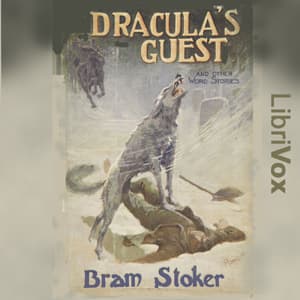
Let's talk about what Stoker is really doing with "Dracula's Guest." This isn't a proper prequel to Dracula - it reads more like an excised chapter, probably cut from the novel's opening before publication. The Englishman (never named, which is a deliberate choice that Stoker scholars still argue about) ignores his coachman's warnings, wanders off the road, and ends up sheltering against a marble tomb in the middle of a blizzard. There's a bolt of lightning. There's a woman in the tomb. There's a massive wolf that may or may not be protecting him.
It's tight, atmospheric, and ends with a telegram from Dracula himself - a detail that lands like a cold hand on the back of your neck if you know the novel. I talked about that cold hand at length in my full review of Dracula, where the restraint is stretched across a whole novel and somehow never breaks. This is why we still read the classics. Stoker understood that dread lives in restraint, not in spectacle.
"The Burial of the Rats" is the other genuine standout. An Englishman lost in the ragpickers' quarter outside Paris, hunted by human scavengers through mountains of refuse. Stoker's sense of place here is almost nauseating - you can smell the rot. It's the most physically grounded story in the collection, and I found myself walking faster along the lake path without realizing it.
But then there's "The Squaw." I won't spoil the mechanism, but there's a scene involving an iron maiden that is graphic in a way that feels less like Gothic horror and more like Stoker working through something personal. My students would hate this. Actually, no - my students would love this one specifically and ignore everything else. That's the problem.
Nine Stories, Nine Readers, Uneven Returns
Here's where I have to be honest about the audio experience. This is a "Various Readers" production, and the research I've found gives me very little to work with regarding who's reading what in this particular version. I know James Langton has been praised for his portrayal of the Englishman in other recordings of the title story - that perfectly stiff-upper-lip restraint cracking under supernatural pressure. But whether he's the voice you'll hear in this version? I genuinely can't confirm.
What I can tell you is that multi-reader collections of public domain works are a gamble. At five hours and fourteen minutes, you're getting nine stories parceled out to different voices, and the transitions between readers can feel like changing radio stations mid-drive. Some voices settle into Stoker's Victorian cadence naturally. Others treat the prose like it's a newspaper article.
The narrator understands that pause is punctuation - but only some of these narrators seem to understand that. Stoker's sentences are built for suspense. They coil. They delay the verb. A reader who rushes through that architecture is dismantling the machinery before it can do its work.
No sound effects, no musical score, no full-cast production. Just voices and text. Which is fine - I'd rather have a clean reading than overwrought sound design - but it means the narrator has nowhere to hide.
Who Should Wander Into This Particular Village
If you've read Dracula and want to understand Stoker's range beyond his one famous novel, this collection is a useful five hours. "Dracula's Guest" and "The Burial of the Rats" alone justify the time. The remaining stories - "The Judge's House" with its malevolent rat, "The Secret of the Growing Gold" with its creeping revenge from beyond the grave - range from solid to forgettable. Stoker was a working writer, not every piece was his best, and a short story collection laid bare makes that obvious in a way a novel doesn't.
That unevenness hit me hard with Lair of the White Worm—a Stoker novel that lurches from inspired weirdness to tedious stretches, and the audio didn't exactly rescue it.If you want the best audio experience of these stories, though, I'd point you toward the Rupert Degas recordings, where a single skilled narrator with versatile accents - harsh peasant voices shifting to aristocratic disdain - can give you the character differentiation these stories need. This "Various Readers" version is fine for a free or low-cost listen. It's a sampler plate, not a dinner.
Worth the Walk, Not the Credit
I finished the collection before Denise and I made it back to the car. She asked if I'd heard anything she'd said for the last twenty minutes. I had not. But I'd stood in a Styrian graveyard, run through Parisian garbage heaps, and watched a cat's revenge play out in medieval iron. For a Tuesday evening, that's not bad. Just don't expect every story - or every reader - to earn your attention the way the best ones do.