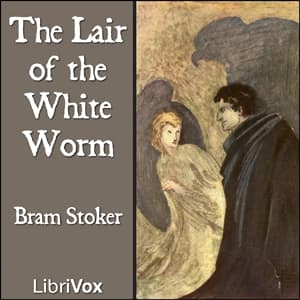

"The worm... the worm... it comes from the depths."
Somewhere around the two-hour mark, that line hit me while I was cleaning my Sig in the garage at 0200. Linda was asleep, Ranger was watching me with that look dogs get when they know something's off, and Stoker had me genuinely unsettled. Not combat-zone unsettled—more like that creeping dread when you're on patrol and the village goes too quiet.
This Ain't Your Grandfather's Dracula
Let me cut to the chase: if you're expecting another Dracula, you're going to be disappointed. This was Stoker's last novel, written in 1911 when the man was clearly running on fumes. The plot meanders like a private who's lost his map. We've got Adam Salton, a young Australian summoned to England by his great-uncle, stumbling into a mess involving mesmerism, a giant snake-woman, and Victorian social climbing that would make a modern reality TV producer jealous.
The premise is solid—ancient evil lurking beneath English soil, a predatory woman who may or may not be a primordial serpent, and a villain named Edgar Caswall who's using some kind of hypnotic kite to assault local women. Yeah, you read that right. A kite. I've seen stranger things in actual intelligence briefings, but not by much.
Where it lost me was the execution. Stoker throws in subplots like a staff officer throwing darts at a planning board. There's a mongoose named Doolittle (I wish I was making this up), African servants with a deeply uncomfortable portrayal that the description rightfully warns about, and romantic entanglements that go nowhere. The pacing lurches from gothic dread to drawing-room conversation with no transition. At five hours fifty, it feels both too long and somehow incomplete.
Betsie Bush Carries the Weight
Here's where I'll give credit where it's due. Betsie Bush narrates this entire mess solo, and she does it with commitment. The LibriVox recording is clean—no audio artifacts, no sudden volume shifts that'll blow out your eardrums on the highway. Bush maintains distinct voices for the sprawling cast, which is no small feat when Stoker keeps introducing characters like he's getting paid per head.
Her pacing is measured, almost formal, which suits the Victorian prose. But here's the thing—measured pacing on already-slow material means you might want to bump it to 1.25x. I did, and the story actually improved. Some of those meandering descriptions of the Derbyshire countryside became atmospheric rather than tedious.
What Bush can't fix is the source material's fundamental problems. When Stoker's prose goes purple—and it goes purple often—she reads it straight. Professional choice, but sometimes you wish she'd inject a little more menace into Lady Arabella's scenes. The woman is literally an ancient worm-creature wearing human skin, and occasionally the narration treats her like any other society lady.
The Historical Baggage Problem
I need to address the elephant in the room. This book contains racial content that's not just "of its time"—it's actively ugly. The African character Oolanga is portrayed in ways that made me wince, and I've read a lot of period military history. If you're sensitive to this—and you have every right to be—this might not be worth your time. Bush reads it as written, which is the correct professional choice, but it doesn't make it easier to hear.
Stoker was clearly trying to say something about primal evil and civilization, but his execution... let's say it reflects 1911 British attitudes in the worst ways. Consider yourself warned.
Who's This For (And Who Should Skip It)
Stoker completists, you need to hear it. Students of how horror evolved from Victorian gothic to modern forms will find value here. Everyone else? Hard pass unless you've got high tolerance for meandering plots and period-typical racism.
The white worm itself—when Stoker finally gets around to describing it—is genuinely creepy. Ancient, massive, hungry. The kind of thing that makes you understand why our ancestors feared the dark. That same cosmic dread—something ancient and incomprehensible threatening everything—drives Project Hail Mary, though Weir trades Victorian melodrama for hard science and actual stakes.
But as a straight-up audiobook recommendation? Tough sell. The narrative structure is a mess, the pacing drags, and the problematic content requires real tolerance. Bush does solid work with what she's given, but she's polishing a tarnished artifact.
Mission... Partially Accomplished
Ranger fell asleep around hour three. Can't say I blame him. But I finished it, because there's something compelling about watching a master storyteller swing for the fences and miss. You learn something about craft from the failures too.









