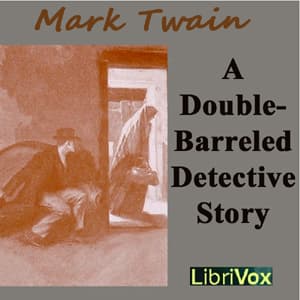

Look, I've got a bone to pick with Mark Twain. The man wrote some of the finest American literature ever put to paper, and then he decides to take Sherlock Holmes - the world's greatest detective - and make him look like a complete fool in the California wilderness. Two hours of my drive to a client meeting in San Antonio, and I'm sitting there in my truck wondering if Twain had some personal beef with Arthur Conan Doyle.
But here's the thing. Once I stopped being annoyed, I realized that's exactly the point.
When Logic Meets the Wild West
Twain's setup is beautiful in its absurdity. Sherlock Holmes shows up at a mining camp - already ridiculous - and applies his famous deductive reasoning to a murder case. The victim's cabin got blown sky-high by his own nephew, Fetlock Jones (who happens to be Holmes's nephew too, because why not). Holmes does his whole routine. The careful observation. The logical chains. The confident pronouncements.
And he's dead wrong.
Meanwhile, some amateur with an unnaturally keen sense of smell - basically a human bloodhound - sniffs out the truth. Literally. The great Sherlock Holmes, undone by a guy following his nose like Ranger tracking a squirrel.
I've seen this dynamic play out in real life more times than I can count. The Pentagon analyst with all the satellite imagery and signal intelligence, completely outperformed by a sergeant who just knows something's wrong because the dogs in the village aren't barking. That same tension between institutional expertise and street-level instinct drives Litigators, where the courtroom veterans get outmaneuvered by scrappy underdogs. Twain understood that life doesn't follow logic. Sometimes the answer isn't in the evidence - it's in the gut.
Greenman's Steady Hand
John Greenman handles the narration with workmanlike efficiency. Nothing flashy. No theatrical voices that make you cringe. He reads Twain's prose clean and clear, which is exactly what this material needs. The humor lands because he doesn't oversell it. When Holmes makes his pronouncements with absolute certainty, Greenman delivers them straight - letting you feel the weight of the coming embarrassment.
At two hours, this is a tight operation. No fat to trim. I listened at my usual 1.25x and it clipped along nicely. Perfect length for a one-way road trip or a long afternoon cleaning firearms. (Ranger slept through most of it, but he perked up during the explosion descriptions. Good boy knows what matters.)
The Revenge Plot You Didn't See Coming
Here's what caught me off guard - the first half isn't even about Holmes. It's a dark revenge story about a woman whose husband abused her and abandoned her. She raises their son with one purpose: to track down his father using an almost supernatural sense of smell she's trained into him from birth. The kid can follow a scent trail across years and miles.
This isn't a comedy. Not at first. There's real venom in Twain's portrayal of domestic cruelty and patient, calculated vengeance. State of Terror has that same undercurrent of personal stakes wrapped inside a larger procedural framework. Then Holmes shows up and it becomes satire. The tonal whiplash is jarring, but I think that's intentional. Twain's saying something about how we process violence - the serious kind versus the kind we dress up in detective fiction.
Who's This For
If you worship at the altar of Sherlock Holmes and can't handle seeing him humiliated, skip this. Twain isn't gentle. But if you appreciate a good takedown of intellectual arrogance - if you've ever watched some know-it-all with a fancy degree get outperformed by common sense - you'll enjoy watching the great detective eat crow.
Mystery purists might feel cheated. There's no fair-play puzzle here. The solution comes from abilities no reader could replicate. But that's Twain's whole argument: real life doesn't give you all the clues in neat little packages.
Mission Debrief
Worth your time? Here's the deal. It's two hours. It's free on most platforms. It's Mark Twain being clever and mean in equal measure. The production is clean, the narration is solid, and you'll get a story that's genuinely surprising if you go in blind.
Is it Twain's best work? Not even close. But it's a fascinating curiosity - America's greatest satirist taking a shot at Britain's greatest detective. And the revenge subplot has teeth that'll stick with you longer than the comedy.
Ranger approved this one. Mostly because it was short enough that he got his walk on schedule.