
"Everyone is a leader, not just people with formal titles."
I was halfway through my morning jog along the Charles River - the stretch near the Weeks Footbridge where the rowers are out early and you can smell the river getting warmer - when that line hit me. And I stopped. Not because it's revolutionary (it isn't), but because it crystallized something I'd been circling in my own research on identity narratives: the stories we tell ourselves about who gets to lead shape whether we actually do.
The Psychology Behind the Eight Essentials (And Where It Actually Works)
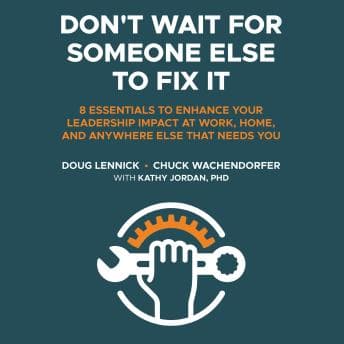
Let me be honest about something. When I see a leadership book with a numbered list of essentials, my academic brain goes into skeptic mode. But Lennick and Wachendorfer do something I genuinely appreciated - they ground their framework in what they call "leadership intelligence," which is basically a blend of moral, social, and technical imperatives. The research actually shows that this tripartite approach to leadership competency has legs. It's not just "be a better person and profits will follow."
The "Know Your Real Self" versus "Aim to Be Your Ideal Self" pairing is where I got most interested, because this is a fascinating case study in identity gap theory. The authors aren't just saying "know your strengths" - they're asking listeners to sit with the distance between who they are and who they want to be. That gap? It's where all the interesting psychological work happens. My therapist would have thoughts about how most people avoid that gap like it's a tax audit.
What makes the framework compelling is the case studies. The North Pole skiing expedition leader, the Olympic snowboarding coach, the Himalayan mountaineer - these aren't your standard Fortune 500 CEO stories. Lennick and Wachendorfer pull from people who lead in extreme, high-stakes physical environments where bad leadership doesn't just tank quarterly earnings, it gets people killed. The protagonist of each story exhibits classic patterns of what the authors call "igniting integrity," and the stakes make the lessons visceral rather than abstract.
But - and this is the psychology researcher in me talking - the "Embrace Empathy and Compassion" section feels like it needed another thirty minutes. They gesture at empathy as essential, they give examples, but the cognitive versus affective empathy distinction gets glossed over. If you're going to tell someone to "be more empathetic," you need to specify which kind. Feeling someone's pain and understanding someone's perspective are different neural processes. This matters.
Tim Andres Pabon and the Pacing Problem
Here's where I have to be upfront: I couldn't find much specific commentary on Pabon's narration for this title, and my own experience was... serviceable. He reads with clear diction and professional steadiness, which is fine for a business book. But at 8 hours and 28 minutes, the audiobook could benefit from more tonal variation between the anecdotal sections and the framework-heavy chapters. The stories about the youth basketball program founder and the senior housing community director are inherently more dynamic material, but Pabon doesn't always shift gears to match. I found myself bumping the speed to 1.25x during the more prescriptive sections and dropping back down when the case studies kicked in.
I wasn't bored, exactly. But I wasn't pulled forward either.
The "Decide Wisely" and "Let Go of What You Know" Paradox
I found myself asking: why does this book pair these two essentials back-to-back? And I think it's the smartest structural choice Lennick and Wachendorfer make. Psychologically, humans are terrible at both - we over-rely on heuristics when deciding and we cling to prior knowledge like it's a life raft. Putting these chapters together forces you to confront how your decision-making is contaminated by what you already believe. The authors pull in Stephen M.R. Covey and Jim Loehr here, and while the "thought leader cameos" approach can feel name-droppy, the insights on performance psychology from Loehr actually land.
The practical exercises at the end of each section are legitimately useful. Not just "reflect on your values" journaling prompts, but structured tools for self-assessment. If you actually do them (and most people won't, let's be real), you'd get substantially more from this book.
Who This Is For (And Who Should Quietly Walk Away)
If you're already deep into leadership literature - you've read your Brené Brown, your Simon Sinek, your Adam Grant - this isn't going to blow your mind. You'll recognize the DNA. But if you're someone who doesn't see yourself as a "leader" because you don't have a corner office? This book is specifically for you, and the diverse cast of real-world examples makes that point better than any abstract argument could.
Skip it if you want cutting-edge organizational psychology. Pick it up if you need a structured, approachable framework that treats leadership as a human skill, not a corporate title.
My Case Notes
Psychologically, most of this tracks. The identity work is solid, the empathy treatment is thin, and the practical tools elevate it above the typical "leadership mindset" book that tells you to be better without telling you how. I finished it by the time I got back to my apartment, sweaty and hungry, and immediately started making dal while mentally drafting this review. The book didn't change my life. But it gave me a framework I could actually hand to someone who says "I'm not a leader" and watch them reconsider. That's worth something.