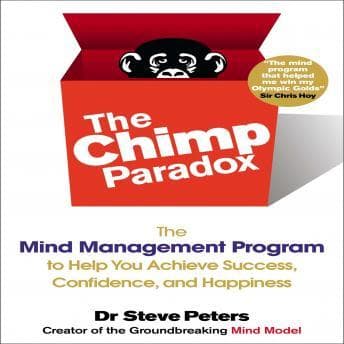

Okay so I have a confession: I've been blaming my "chimp" for every bad decision I've made since finishing this audiobook. Snapped at Kevin because he ate my leftover pad thai? Chimp. Agreed to a 7AM meeting I definitely didn't need to attend? Chimp. Bought another sci-fi series when I have 47 unfinished in my library? You guessed it. Chimp.
But here's the thing - Dr. Steve Peters actually gives you a framework that's way more useful than just a convenient excuse for being a mess. The core idea is pretty simple: your brain has three main systems (the Chimp, the Human, and the Computer), and they're constantly fighting for control. Your Chimp is the emotional, reactive part that hijacks you during stress. Your Human is the rational, logical part you wish was driving more often. And the Computer is basically your autopilot - habits and beliefs you've stored over time.
I finished this in about 5 commutes, and honestly? The ROI on this audiobook is solid. Not life-changing-revelation solid, but practical-tools-I-actually-use solid. Peters is a sports psychologist who's worked with Olympic athletes and Premier League teams, and you can tell. This isn't fluffy "think positive thoughts" nonsense. It's more like debugging your own mental processes - which, as someone who literally does that for distributed systems all day, I appreciate.
The Model That Actually Sticks
What makes this different from your standard self-help fare is the metaphor itself. Look, I've listened to a lot of psychology-adjacent books (occupational hazard of a long commute), and most of them blend together into vague advice about "being present" or whatever. 12 Rules for Life had that same quality—specific frameworks that actually stuck with me instead of dissolving into generic platitudes. But the Chimp model? It's sticky. Like, I can actually use it in the moment.
Last week I was in a code review that was going sideways - someone was being needlessly aggressive about my architecture decisions - and I literally thought "that's my Chimp wanting to fire back, let the Human drive." Did it work perfectly? No. But having that mental shortcut helped me pause for like two seconds before responding, which is two seconds more than I usually get.
The book does drag in places. Peters repeats concepts a lot, and some sections feel like they could've been condensed. There's a whole chunk about "Gremlins" and "Goblins" (basically different types of unhelpful beliefs) that felt like it was padding the runtime. Could've been a blog post. Or at least a shorter chapter.
Tim Andres Pabon Gets the Job Done
So here's where I have to be honest - I couldn't find a ton of info about Pabon as a narrator, but based on this performance, he's solid. Clear, easy to follow, good pacing for a book that's essentially explaining psychological concepts for 10 hours. His voice has this calm, measured quality that works well for the material. Not distracting, not grating.
That said, this isn't a narrator performance that's going to blow you away. It's functional. Professional. The kind of narration where you forget someone's reading to you because you're focused on the content - which, for a self-help book, is probably exactly what you want. No one needs dramatic flair when explaining how your amygdala hijacks your prefrontal cortex.
I listened at 1.5x and it worked fine. Could probably push to 1.75x if you're already familiar with psychology concepts.
Who Should Listen (And Who Should Skip)
Perfect for: commute, gym, chores. Anything where you want to absorb useful concepts without needing to take notes. The repetition that annoyed me actually helps with retention when you're half-asleep on the 6:47 Caltrain.
Skip if: you want cutting-edge neuroscience. This is pop psychology, and that's fine, but if you've already read a bunch of behavioral science books, some of this will feel basic. Also skip if you need audiobooks to be entertaining - this is educational, not a page-turner.
The people who'll get the most out of this are probably folks who struggle with emotional regulation (hi, that's me during on-call weeks) or anyone who keeps sabotaging themselves and can't figure out why. It's basically a user manual for your own brain, written for people who never got one. Gambler worked the same way for me—gave me vocabulary for understanding my own risk-taking patterns that I didn't have before.
Kevin actually listened to parts of this with me on a road trip, and now we both reference "managing the Chimp" when one of us is being irrational. Is it a little annoying? Sure. But it's also genuinely useful to have shared vocabulary for "hey, you're spiraling and I'm trying to help."
The bonus Q&A content is nice but not essential. Worth a listen if you finish the main book and want more, but don't feel bad about skipping it.
Would I listen again? Probably not cover to cover, but I could see revisiting specific sections when I'm going through a particularly stressful stretch. It's the kind of book that's more useful as a reference than a one-time experience.