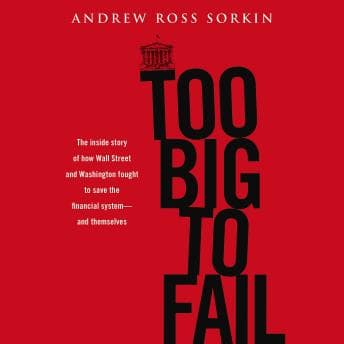

I started this one during a particularly brutal week of on-call rotations, and I'm not exaggerating when I say the chaos on Wall Street in 2008 made my production incidents look like minor hiccups. Twenty-one hours is a commitment—that's basically two full weeks of commutes for me—but I finished this in about ten days because I kept "accidentally" missing my stop.
When Your Caltrain Becomes a Trading Floor
So here's the thing about financial crisis books: they can go one of two ways. Either they're so jargon-heavy that you need an MBA to follow along, or they're dumbed down to the point of being useless. Sorkin threads the needle perfectly. I'm a software engineer, not a finance person (though I've debugged enough payment systems to know what a CDO is, unfortunately), and I never felt lost. The man basically turned the 2008 meltdown into a thriller, complete with boardroom showdowns, 2AM phone calls, and enough ego to power a small city.
The structure is clever—Sorkin jumps between Lehman Brothers, the Fed, Treasury, and various banks in a way that builds tension without losing you. It's basically incident response at scale, but instead of servers going down, it's the entire global economy. As someone who's been in war rooms at 3AM trying to figure out why everything is on fire, I found the parallels weirdly comforting? Like, at least when my systems crash, we don't need Congressional approval to fix them.
William Hughes Nails the Panic
I couldn't find a ton about Hughes online before this, but based on this performance? The guy gets it. He's not doing dramatic voice acting—this isn't that kind of book—but he nails the tone. There's this underlying tension in his delivery that matches the material perfectly. When Paulson is freaking out about Lehman, you can hear the stress. When Dick Fuld is being stubborn and delusional, Hughes captures that particular brand of CEO arrogance that makes you want to throw your phone.
The pacing is solid for complex material. Some business audiobooks I have to bump up to 1.75x because they're padding runtime (looking at you, every startup memoir ever), but I kept this at 1.5x and it felt right. Hughes knows when to let moments breathe and when to push through the technical stuff. The Audies nomination makes sense.
The Cast of Characters You'll Love to Hate
The real star here is Sorkin's access. The level of detail is insane—we're talking private conversations, what people were eating, who was crying in bathrooms. (Yes, there's crying. These are billionaires watching their empires crumble in real-time.) You get inside the heads of Paulson, Geithner, Bernanke, Jamie Dimon, Lloyd Blankfein... basically everyone who was either saving or destroying the economy depending on your perspective.
Sorkin doesn't really editorialize, which I appreciate. He presents the facts and lets you draw your own conclusions about whether these guys were heroes, villains, or just deeply flawed humans making impossible choices with incomplete information. Talking to Strangers digs into that same territory—how we misjudge people under pressure and make calls with incomplete data—though Gladwell takes it way beyond Wall Street. (As an engineer, I felt that last one in my soul.)
The book is from 2009, so it's obviously missing the longer-term fallout and regulatory changes that came later. But as a snapshot of those specific weeks in September 2008? It's the definitive account. Period.
Who Should Queue This Up (And Who Should Skip)
This is ideal commute material. Complex enough to keep you engaged, but structured so you can zone out for a few minutes and pick back up without being totally lost. I listened through some pretty packed morning trains and never had to rewind because someone's backpack was in my face.
Skip this if you want light entertainment or if financial stuff makes your eyes glaze over. This isn't a beach read—it's 21 hours of dense, detailed crisis management. But if you're the kind of person who finds disaster post-mortems fascinating (hi, fellow incident responders), you'll eat this up.
Worth the Runtime Investment
The ROI on this audiobook is solid. You come out understanding what actually happened in 2008 beyond "banks bad, bailouts happened." And honestly? Understanding how systems fail at scale—whether they're financial systems or distributed systems—is just useful knowledge. The patterns are eerily similar.
Kevin asked me what I was listening to last week and I tried to explain the whole AIG credit default swap situation and his eyes glazed over in about thirty seconds. Fair. But if you're reading this review, you're probably not Kevin.






![Steve Jobs [unabridged audiobook] audiobook cover](/_next/image?url=https%3A%2F%2Fcovers.audiobooks.com%2Fimages%2Fcovers%2Ffull%2F9788499923406.jpg&w=1920&q=75)