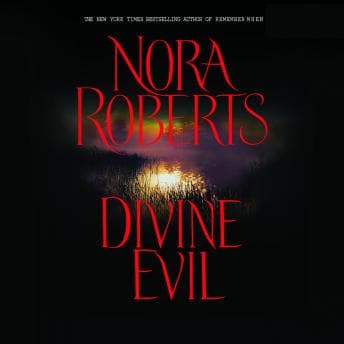

I picked this up on a Wednesday night while reorganizing my horror section at the library - yes, I was shelving books at 9 PM because that's the kind of person I am - and I figured a Nora Roberts romantic suspense from 1992 would be comfortable background noise. Something I could half-pay-attention to while alphabetizing.
I was wrong about the comfortable part.
Small Town, Big Rot
Here's what Divine Evil actually is, underneath the romance packaging: it's a story about how evil hides in plain sight behind community and tradition. Clare Kimball comes back to Emmitsboro, Maryland, carrying childhood trauma she can't quite name, and the town she returns to has this suffocating normalcy that keeps curdling at the edges. Roberts understood something that a lot of thriller writers miss - the most effective horror isn't the monster in the woods, it's the neighbors who know the monster and look away. The satanic cult at the center of this isn't played for shock value gore. It's about power structures and who gets protected in small communities. That's genuinely unsettling territory.
The romance with Cam, the reformed bad-boy sheriff, is exactly what you'd expect from Roberts - warm, a little swoony, well-paced. But what surprised me is how the relationship actually serves the suspense. Clare's growing sense of safety with Cam is the thing that makes the danger feel more dangerous, not less. Roberts is smart about that trade-off.
The cult scenes, though. The chanting sequences. I was standing in the 800s section of my library holding a copy of Shirley Jackson's We Have Always Lived in the Castle when one of those scenes hit, and I had a moment. A real one. Not because it's supernatural horror - it isn't - but because Roberts commits to the ugliness of people who genuinely believe their evil is sanctioned. That's the thing that actually gets under your skin.
Kimberly Farr: The Complicated Part
Okay, so. Farr is doing real work here, and I want to be specific about where she lands for me.
Clare she handles beautifully. There's a controlled tension in how Farr voices her - this woman who has built an entire life around maintaining composure while something unnamed keeps threatening to crack through. You can hear Clare holding herself together, and that's not easy to perform. The emotional beats in her scenes with Cam feel earned, not performed.
Character differentiation is genuinely solid. Emmitsboro has a full cast of small-town types - the gossip, the priest, the old friends - and Farr keeps them distinct without leaning into caricature. That matters over 18 hours. You never lose the thread of who's talking.
But the male voices. Specifically the male voices when dialect is involved. There's a flatness there that breaks the spell occasionally - not constantly, but enough that you notice the seams. The chanting scenes that other listeners found disconcerting? I actually thought Farr handled those with appropriate creepiness. The discomfort is the point. Where she struggles is in the more grounded male-voiced dialogue, where the vocal choices feel slightly undercommitted compared to her female characters.
She's a 3.5 narrator for me. Good enough that I didn't want to stop. Not good enough that I forgot I was listening to a performance.
Speaking of Farr's range, I found her work on French Braid more consistently compelling—every character felt fully inhabited, not just the women.Who This Is Actually For
If you're a horror purist, this isn't your book. The evil here is human and organizational, not supernatural, and the romance takes up substantial real estate. If that sounds like a dealbreaker, skip it.
But if you're a reader who likes your small-town atmosphere genuinely threatening - if you appreciate a thriller that understands community complicity as its central horror mechanism - this holds up better than you'd expect from a 1992 romantic suspense. Roberts won a RITA for this, and you can feel why. She was doing something more structurally interesting than the genre typically demanded. That same ambition is on display in Sanctuary, another of her novels where the suspense comes from what the town knows and won't say.
My podcast listeners who are into the intersection of domestic suspense and community-rot horror - the ones who loved Sharp Objects or The Secret History - would find a lot to appreciate here. It's not reinventing anything, but it's doing what it does with real craft. Then She Was Gone mines similar territory—another domestic suspense where the horror is grounded in the people you think you know.
Finished it at 1 AM standing in my kitchen. Shirley (my cat) was unimpressed. I was unsettled in a way I hadn't anticipated from a Roberts novel. That's worth something.