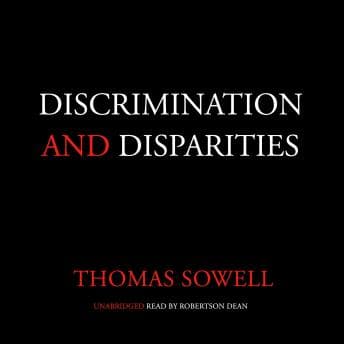

Thomas Sowell doesn't care about your feelings. And honestly? After spending five hours with this audiobook while cooking an unnecessarily elaborate dal makhani on a Sunday afternoon, I kind of respect that about him.
The Psychologist's Problem With Simple Explanations
Here's what drew me to this book as someone who studies human cognition: Sowell's central argument is essentially a takedown of monocausal thinking. The idea that any single variable - discrimination, genetics, culture, exploitation - can explain the vast differences in outcomes between individuals and groups. The research actually shows that humans are terrible at holding multiple causal factors in their heads simultaneously. We default to narratives. Hero and villain. Oppressor and oppressed. Sowell knows this about us, and he weaponizes it by burying you in data until your comfortable little narrative collapses under the weight. The same pattern of dismantling comfortable frameworks shows up, far less rigorously, in Achievement Habit — though where Sowell reaches for data, that book reaches for inspirational vibes, which tells you something about the difference between intellectual courage and self-help aesthetics.
He opens with something deceptively simple: the concept of prerequisites and their multiplicative effects. If success requires five independent factors and you have an 80% chance of meeting each one, your probability of having all five isn't 80% - it's about 33%. This isn't controversial math. But Sowell uses it to dismantle the assumption that statistical disparities between groups automatically indicate discrimination. I found myself asking: why does this basic probability concept feel so counterintuitive to most people? Because we're pattern-seeking creatures who prefer stories to statistics. My entire career is built on understanding that bias.
What makes this book interesting - and occasionally frustrating - is that Sowell treats human societies like an economist would treat a market. Cold. Empirical. He pulls data from Malaysian Chinese communities, West African immigrants outperforming native-born Black Americans, Jewish overrepresentation in certain European professions before WWII. The global scope is genuinely impressive for a five-hour listen. But here's where the psychologist in me bristles: he sometimes treats cultural and geographical advantages as though they exist in a vacuum, separate from the systems that shaped them. The human mind doesn't work that way. Context isn't noise - it's signal.
Where Sowell's Framework Holds and Where It Cracks
Sowell's strongest chapters deal with what he calls the "invincible fallacy" - the assumption that in the absence of discrimination, all groups would achieve proportional representation in all fields. He dismantles this with example after example: first-born children outperform later siblings academically across cultures, geographic advantages (access to harbors, navigable rivers) correlate with economic development across centuries. These aren't ideological claims. They're observable patterns.
But - and this is a significant but - Sowell exhibits a classic confirmation pattern himself. He's extraordinarily rigorous when dismantling left-leaning policy assumptions (affirmative action, minimum wage laws, housing regulations) and considerably less curious about examining whether free-market outcomes also produce their own feedback loops of disadvantage. The book doesn't pretend to be balanced, and I appreciate the honesty. But as someone trained to spot motivated reasoning, I noticed the asymmetry. My therapist would have thoughts about a mind this certain of its own objectivity.
Psychologically, what doesn't quite track is Sowell's treatment of discrimination itself. He acknowledges it exists but frames it primarily as an economic cost to the discriminator - a market inefficiency that competition should theoretically correct. This is elegant economics but somewhat thin psychology. Discrimination isn't always rational, and humans aren't always economizing. Sometimes prejudice persists precisely because it serves psychological needs that have nothing to do with profit margins. Sowell is too smart not to know this, which makes the omission feel deliberate.
Robertson Dean Does the Job, Not the Performance
Robertson Dean narrates this with the steady, professional clarity you'd expect from someone with a theatrical background and multiple AudioFile Earphones Awards. His reading is clean and measured - exactly what dense empirical content needs. You're never struggling to parse a sentence because of delivery.
That said, "clean and measured" can tip into "flat" when you're listening to chapter after chapter of statistical analysis. There's no vocal shift between a dry data point about income percentiles and a genuinely provocative argument about institutional incentives. Everything lands at the same temperature. For a book that's already methodical in its prose, a narrator who occasionally signaled "pay attention, this part matters" would have helped. I caught my attention drifting around hour three and had to rewind twice. At five hours, it's a tight listen - but the monotone delivery makes it feel longer than it is.
This Is a Fascinating Case Study in Intellectual Courage and Its Blind Spots
If you're someone who enjoys having your assumptions challenged - genuinely challenged, not the comfortable kind where you nod along - Sowell delivers. If you want a book that accounts for the full complexity of human psychology, including irrational prejudice, identity formation, and the stories we tell ourselves about merit? You'll find gaps.
Who should listen: anyone who's ever said "the data clearly shows" without checking whether they're cherry-picking. Anyone studying policy, economics, or social psychology who wants a sharp contrarian perspective. Skip it if you need your nonfiction authors to be evenhanded - Sowell has a thesis and he's prosecuting it.
I finished the dal makhani. I finished the book. Both left me thinking about what ingredients were missing. But the ones that were there? Pretty good.