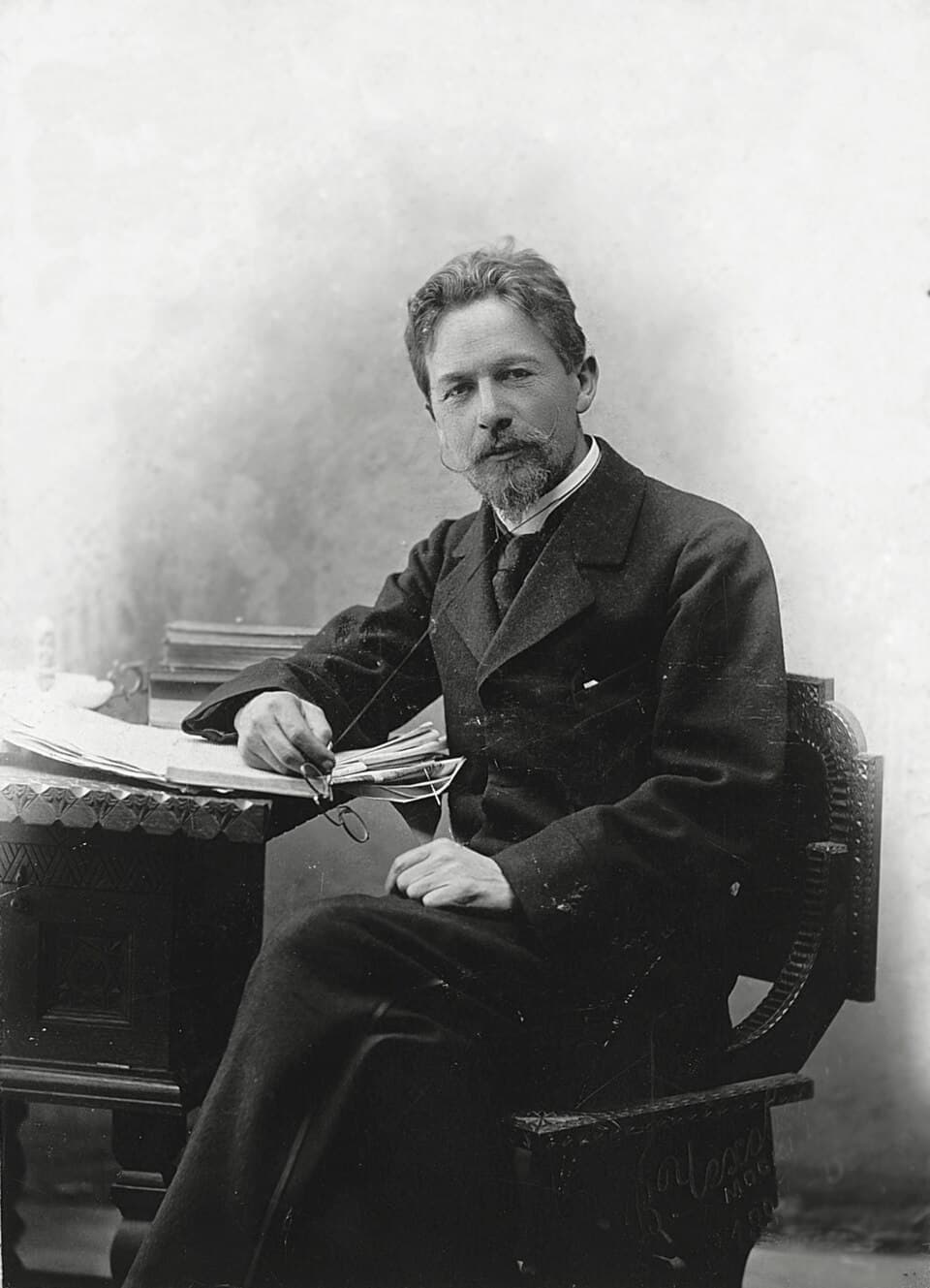

Everyone tells you Chekhov is the master of subtlety. That he works in whispers. That his stories are like watercolors - all suggestion, no hard lines. And yeah, sure, that's true for a lot of his work. But "Difficult People" hit me like a slap at the kitchen table, which is pretty much exactly what happens in the story itself.
I listened to this one during a Sunday morning walk along the lakefront with Denise. Twenty-one minutes. That's it. We hadn't even made it to the Fullerton underpass before it was over. And I spent the rest of the walk just... quiet. Denise asked if I was okay. I told her Chekhov had just described every argument about money I'd ever witnessed growing up. She nodded like she understood, because she did.
The Genius of a Twenty-Minute Gut Punch
Here's what Chekhov does in this story that still floors me after all these years of teaching his work: he makes you hate the father, then forces you to understand him. Pyotr needs money for college. That's it. That's the request. And his father Yevgraf turns it into a full domestic war - not because he's cruel, but because poverty has ground him down into someone who experiences every ask as an attack. The scene where the father's anger spirals and the mother starts crying and the younger children go silent - Chekhov doesn't editorialize. He just shows you the family flinching. That silence from the kids is louder than anything the father says.
This reminds me of what Hemingway said about prose being like an iceberg - the dignity of movement comes from what's beneath the surface. But Chekhov was doing this decades before Hemingway theorized about it. The real story isn't the argument about rubles. It's about how poverty doesn't just take your money - it takes your capacity to be decent to the people you love most. Ernest Becker spends a lot of time in Denial of Death on that exact mechanism - how the pressure of our own limitations warps the way we treat the people closest to us, and reading it a few years back made me a better teacher of this story.
Michael Scott's Narration - Close But Not Quite There
Let's talk about the performance. Michael Scott reads this with genuine warmth and a reasonable pace - he doesn't rush Chekhov, which I respect. The narrator understands that pause is punctuation, and there are moments where Scott lets the silence after Yevgraf's outbursts just hang there. Good instinct.
But here's where it gets tricky. The accent work is inconsistent - sometimes there's a hint of something Eastern European in the father's dialogue, sometimes it vanishes entirely mid-sentence. And the differentiation between Pyotr and his father needed more contrast. Yevgraf should sound worn down, compressed, like a man whose voice has been flattened by decades of counting kopecks. Pyotr should sound young and raw and a little self-righteous, the way college-age kids do when they're asking for something they desperately need but can't quite bring themselves to say plainly. Scott gets close on the father but Pyotr comes across too measured, too calm. That kid should be vibrating.
The production itself is clean enough, though I caught a couple spots where the audio felt slightly muffled - nothing that ruined the experience, but noticeable at 1.0x speed. (Yes, I listened at 1.0x. The prose deserves to be savored, even in translation.)
Why We Still Assign Chekhov (and Why Students Still Resist)
My students would hate this. Not because it's bad - because it's too real. Teenagers don't want to sit with a story about a father who loves his son but can't stop being terrible to him. They want villains they can point at. Chekhov doesn't give you that. He gives you a father who, after the awful argument, watches his son leave and feels genuine remorse - but you know, you just know, that next time the money conversation comes up, it'll play out exactly the same way. That's not a plot twist. That's just family.
If you loved Chekhov's "The Lady with the Dog" - that same precision of emotional observation is here, just aimed at a different kind of love. And if you've read Dostoevsky's family dynamics but found them operatic, this is the kitchen-sink realism version. Same Russian soul, smaller stage, sharper knife.
At twenty-one minutes, this is basically a palate cleanser. But it's the kind that stays on your tongue. Worth pausing the faculty meeting for - though honestly, you could listen to this twice during one of Principal Martinez's budget presentations and still have time to fake a question about supply allocations.
The Assignment: Who Gets an A, Who Gets a Pass
If you're a Chekhov completist or someone who wants to understand why short fiction matters, this is worth your time. Twenty-one minutes is nothing. But I wouldn't spend a full credit on it - at this length, find it on a streaming service or your library app. The narration is decent but not definitive, and there are other recordings of this story out there worth comparing. If you're new to Chekhov, start with "The Lady with the Dog" or "Ward No. 6" - they'll give you more to chew on. Come back to this one when you already love him and want to see him work in miniature.